
Table of Contents
- Why Pressure Washing Delivers the Biggest Curb Appeal Boost
- Soft Washing vs Pressure Washing: Which Method Fits Your Surfaces?
- Average Cost of House Pressure Washing and What Drives the Price
- How to Prepare Home for Pressure Washing: A Step-by-Step Checklist
- Residential vs Commercial Pressure Washing: What Changes
- How Often Should You Pressure Wash Your Home Exterior?
- DIY vs Professional Pressure Washing: What Actually Works for Curb Appeal
- Frequently Asked Questions
Last Updated: September 12, 2026
Why Pressure Washing Delivers the Biggest Curb Appeal Boost
Pressure washing is the single fastest way to change how a house reads from the street, and it costs a fraction of what most sellers spend on staging. This guide from Carters Precision Pressure Washing covers the methods, timing, and surface rules that actually move the needle. Buyers form a first impression before they leave the car, and a stained driveway or green-streaked roof tells them the house has been neglected. Cleaning reverses that signal in a single afternoon. Below, we break down which method fits which surface, what drives your quote, and how often to schedule the work.
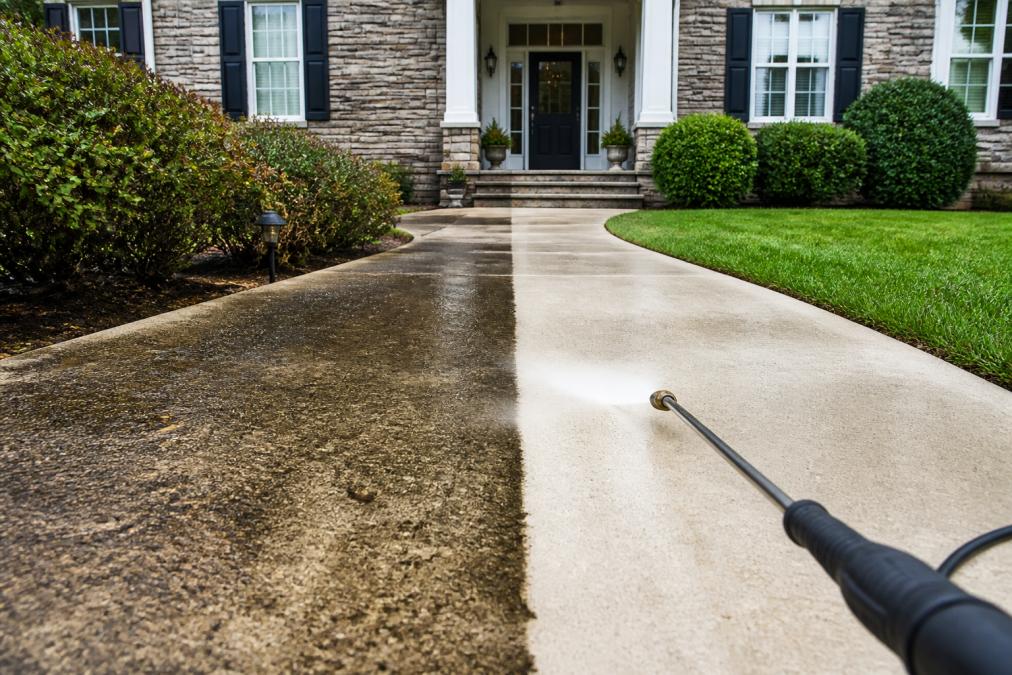
What Grime, Mold, and Algae Do to Your Home’s First Impression
Organic growth is the real problem, not loose dirt. Algae and mildew hold moisture against siding, stucco, and roofing, which is where long-term decay starts (the EPA). A green or black film on a north-facing wall signals a moisture problem to any inspector.
How Clean Exteriors Support a Higher Sale Price
A clean exterior removes a buyer’s easiest reason to negotiate down. Sellers routinely lose more on a single lowball offer than a full exterior cleaning costs. Think of it as pre-sale preparation that pays for itself before the listing photos are even taken.
Soft Washing vs Pressure Washing: Which Method Fits Your Surfaces?
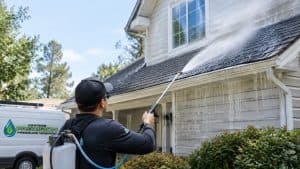
Soft washing uses low pressure with a cleaning solution to kill organic growth at the root. Pressure washing uses high-pressure water to blast away embedded grime. The two are not interchangeable, and using the wrong one is the most common and most expensive mistake homeowners make.
| Surface | Recommended Method | Pressure Level | Why |
|---|---|---|---|
| Concrete driveway, sidewalk | Pressure washing | High | Withstands force; lifts oil and gum |
| Vinyl siding | Soft washing | Low | High pressure forces water behind panels |
| Asphalt shingle roof | Soft washing | Low | Pressure strips granules and voids warranty |
| Stucco, painted wood | Soft washing | Low | Cracks and chips under direct force |
| Brick, stone patio | Pressure washing | Medium | Needs controlled PSI to protect mortar |
When High Pressure Is Safe (and When It Is Not)
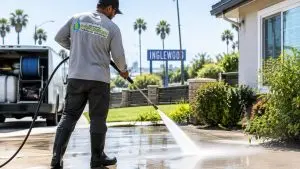
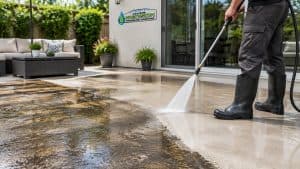
High pressure is safe on poured concrete, most brick, and stone patios (extension.psu.edu). It is not safe on asphalt shingles, aged stucco, or anything with failing paint or loose mortar (extension.okstate.edu). A high-pressure nozzle held too close will etch concrete and tear wood grain.
Why Soft Washing Protects Roofs, Siding, and Stucco
Soft washing relies on detergent application and dwell time rather than force. The solution kills algae and mold at the source, so the surface stays clean longer than a pressure-only rinse. That matters most on roofing, where granules are the only thing standing between shingles and the sun.
Average Cost of House Pressure Washing and What Drives the Price
Most providers quote per job, not per hour, so the only way to sanity-check a bid is to know what moves them. Pricing depends on quantity, dates, and delivery. Your quote will land somewhere inside them based on the factors that follow.
| Service | Typical Range | Common Unit |
|---|---|---|
| Single-story house wash (siding only) | $200-$400 | per job |
| Two-story house wash | $300-$600 | per job |
| Driveway (standard two-car) | $100-$250 | per job |
| Walkway and front steps | $75-$175 | per job |
| Roof soft wash | $400-$800 | per job |
| Deck or patio | $150-$400 | per job |
| Full exterior package (house + flatwork + roof) | $700-$1,500 | per job |
Pricing depends on quantity, dates, and delivery. A bid that seems too low may mean skipped detergent, no post-treatment, or a single pressure-only pass that regrows within weeks.
Factors That Change Your Quote
- Cleanable square footage. Providers measure the actual surface area, not the footprint of the house. A home with a long driveway, wraparound walkway, and rear patio can carry 1,500+ square feet of flatwork on top of the siding.
- Stories and access. Second-story siding, steep roof pitches, and tight side yards require ladders, harnesses, or lift equipment, all of which add labor hours.
- Surface mix. Concrete, vinyl, stucco, wood, and asphalt shingle each demand a different method, nozzle, and detergent. A job that touches four materials takes longer than one that touches two.
- Severity of growth. Light dust rinses off. A decade of bonded algae, lichen, or oil staining needs dwell time, agitation, and sometimes a second application.
- Detergent and plant protection. Plant-safe solutions and pre-wetting of landscaping add a step but prevent the callbacks that come from dead shrubs.
- Travel and minimums. Many providers set a minimum job size, so a single walkway may cost more per square foot than the same walkway bundled into a full package.
Ask whether the quote includes a post-treatment. A quality job applies a residual that slows regrowth.
The Resale Math Most Sellers Skip
Pressure washing is one of the few pre-listing expenses where the spend is small relative to the negotiating leverage it creates. A buyer who sees green algae on the siding or black streaks on the roof has an easy, visible reason to ask for a credit, and that credit is almost always larger than the cleaning bill. Real estate agents commonly advise washing the exterior before listing photos, because the same house photographs dramatically better clean, and listing photos drive showing requests.
Run the comparison yourself: a full exterior package versus a single requested repair credit. In most transactions, the cleaning cost is a rounding error against the price conversation it prevents. That is the ROI case, not that washing adds a fixed dollar amount to the appraisal, but that it removes the buyer’s cheapest reason to negotiate down.
How to Compare Bids Without Getting Burned
Ask every provider the same four questions so the bids are actually comparable:
- Which surfaces are included, and which are excluded?
- What method is used on each surface, pressure or soft wash?
- Is a detergent and post-treatment included, or is this a water-only rinse?
- Is the quote flat-rate or hourly, and does it change if growth is heavier than expected?
A written, itemized estimate protects both sides. If a provider will not put the scope in writing, that is the bid to decline.
How to Prepare Home for Pressure Washing: A Step-by-Step Checklist
Knowing how to prepare home for pressure washing protects your belongings and gets a better result. Most of the work happens before the crew arrives.
- Move vehicles, grills, and patio furniture off the driveway and deck
- Close and lock all windows and doors
- Bring pets and potted plants inside, or cover what cannot move
- Clear gutters of debris so runoff drains cleanly
- Cover outdoor outlets and light fixtures
- Point out problem areas, oil stains, or delicate surfaces to the crew
- Confirm the provider’s water source and runoff plan
Skipping window and door prep is the mistake that causes the most callbacks. Water forced past a loose seal means interior damage, and that repair costs far more than the cleaning itself.
Residential vs Commercial Pressure Washing: What Changes
Commercial exterior cleaning runs on a different schedule and a different standard. A retail storefront or office entry is judged by every customer who walks past, so high-traffic areas get serviced on a recurring plan rather than once a season. Parking lots need oil, gum, and debris removal that residential driveways rarely see. Commercial work also involves larger equipment, safety planning for foot traffic, and often early-morning scheduling to avoid disrupting business hours.
How Often Should You Pressure Wash Your Home Exterior?
Frequency is not one number, it depends on the surface, the climate, and how much organic material the property sheds onto itself. The table below is the schedule most exterior cleaning professionals recommend as a starting point, then adjust for your conditions.
| Surface | Typical Interval | Why |
|---|---|---|
| Vinyl or fiber cement siding | Every 12-24 months | Algae and mildew film builds on north-facing walls first |
| Painted wood siding | Every 12-18 months | Trapped moisture breaks down paint adhesion |
| Stucco | Every 12-24 months | Porous finish holds dirt and mildew |
| Asphalt shingle roof | Every 24-36 months | Soft wash only; granules degrade with over-cleaning |
| Concrete driveway and walkways | Every 12-18 months | Oil, tire marks, and organic staining accumulate |
| Wood deck | Every 12 months, plus reseal | Cleaning preps the surface for sealer |
| Brick and stone | Every 18-24 months | Mortar tolerates cleaning but not repeated high pressure |
| Gutters and fascia (exterior faces) | Every 12 months | Streaking shows from the street |
What Shortens the Interval
- Coastal or humid climates. Salt air and constant moisture feed growth year-round, so twice-a-year service is common.
- Heavy tree cover. Shade plus leaf tannins and sap mean more frequent cleaning, especially on the shaded side of the house.
- North-facing walls. These stay damp longest after rain and are almost always the first surface to show green film.
- Sprinkler overspray. Hard water and mineral deposits etch concrete and leave white spotting that needs its own treatment.
- Recent construction or landscaping. Dust, mortar haze, and soil tracked onto flatwork should be cleaned soon after the project ends.
The Visual Test, Made Specific
Instead of guessing, check three things each season:
- The swipe test. Run a finger across siding or a driveway in a shaded area. If it comes away with a dark or green residue, growth is active.
- The rain test. After a storm, watch how long north-facing surfaces stay dark. Surfaces that stay damp for hours are feeding algae.
- The photo test. Take a phone photo of the front of the house from the street in the same spot every few months. Side-by-side photos reveal gradual dulling that the eye normalizes.
Frequency beats intensity. Regular light cleanings protect surface integrity far better than one aggressive wash every few years.
Build a Simple Annual Maintenance Calendar
A predictable rhythm is easier to keep than a reactive one:
- Spring: Wash siding, walkways, and the driveway after pollen season. This is the highest-impact cleaning for curb appeal because it precedes the season of showings and outdoor hosting.
- Summer: Spot-treat oil stains and any mildew that reappears on shaded walls.
- Fall: Clean gutters and fascia before leaf drop finishes, and wash the deck before winter.
- Winter: Inspect, but avoid pressure washing in freezing temperatures, water in cracks and pores can freeze and expand, damaging masonry and wood.
Staying on this schedule also keeps surfaces easier to clean over time. Growth that is removed while it is still a film releases with a light application; growth left for years bonds to the substrate and requires stronger methods that carry more risk to the surface underneath.
DIY vs Professional Pressure Washing: What Actually Works for Curb Appeal
Renting a machine and doing it yourself looks cheaper until you account for the damage risk. Consumer units can still exceed the safe PSI for siding, and one wrong pass on stucco or shingles creates a repair bill that dwarfs the savings. Professionals bring surface-specific settings, the right detergents, and the experience to know when to back off the pressure. For pre-sale preparation especially, the goal is a result that photographs well and holds up through the listing period.
Carters Precision Pressure Washing handles roofs, houses, driveways, and commercial exteriors with methods matched to each surface. Contact us today to get a free estimate and experience our precision cleaning services. We can walk your property to flag delicate areas before any work begins.
Your exterior is the first thing a buyer, tenant, or customer sees, and it is the easiest thing to get wrong with the wrong method or too much pressure. Carters Precision Pressure Washing restores roofs, siding, driveways, and storefronts with surface-matched techniques that protect what is underneath while making it shine. From free estimates to a results-focused finish, our team is built for properties that need to look their best. Call for a free estimate and see the difference precision cleaning makes.
Frequently Asked Questions
Does pressure washing increase home value for resale?
A clean exterior helps buyers see a well-maintained property, which supports stronger offers. Real estate agents often recommend pressure washing before listing because mold, mildew, and grime signal deferred maintenance. While no cleaning service guarantees a specific dollar increase, removing algae from siding and stains from driveways makes your home photograph better online and show better in person. For sellers, professional pressure washing is one of the lower-cost improvements with visible impact on curb appeal.
Is soft washing better than high-pressure washing for curb appeal?
It depends on the surface. Soft washing uses low pressure and cleaning solutions to kill mold and algae at the root, making it safer for roofs, vinyl siding, stucco, and painted wood. High-pressure washing works well on concrete driveways, brick, and stone patios where the surface can handle the force. Many homes need both methods. A professional can match the technique to each surface so you get a thorough clean without cracking siding or stripping paint.
How much does professional house pressure washing cost?
Pricing depends on your home’s size, the surfaces being cleaned, how much mold or staining is present, and whether soft washing or high pressure is needed. Because every property is different, the most accurate approach is to request a free estimate. Carters Precision Pressure Washing provides quotes based on your specific surfaces and condition.
Can pressure washing damage siding or roofing materials?
Yes, if the wrong pressure or technique is used. High-pressure water can crack vinyl siding, strip paint from wood, force water behind stucco, and tear granules from asphalt shingles. That is why soft washing exists. Professional crews adjust PSI and nozzle selection for each material, and they know which surfaces should never receive direct high pressure. If you have older siding or a roof with visible wear, ask your provider to confirm they use soft washing for those areas.