

Table of Contents
- Why Standard Pressure Washing Damages Stucco Siding
- Soft Washing Stucco: The Safer Alternative to High Pressure
- Recommended PSI for Stucco and How to Set Your Machine
- Step-by-Step: Safe Pressure Washing for Stucco Homes
- How to Remove Algae From Stucco Without Damaging the Finish
- EIFS vs. Hard-Coat Stucco: Adjusting Your Cleaning Method
- Post-Cleaning Maintenance and Efflorescence Troubleshooting
- Conclusion: When to Call a Professional
- Frequently Asked Questions
Last Updated: September 7, 2026
Stucco is a porous surface that absorbs water readily, which is why standard high-pressure washing often causes structural damage instead of a clean finish. Safe pressure washing for stucco homes requires low water pressure, the right nozzle, and cleaning agents that lift mold and mildew without forcing moisture into the wall. Below, we’ll show you exactly how to protect your siding while restoring its appearance, starting with why the most common approach fails.
Why Standard Pressure Washing Damages Stucco Siding
The biggest mistake homeowners make is treating stucco like concrete. A standard pressure washer blasts water at thousands of PSI, which is fine for driveways but destructive to a porous surface like stucco. When high-pressure water hits the texture, it can erode the finish, chip the surface, and create entry points for moisture.
The real danger isn’t the visible damage, it’s what happens underneath. Water that penetrates the substrate gets trapped behind the siding, leading to rot, mold growth inside the wall cavity, and costly structural damage that isn’t visible until it’s severe. Many homeowners don’t realize the exterior finish is only a protective shell; once breached, the entire wall system is at risk.
Understanding Stucco Porosity and Water Intrusion Risks
Stucco’s porosity is what gives it that breathable quality, but it’s also its weakness. Unlike sealed surfaces, stucco allows moisture to pass through if the pressure is high enough to overcome the surface tension of the water. The result is water intrusion that can compromise the integrity of the entire wall assembly.
Never use a pressure setting above 1,200 PSI on stucco. Even at that level, you must keep the nozzle moving and maintain distance. A concentrated blast from a zero-degree tip can cut through the finish like a knife, creating a channel for water to enter the wall.
Soft Washing Stucco: The Safer Alternative to High Pressure
Soft washing is the method professionals recommend for stucco homes. Instead of relying on pressure to strip away grime, soft washing uses a low-pressure spray combined with cleaning solutions that break down mold, mildew, and algae at the source. The chemical does the work, not the water pressure.
This approach typically uses a 12v pump system that delivers water at around 100 PSI, barely more than a garden hose. That’s enough to rinse the surface but gentle enough to protect the finish and prevent water intrusion. The cleaning solution, usually containing sodium hypochlorite, is applied, allowed to dwell, and then rinsed away with the low-pressure stream.
Recommended PSI for Stucco and How to Set Your Machine
The recommended PSI for stucco is between 500 and 1,200, with 800 PSI serving as a practical sweet spot for most homes (familyhandyman.com). If you’re using a gas-powered pressure washer, you’ll need to adjust the settings carefully since most machines are capable of far more than stucco can safely handle.
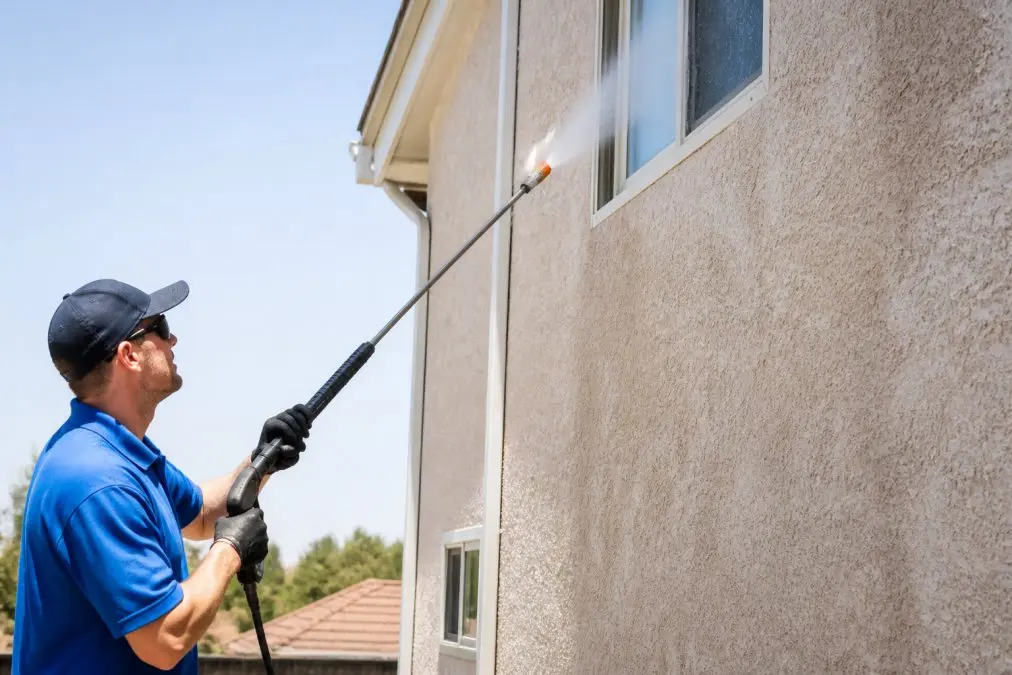
To set your machine correctly, start at the lowest possible setting and test on an inconspicuous area. Increase pressure gradually until the cleaning solution and water remove the grime without etching the surface. You should also factor in your distance from the wall, closer range increases effective pressure, so maintain at least 12 to 18 inches between the nozzle and the siding.
Choosing the Right Nozzle Tip and Spray Pattern
The nozzle tip determines the spread of water and, therefore, the pressure per square inch. For stucco, you want a 40-degree nozzle tip, which produces a wide fan pattern that disperses the water’s force across a larger area (pressurewashersdirect.com). This is the widest tip available for most pressure washers and is essential for protecting the surface.
Avoid zero-degree and 15-degree tips entirely. These produce concentrated streams that will gouge the stucco and create grooves in the texture. Even a 25-degree tip can be risky if you’re not experienced with maintaining a consistent distance and speed.
Step-by-Step: Safe Pressure Washing for Stucco Homes
A successful cleaning comes down to preparation and patience. Rushing the process or skipping the setup phase is where most DIY attempts go wrong. Follow this sequence for safe pressure washing for stucco homes.
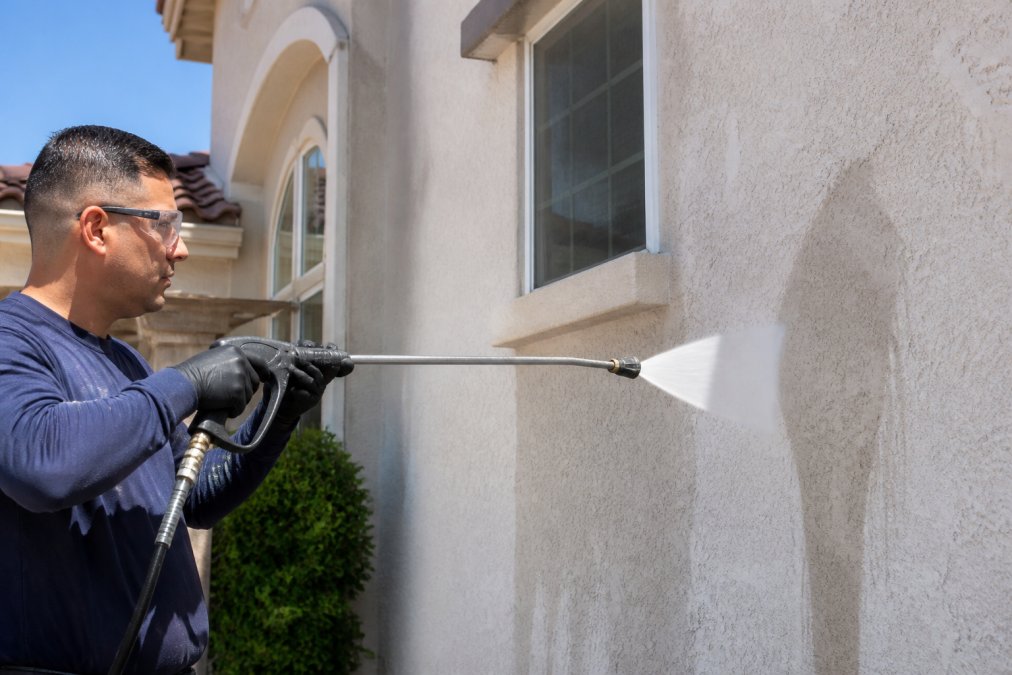
- Protect surrounding areas. Cover plants, electrical outlets, and light fixtures with plastic sheeting. The cleaning solution can harm vegetation and sensitive components.
- Pre-wet the stucco. Saturate the wall with plain water using your low-pressure setting. This prevents the cleaning solution from drying too quickly and reduces absorption.
- Apply the cleaning solution. Using a chemical injector or a pump sprayer, apply your detergent from the bottom up. This prevents streaking and allows for even dwell time.
- Let the solution dwell. Allow 5 to 10 minutes for the chemicals to break down mold, mildew, and algae. Do not let it dry on the surface.
- Rinse with low pressure. Using the 40-degree tip, rinse from the top down with your pressure set below 1,200 PSI. Keep the wand moving in smooth, overlapping passes.
- Inspect your work. Walk the wall and check for missed spots or remaining stains. Repeat the application on stubborn areas rather than increasing pressure.
Inspecting for Cracks and Pre-Treating Problem Areas
Before you start, walk the entire exterior and inspect for cracks, chips, or areas where the stucco has separated from the substrate. Any opening, no matter how small, is a potential entry point for water under pressure. Mark these areas and address them before cleaning.
Crack repair should happen before washing, not after. Small hairline cracks can be filled with a flexible stucco patching compound, while larger damage may require professional assessment. Cleaning a compromised wall will force water into the cracks and worsen the damage. If you find significant issues, postpone the wash and consult a contractor.
How to Remove Algae From Stucco Without Damaging the Finish
Algae and mildew on stucco appear as dark green or black streaks, typically on north-facing walls or areas shaded by trees. These organic growths root into the porous surface, which is why they often return quickly after a simple rinse. Removing algae from stucco requires a cleaner that kills the organism, not just washes away the visible stain.
A mixture containing sodium hypochlorite, commonly known as bleach, is the standard treatment (the EPA). Diluted properly and combined with a surfactant to help it cling to the vertical surface, this solution kills algae at the root. Apply it with a low-pressure sprayer, allow it to dwell for the recommended time, and rinse gently. The key is letting the chemical work, scrubbing with a brush or increasing pressure will damage the texture.
Test your cleaning solution on a small, hidden section of stucco first. Different stucco formulations react differently to chemicals, and a patch test will tell you if the mix is too strong before you commit to the entire wall.
EIFS vs. Hard-Coat Stucco: Adjusting Your Cleaning Method
Not all stucco is the same, and using the wrong method can cause serious damage. Hard-coat stucco is a traditional cement-based material applied in multiple layers over a wire mesh. It’s durable and somewhat forgiving, though still porous and sensitive to high pressure.
EIFS, or Exterior Insulation and Finish Systems, is a synthetic stucco product that’s also known by brand names like Dryvit. It consists of a foam insulation board covered by a synthetic finish. EIFS is far more delicate than hard-coat stucco and is notorious for moisture problems when water gets behind the finish. It should never be pressure washed, only soft washed with the lowest possible pressure and the gentlest cleaning agents.
| Stucco Type | Composition | Max Safe PSI | Cleaning Method |
|---|---|---|---|
| Hard-coat stucco | Cement, sand, lime over mesh | 1,200 PSI | Soft wash with 40-degree tip |
| EIFS (synthetic) | Foam board + synthetic finish | 100 PSI (soft wash only) | Chemical cleaning, no pressure |
| Acrylic finish over hard-coat | Hard-coat base + acrylic topcoat | 800 PSI | Low-pressure rinse, gentle chemicals |
If you’re unsure which type you have, look at the thickness and texture. Hard-coat stucco is typically thicker with a rougher, more textured surface. EIFS often feels more uniform and slightly softer to the touch. When in doubt, treat it as EIFS and use the gentlest method available.
Post-Cleaning Maintenance and Efflorescence Troubleshooting
A proper wash should last several years, but maintenance determines how long the results hold. After cleaning, schedule an annual inspection to catch small issues before they become costly repairs. Trim vegetation away from the walls to improve airflow and reduce the moisture that feeds algae growth.
White, chalky residue appearing on your stucco after it dries is likely efflorescence, a mineral deposit left when water evaporates from the wall. This is a sign that moisture is moving through the stucco, and it often appears after cleaning if water has penetrated the surface. A mild cleaning solution can remove the visible deposit, but you should address the underlying moisture issue to prevent it from recurring. Persistent efflorescence may indicate a drainage problem or a crack allowing water entry.
Conclusion: When to Call a Professional
Safe pressure washing for stucco homes demands the right equipment, chemicals, and technique, and even then, mistakes happen. If your home has EIFS, extensive cracking, or staining that doesn’t respond to gentle cleaning, professional help is the safer route. Our team at Carters Precision Pressure Washing specializes in restoring exterior surfaces without the damage that comes from overzealous pressure. We use soft washing techniques tailored to your siding type, protecting your investment while enhancing your curb appeal. Contact us today for a free estimate and let us make your home shine.
Frequently Asked Questions
Is it okay to pressure wash a stucco house?
Yes, but only with the right technique. Standard pressure washing with high-pressure water can force moisture into the porous surface, leading to structural damage and water intrusion. For safe pressure washing for stucco homes, you must use a low recommended PSI for stucco, typically under 1200 PSI, and a wide 40-degree nozzle. Soft washing stucco with a gentle detergent application is the safest approach to remove mold and mildew without harming the substrate.
What is the recommended pressure washer PSI for washing stucco?
The recommended PSI for stucco is between 500 and 1200 PSI. Anything higher risks cutting into the soft surface and causing cracks. Your machine’s pressure will be too high if you see surface texture being stripped away. When using a pressure washer, hold the nozzle tip at least 12 to 18 inches away from the wall and keep the wand moving to avoid concentrating the stream on one spot for too long.
What is the best way to clean a stucco house?
The best way to clean a stucco house is soft washing stucco. This method uses a 12v pump to apply a chemical cleaning solution, such as a diluted sodium hypochlorite mix, at low pressure. The solution dwells on the surface to break down algae, mold, and oxidation before a gentle rinse cycle. This prevents water intrusion and surface damage that high-pressure water can cause on this porous material.
Can high-pressure water cause cracks in stucco?
Yes. High-pressure water can cause cracks and severe structural damage to stucco homes. When water is forced into hairline cracks, it expands the substrate and worsens the damage. The force can also erode the soft surface texture. Always inspect for existing crack repair needs before cleaning and stick to a low-pressure rinse to protect the integrity of the wall assembly and prevent expensive water intrusion issues.
Getting stucco clean without destroying it comes down to respecting its porous nature. High pressure is the enemy; low pressure, the right chemicals, and patience are your tools. If you’re preparing to sell your home or simply want it to look its best, trust the process, or trust the professionals who do it daily. Call Carters Precision Pressure Washing for a free estimate and see the difference precision makes.