

Table of Contents
- Assess the Oil Stain and Concrete Condition
- Immediate Steps for Fresh Oil Spills
- Best Concrete Degreaser for Commercial Use
- Pressure Washing Concrete Oil Removal Techniques
- Removing Deep-Set and Aged Oil Stains
- Safety Precautions and Concrete Sealing After Cleaning
- When to Hire a Professional for Commercial Concrete
- Frequently Asked Questions
Last Updated: September 4, 2026
Commercial concrete is porous, which is why oil spills turn into dark, stubborn stains so quickly. The moment petroleum products hit the surface, they begin penetrating the slab, and standard household cleaners won’t pull them back out. At Carters Precision Pressure Washing, we’ve seen parking lots and service bays where years of leaks have created a permanent, slippery film. The good news is that with the right technique, you can remove oil stains from commercial concrete effectively, even when those stains have been sitting for months.
Removing oil stains from commercial concrete requires a combination of absorbent materials, chemical degreasers, and mechanical scrubbing. There is no single product that works on every stain. The approach depends on the age of the spill, the porosity of the slab, and the type of oil involved. Below, we break down each step so you can match the method to the mess.
Assess the Oil Stain and Concrete Condition
Before applying any product, identify the stain type and the condition of the concrete. Fresh oil sits on the surface, while aged oil has penetrated deep into the pores. Synthetic oil behaves differently than petroleum-based grease, and a heavily pitted or cracked slab needs gentler handling than a smooth, sealed surface.
Start by checking for surface texture. If water beads up on the concrete, it likely has a sealer, which changes how chemicals interact with the stain. Unsealed concrete absorbs everything, so expect the oil to have traveled deeper. Also look for nearby drains or landscaping. Runoff containing hydrocarbons can create environmental hazards, and EPA guidelines on oil spill containment recommend containing the spill before it reaches storm drains.
A quick porosity test helps determine the approach. Sprinkle a few drops of water on the stained area. If the water soaks in within a minute, the concrete is highly porous and will need a poultice to draw oil out. If the water beads, the surface is denser or sealed, and a degreaser paired with scrubbing will likely suffice.
Immediate Steps for Fresh Oil Spills
Fresh oil spills are the easiest to handle because the oil hasn’t fully penetrated the surface. Time is critical. The longer the oil sits, the deeper it travels into the concrete pores.
- Contain the spill immediately. Use absorbent pads, kitty litter, or fine sand to cover the oil completely.
- Let the absorbent material sit for 30 to 60 minutes. It needs time to wick the oil out of the surface.
- Sweep up the saturated material and dispose of it properly. Do not wash it down a drain.
- Apply a dish soap and hot water mixture to the remaining film, then scrub with a stiff-bristle brush.
- Rinse thoroughly with clean water.
The absorbent step matters more than most people realize. Absorbent materials work by capillary action, pulling oil out of the pores rather than just wiping the surface. Skipping this step leaves oil in the concrete, which resurfaces later as a dark shadow.
For fresh spills on hot pavement, the oil is thinner and spreads faster. Work quickly, and use more absorbent material than you think you need. Heat reduces oil viscosity, which means deeper penetration in less time.
Best Concrete Degreaser for Commercial Use
The best concrete degreaser for commercial use is a solvent-based or alkaline degreaser designed specifically for petroleum stains. These products use surfactants to break the bond between the oil and the concrete surface, allowing water to rinse the residue away.
Look for a product with a pH above 10 for heavy grease, or a citrus or solvent-based degreaser for aged petroleum stains. Alkaline degreasers emulsify oils, turning them into a water-soluble mixture that rinses clean. Solvent-based options dissolve the oil directly, which makes them effective on older, congealed stains.
Apply the degreaser generously and let it soak. Most commercial degreasers need 10 to 15 minutes of dwell time to break down the oil. Do not let the product dry on the surface, as this reduces its effectiveness and can leave a residue. Agitate the area with a stiff-bristle brush during the dwell time to help the surfactant penetrate the stain.
Never mix different degreasers. Combining an alkaline product with an acid-based cleaner can produce hazardous fumes or a chemical reaction that damages the concrete. Stick to one product per cleaning session.
Pressure Washing Concrete Oil Removal Techniques
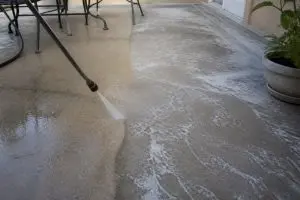
Pressure washing concrete oil removal works best as a follow-up step after chemical treatment, not as a standalone method. High-pressure water alone will remove surface oil, but it can also drive oil deeper into porous concrete. The correct sequence is degrease, scrub, then rinse with pressure.
Equipment Selection: Rental Versus DIY
For commercial concrete, the choice between renting industrial equipment and using consumer-grade tools directly affects both results and cost. Consumer pressure washers (1,500 to 2,500 PSI) are adequate for light surface cleaning but struggle with aged stains or large areas. A commercial-grade hot water pressure washer (3,000 to 4,000 PSI with a burner) removes oil far more effectively and covers ground faster, reducing labor time.
If the stained area exceeds 500 square feet, or if the stain is more than a few weeks old, renting a commercial unit is almost always more economical than DIY. A hot water pressure washer rental typically costs $75 to $150 per day, while the labor and time savings often justify the expense. For parking lots or service bays with multiple stains, a multi-day rental becomes cost-effective quickly.
Alternatively, industrial floor scrubbers with integrated vacuum recovery are superior to pressure washing alone for very large areas. These machines combine scrubbing, chemical injection, and immediate water recovery in a single pass, which eliminates runoff and reduces water consumption by 50 to 70 percent compared to pressure washing. Floor scrubber rentals range from $100 to $250 per day, but they are worth considering for facilities with strict environmental compliance requirements or where water runoff is a concern.
Pressure Washing Technique and Settings
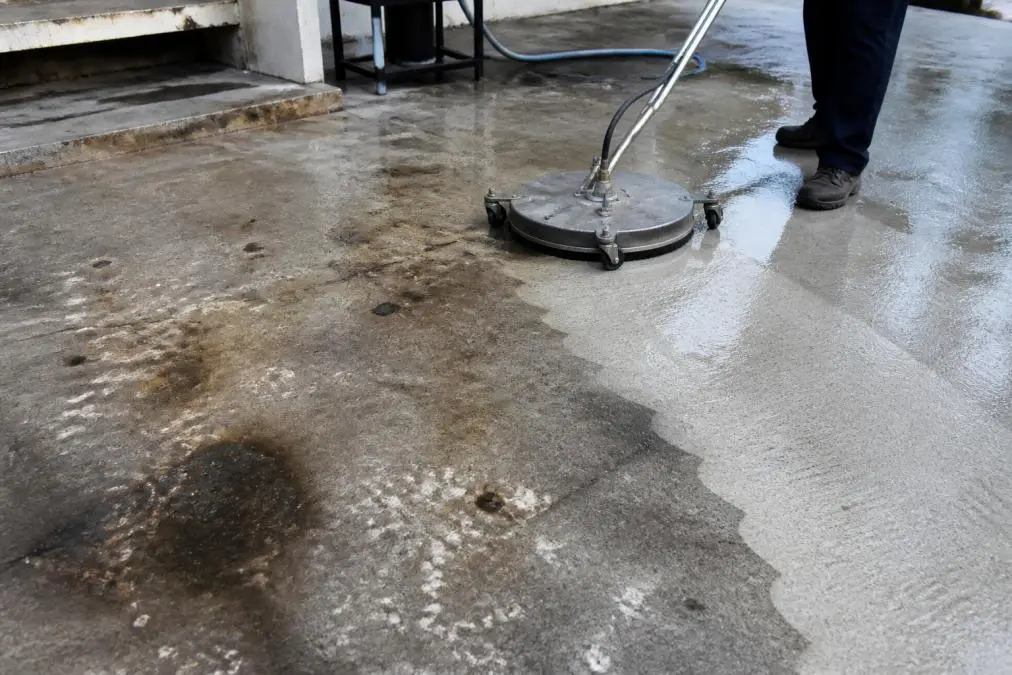
Use a surface cleaner attachment rather than a straight wand for large commercial areas. A surface cleaner distributes pressure evenly and prevents streaking or gouging. For the rinse, use a wide fan pattern at 2,500 to 3,000 PSI, keeping the nozzle at least 12 inches from the surface. Hold the wand at a 45-degree angle and work in overlapping passes to ensure even coverage.
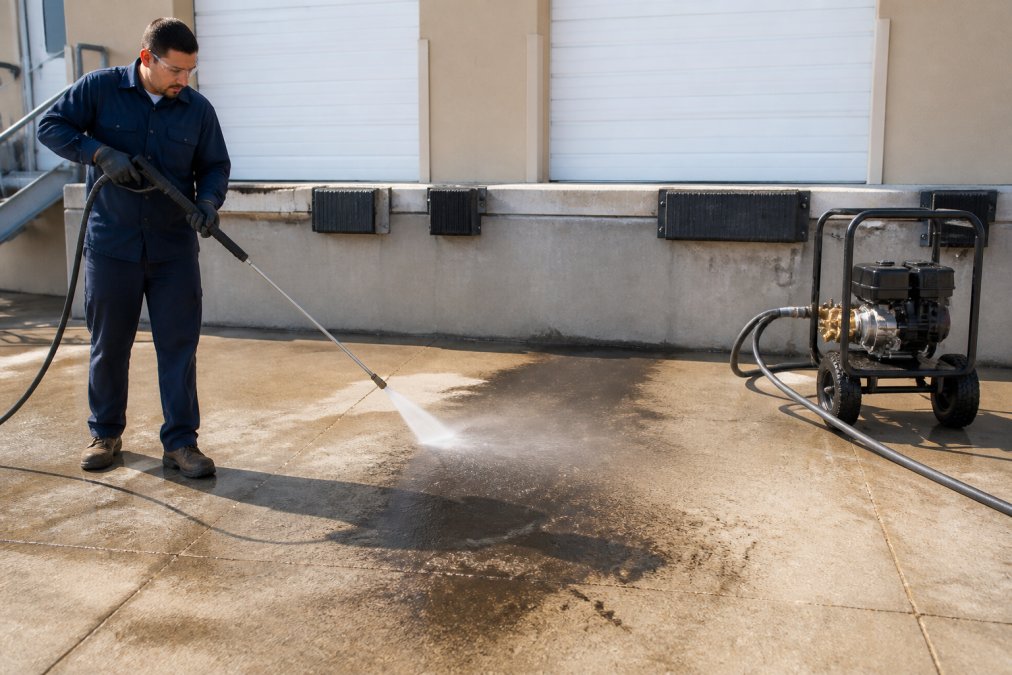
Hot water pressure washing is significantly more effective than cold water for oil removal. Heated water thins the oil and activates the degreaser more efficiently. If you are renting equipment, choose a unit with a burner that heats water to 180 to 200 degrees Fahrenheit (peer-reviewed research). The combination of heat, chemical action, and pressure removes the vast majority of surface oil in a single pass.
Concrete Type Considerations
The PSI and technique must match the concrete’s condition and finish. Polished or sealed commercial concrete is denser and can tolerate higher pressure (3,500 to 4,000 PSI) without damage. Broom-finish or unsealed concrete is more porous and vulnerable to erosion; use 2,500 to 3,000 PSI and keep the nozzle farther away to avoid pitting the surface. Heavily cracked or deteriorating concrete should be pressure-washed at the lower end of the range, or not at all if the structure is compromised.
Always test the pressure and distance on an inconspicuous area first. A test pass reveals whether the equipment will damage the surface or leave residual staining. This step takes five minutes and prevents costly mistakes on visible areas.
Removing Deep-Set and Aged Oil Stains
Aged oil stains require a poultice, which is a thick paste that draws oil out of the concrete pores as it dries. This is the most reliable method for deep-set stains that have penetrated the slab.
Mix an absorbent material such as diatomaceous earth, baking soda, or unscented kitty litter with a degreaser to form a paste with the consistency of peanut butter. Apply the poultice in a layer at least half an inch thick over the entire stain, extending an inch beyond the edges. Cover it with plastic sheeting to slow evaporation, and let it sit for 24 to 48 hours.
As the poultice dries, it pulls oil from the concrete through capillary action. The oil travels upward into the absorbent material, leaving the concrete clean beneath. After the poultice has fully dried, sweep it up and rinse the area. You may need to repeat the process for very old or heavy stains.
A poultice is the only method that actually extracts oil from deep within concrete. Surface cleaning methods only remove what is visible, leaving the stain to bleed back through over time.
Safety Precautions and Concrete Sealing After Cleaning
Chemical degreasers and oil residue require proper handling. Wear chemical-resistant gloves, safety glasses, and closed-toe shoes. Work in a well-ventilated area, and keep children and pets away from the cleaning zone. Check the OSHA hazard communication standards for chemical safety for guidance on handling industrial cleaners.
Dispose of oil-soaked absorbents and rinse water according to local regulations. Oil-contaminated materials are often classified as hazardous waste and cannot go in regular trash or down storm drains. Many municipalities offer hazardous waste collection events, and some areas require a licensed hauler for commercial quantities.
Concrete Sealing: Types and Application for Commercial Surfaces
After the concrete is clean and fully dry, sealing becomes the critical step that prevents future oil absorption and extends the life of your investment. Commercial concrete comes in different surface finishes, broom finish, polished, troweled, or exposed aggregate, and each requires a different sealer approach.
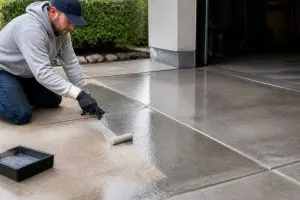
Penetrating sealers are the most common choice for commercial concrete. These products soak into the pores and create a water-repellent barrier without changing the surface appearance or creating a slippery finish. Penetrating sealers work on both sealed and unsealed concrete and are ideal for high-traffic areas like loading docks and parking lots where slip resistance matters. Apply penetrating sealers in thin, even coats using a roller or sprayer, and allow 24 to 48 hours of cure time before the surface sees traffic.
Membrane sealers (also called topical sealers) sit on the surface and create a visible protective layer. These are more durable and offer higher gloss, but they can be slippery when wet and require more frequent reapplication. Membrane sealers are better suited to polished concrete or decorative finishes where appearance is a priority. They typically last 2 to 3 years before needing recoating.
Solvent-based versus water-based sealers is another critical choice. Solvent-based sealers penetrate deeper and cure faster (often 4 to 8 hours), making them practical for commercial spaces that cannot afford extended downtime. Water-based sealers are lower-odor and more environmentally friendly, but they cure more slowly (12 to 24 hours) and may require a second coat for the same level of protection.
Before sealing, the concrete must be completely dry, ideally at least 48 hours after the final rinse. Any residual moisture will prevent the sealer from bonding properly and can trap oil vapor beneath the surface, causing the stain to reappear. On porous, heavily stained concrete, consider a primer coat before the sealer to ensure even coverage and maximum protection.
Reapply sealer every 2 to 3 years for high-traffic commercial areas, or every 3 to 5 years for lighter-use spaces. Regular resealing is far cheaper than removing a new set of oil stains, and it keeps the concrete looking clean and professional. Many commercial property managers schedule sealing as part of their annual maintenance plan, often in spring or fall when weather is stable and the facility can accommodate curing time.
When to Hire a Professional for Commercial Concrete
Large commercial areas, heavily stained slabs, and environmental compliance concerns all point toward hiring a professional. If the stained area exceeds a few hundred square feet, or if the oil has been accumulating for years, DIY methods will consume days of labor and still leave visible shadows.
Professional crews bring industrial-grade equipment and commercial degreasers that are not available to consumers. They also handle hazardous waste disposal correctly, which protects your business from liability. For property managers and business owners, the cost of downtime and labor often exceeds the cost of a professional service.
That is where Carters Precision Pressure Washing comes in. Our team handles commercial concrete restoration across Los Angeles, using hot water pressure washing, industrial degreasers, and proper waste containment. We restore parking lots, loading docks, and service bays to a clean, safe condition, and we seal the surface afterward to prevent future staining. For a free estimate and to see how we can remove oil stains from commercial concrete on your property, call Carters Precision Pressure Washing today. Restoring your concrete improves safety, appearance, and the long-term value of your property.
Frequently Asked Questions
What is the most effective way to remove old oil stains from concrete?
Old oil stains require a multi-step approach: apply an alkaline degreaser and let it soak for 15-30 minutes to break down the hydrocarbon bonds, scrub with a stiff-bristle brush to agitate the stain, rinse thoroughly, then repeat if needed. For aged stains that have penetrated deep into the concrete’s porosity, a poultice, a paste-like mixture of degreaser and absorbent material, left on the surface for several hours or overnight can draw out congealed oil. Pressure washing often completes the process by removing loosened residue.
Can pressure washing remove oil stains from commercial concrete?
Pressure washing alone is not sufficient for oil stains. It works best as a final rinse step after chemical treatment. Hot water pressure washers combined with a degreaser are more effective than cold water alone because heat reduces surface tension and helps emulsify oil. Pressure washing removes residue and loosened stains but cannot break down the chemical bonds of petroleum-based oils without a surfactant-based cleaner applied first.
Do I need specialized degreasers for commercial concrete oil removal?
Yes. Commercial-grade degreasers are formulated with stronger surfactants and alkaline compounds than household cleaners to handle the volume and severity of industrial oil contamination. They are designed to work on porous concrete surfaces where oil has penetrated deeply. Look for degreasers labeled for commercial or industrial use; they typically cost more but deliver faster results and require less scrubbing, which saves time and labor on large commercial properties.
What safety precautions should I take when using chemical cleaners on concrete?
Always wear personal protective equipment: chemical-resistant gloves, safety glasses, and a respirator if working indoors or in poorly ventilated areas. Ensure proper ventilation and avoid mixing different cleaners, as this can create hazardous reactions. Follow the pH balance guidelines on the product label. Contain runoff to prevent environmental contamination of soil or storm drains. After cleaning, rinse the area thoroughly to remove all chemical residue. If you are unsure about handling hazardous materials, hire a professional who is trained in proper disposal and safety protocols.