
Table of Contents
- Step 1: Gather the Right Cleaning Supplies and Tools
- Step 2: Create a High-Traffic Entryway Maintenance Schedule
- Step 3: Best Practices for Storefront Glass Cleaning
- Step 4: Tackle Thresholds, Entry Mats, and Floor Protection
- Step 5: Maintain Door Hardware, Hinges, and Weather Seals
- Step 6: When to Call Commercial Pressure Washing Services
- Step 7: Seasonal Checklists, Safety, and Eco-Friendly Protocols
- Common Mistakes That Undo Your Storefront Entryway Cleaning
- Frequently Asked Questions
Last Updated: September 14, 2026
Step 1: Gather the Right Cleaning Supplies and Tools
Maintaining clean storefront entryways starts with a stocked, purpose-built kit:
- Microfiber cloths (separate colors for glass and hardware)
- Squeegee with a fresh rubber blade
- Mild soap or a pH-neutral glass cleaner
- Non-abrasive scrub pad for thresholds
- Soft-bristle brush for tracks and gaskets
- Vacuum with a crevice attachment
- Entry mats rated for high-traffic use
- Trash bags and a small debris bin
The most common mistake is grabbing whatever’s under the sink. Glass gets a dedicated microfiber, hardware gets a dry cloth, and floors get their own tools. Cross-contamination spreads oils from handles onto glass, which is why so many entryways look smeared an hour after cleaning.
Carters Precision Pressure Washing handles the heavy exterior work, but your team can own the daily interior routine. Stock the kit once, label the cloths, and the process runs itself.
Step 2: Create a High-Traffic Entryway Maintenance Schedule
A high-traffic entryway maintenance schedule assigns specific cleaning tasks to daily, weekly, and monthly intervals based on foot traffic. Storefronts with steady customer flow need daily attention; quieter offices can stretch some tasks to twice weekly.
Here’s a schedule that works for most retail and office properties:
| Frequency | Task | Time Needed |
|---|---|---|
| Daily | Sweep and spot-mop entry floor | 10 min |
| Daily | Wipe door handles and push plates | 5 min |
| Daily | Quick glass spot-clean | 10 min |
| Weekly | Full glass panel wash, inside and out | 30 min |
| Weekly | Vacuum entry mats and thresholds | 15 min |
| Monthly | Hinge lubrication and hardware check | 20 min |
| Monthly | Deep clean gaskets and weather seals | 25 min |
| Quarterly | Full exterior pressure wash | Varies |
Post the schedule where staff can see it. Consistency matters more than intensity: a ten-minute daily sweep prevents the kind of dirt buildup that takes an hour to remove.
Step 3: Best Practices for Storefront Glass Cleaning
Best practices for storefront glass cleaning come down to three rules: work top to bottom, use a squeegee instead of paper towels, and never clean glass in direct sunlight. Heat evaporates cleaner before it lifts grime, leaving streaks.
Start with a microfiber cloth dampened with mild soap and water to remove loose dust, then squeegee, overlapping each stroke by an inch and wiping the blade between passes.
For aluminum frames, use a separate cloth. Abrasive pads scratch the finish and trap dirt, making future cleaning harder; a non-abrasive approach keeps frames looking new longer.
Fingerprints on push plates and handles need attention every few hours on busy days. Keep a spray bottle and microfiber behind the counter for quick touch-ups.
Clean glass from the inside on cloudy mornings, then hit the exterior in the afternoon shade. Direct sun is the number one cause of streaky commercial glass, and no amount of extra product fixes it.
Step 4: Tackle Thresholds, Entry Mats, and Floor Protection
Thresholds, entry mats, and floor protection form your building’s first line of defense against tracked-in dirt. A quality mat traps debris before it reaches interior flooring, cutting mopping time significantly.
Thresholds collect grit in their grooves. Vacuum first, then scrub with a soft-bristle brush and mild soap. Rinse with a damp cloth, not a hose, since standing water damages the finish and rusts metal.
Entry mats need vacuuming weekly and deep cleaning monthly. Absorbency drops as mats load with dirt, so replace them when they stop trapping debris; rotating two sets extends their useful life.
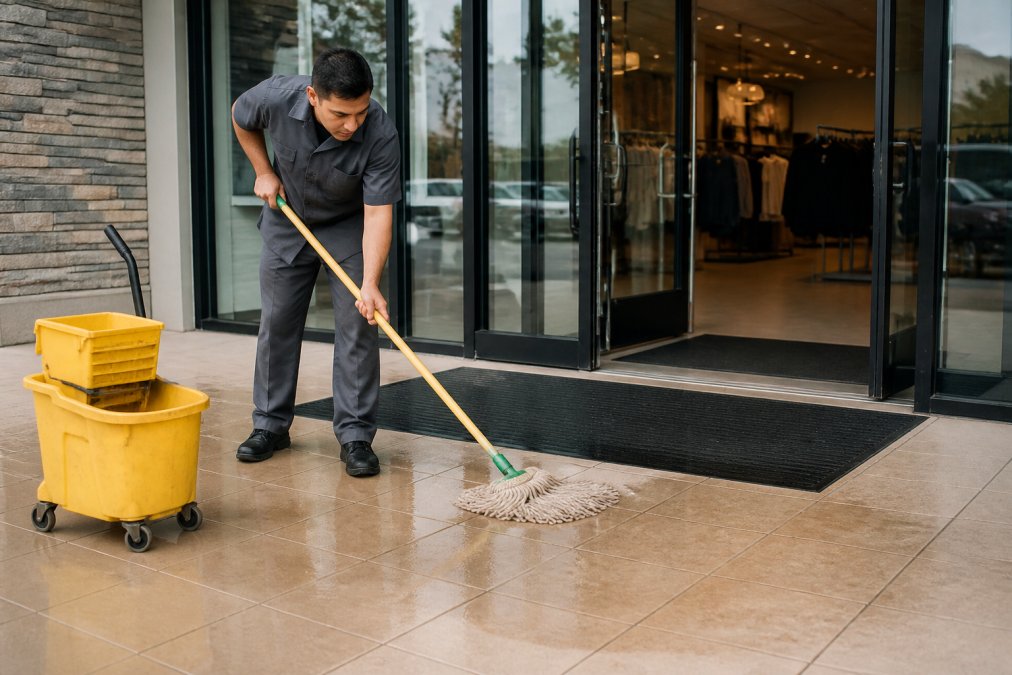
For floor protection, the goal is moisture control. Wet floors near entrances create slip hazards, a liability issue, not just an aesthetic one (osha.gov). Place wet-floor signs during rain, and mop with a damp rather than soaked mop.
Step 5: Maintain Door Hardware, Hinges, and Weather Seals
Door hardware, hinges, and weather seals determine whether your entryway functions smoothly or grinds, sticks, and leaks. Most guides stop at “wipe the handles,” missing the real value: dirt is a mechanical problem, and the failures it causes generate repair invoices.
How dirt actually breaks a door
Grit on a hinge works between the pin and knuckle. Every swing grinds it against the metal, widening clearance until the door sags, the top corner drags, and the closer works harder. By the time you hear the squeak, the wear has already started.
The same pattern plays out elsewhere:
- Thresholds and bottom sweeps: Sand and salt collect in the channel, abrading the sweep until it no longer contacts the floor. That gap lets in water, drafts, and pests.
- Push plates and pulls: Body oils and hand lotion build a film that traps dust. The film is mildly acidic and dulls the finish over time.
- Closers and pivots: Dust mixed with old lubricant forms a paste that stiffens the arm and shortens the closer’s life.
- Weather seals: Dirt embedded in the seal keeps it from compressing evenly, so it wears in patches and leaks at the thinnest point.
A hardware maintenance routine that prevents repairs
Wipe hinges with a dry cloth to remove grit, then apply two or three drops of light machine oil to the pivot points. Avoid spraying directly onto the hinge; overspray attracts dirt. Work the door back and forth, then wipe away the excess.
Check and tighten hinge screws quarterly. Loose screws let the door shift, misaligning the latch and wearing the strike plate. If a screw hole is stripped, a longer screw or a golf tee coated in wood glue is a common field fix.
Weather seals and gaskets keep out water, drafts, and pests. Inspect them monthly for cracks, tears, or compression; a worn gasket lets in moisture that rusts hardware and warps thresholds. Replace seals at the first sign of wear.
Rust prevention means drying metal surfaces after cleaning and touching up scratched paint promptly. For aluminum frames, a silicone-based protectant slows oxidation.
Troubleshooting common door malfunctions
| Symptom | Likely cause | First fix |
|---|---|---|
| Door drags at the top corner | Worn or loose top hinge, sagging door | Tighten screws; if worn, replace hinge |
| Door won’t latch | Misaligned strike plate or swollen frame | Adjust strike plate; check for moisture swelling |
| Squeak on every swing | Dry hinge pin or embedded grit | Clean pin, re-oil with light machine oil |
| Door slams or won’t stay open | Closer adjustment or worn closer | Adjust closing speed screw; replace if leaking |
| Draft or water at the bottom | Worn bottom sweep or threshold seal | Replace sweep; check threshold for gaps |
| Stiff handle or lock | Dirt in the cylinder or dried lubricant | Flush with graphite or dry lubricant, not oil |
Never use a pressure washer on door hardware, hinges, or gaskets. The force drives water into sealed mechanisms, strips lubricant, and can crack rubber seals. Keep pressure washing to exterior hard surfaces only.
A simple rule: if a door needs force to open, close, or latch, the problem is mechanical, and cleaning alone won’t fix it. Address the hardware before it needs replacing.
Step 6: When to Call Commercial Pressure Washing Services
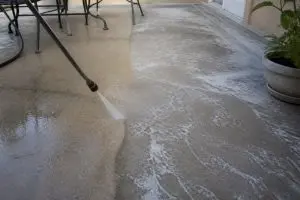
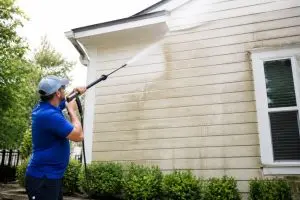
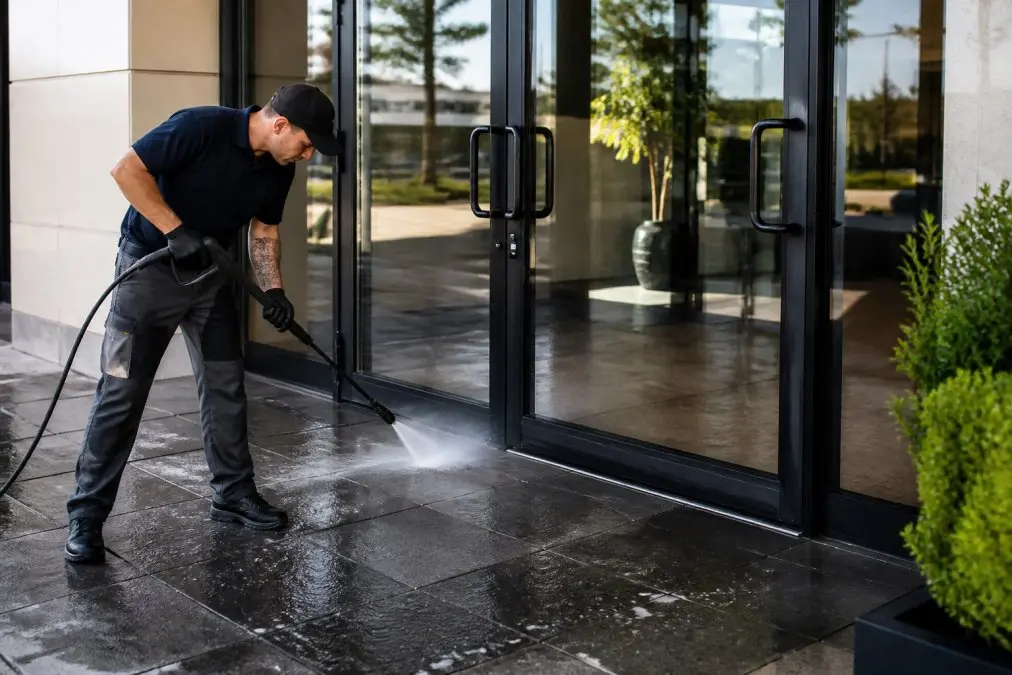
Commercial pressure washing services handle exterior work daily maintenance can’t touch: embedded grime on walkways, gum on sidewalks, oil stains on pavement, and years of buildup on facades. Knowing when to call a professional saves you from damaging surfaces with the wrong equipment.
Call a professional when you see:
- Dark staining on concrete that resists scrubbing
- Gum, oil, or grease embedded in walkways
- Mildew or algae on exterior walls and awnings
- Black streaks on the building facade
- Stained parking areas or drive-through lanes
Pressure washing requires matching PSI and technique to each surface. Concrete tolerates higher pressure than stucco, and wood needs a gentler approach than either. Getting it wrong strips paint, cracks siding, and etches stone.
Carters Precision Pressure Washing specializes in exterior cleaning for commercial and residential properties, handling roofs, facades, walkways, and parking areas. If your entryway’s exterior looks tired no matter how much you scrub, bring in equipment designed for the job.
Step 7: Seasonal Checklists, Safety, and Eco-Friendly Protocols
Seasonal shifts change what your entryway needs. In wet months, moisture control and slip prevention top the list; in dry, dusty seasons, debris and dirt trapping become the priority. Each season has different failure modes, so it deserves its own plan.
Seasonal maintenance checklist
Spring
- Deep clean exterior surfaces and remove winter salt residue from thresholds and mats
- Inspect door hardware and seals for freeze-thaw damage
- Refresh or replace entry mats that lost absorbency over winter
- Check drainage away from the entrance so spring rain doesn’t pool at the door
Summer
- Increase glass cleaning frequency; pollen and dust film builds faster in dry heat
- Watch for sun damage and cracking on rubber seals and sweeps
- Check that awnings and overhangs aren’t shedding debris onto the entry
- Verify exterior lighting so evening entries stay visible and safe
Fall
- Clear fallen leaves from thresholds, mats, and door tracks before they compost into grit
- Clean gutters and downspouts above the entrance to prevent overflow onto walkways
- Prep for rain: restock wet-floor signs and check mat absorbency
- Inspect weather seals before the first cold snap
Winter
- Prioritize moisture control; add extra mats and change them more often
- Monitor for salt and ice damage to thresholds, hardware, and flooring
- Keep a mop and wet-floor signs staged at the entrance during storms
- Check that heat isn’t escaping through worn seals, which drives up energy cost
Safety and liability considerations
Wet entry floors are a leading cause of slip-and-fall claims, and documented maintenance schedules protect property owners. Practical steps:
- Place wet-floor signs the moment moisture appears, not after a customer slips
- Use a damp mop rather than a soaked one, and dry the floor before reopening the area
- Choose mats with a backing that grips the floor and won’t curl at the edges
- Keep walkways clear of cords, signage, and clutter that create trip hazards
- Address uneven thresholds or cracked tile promptly; those are common claim triggers
Keep a cleaning log. A written record of when floors were mopped, mats changed, and hazards addressed supports a property owner if a claim is filed, and makes it obvious when a task is skipped.
A slip-and-fall claim is far more expensive than any cleaning routine. The log, the signs, and the damp mop are cheap insurance.
Eco-friendly cleaning protocols
Many property managers now ask about sustainable cleaning methods, and green protocols usually cost less, not more. Options for commercial storefronts:
- Biodegradable, pH-neutral cleaners for glass and floors instead of ammonia or bleach-based products
- Microfiber systems that clean with less water and less product per square foot
- Concentrates mixed on site to cut packaging waste and shipping weight
- Low-water techniques such as damp mopping and squeegee work instead of hose-down cleaning
- Runoff capture during exterior washing so soap and grime don’t flow into storm drains
- Reusable or washable mats instead of disposable adhesive mats where traffic allows
Check labels for third-party certifications such as Safer Choice or Green Seal, which verify environmental claims rather than relying on marketing language (the EPA). Professional services often use these methods by default, so ask what a contractor uses before booking exterior work.
The throughline across all three topics is the same: a written plan, a visible log, and products chosen for the surface and season. That combination separates a storefront that looks clean from one that stays clean and safe year-round.
Common Mistakes That Undo Your Storefront Entryway Cleaning
The biggest mistake is cleaning glass before removing loose dust, which grinds grit into the surface and leaves micro-scratches. Always dust first.
Other frequent errors:
- Using paper towels on glass, which leaves lint and streaks
- Skipping hinge lubrication until doors start squeaking
- Ignoring gaskets until water damage appears
- Pressure washing door hardware and seals
- Letting entry mats stay dirty until they stop working
- Cleaning in direct sunlight
Each turns a simple task into a repair. The fix: a written schedule, the right supplies, and knowing which jobs belong to a professional.
Frequently Asked Questions
How often should commercial storefront entryways be deep cleaned?
High-traffic storefront entryways need daily spot cleaning and a deep clean every four to six weeks. Weekly maintenance should cover sweeping, mat rotation, and glass touch-ups. Monthly tasks include threshold scrubbing, hinge lubrication, and weather seal inspection. If your entryway serves more than 500 people daily, shorten the deep clean cycle to every two to three weeks. Pressure washing the surrounding sidewalk and entry slab once or twice a year removes embedded grime that daily cleaning cannot reach.
What are the best tools for maintaining glass storefront doors?
A microfiber cloth, a squeegee with a fresh rubber blade, and a mild soap solution handle most storefront glass cleaning. Avoid paper towels, which leave lint and can scratch coated glass. For aluminum frames, use a non-abrasive pad and warm water with a few drops of mild dish soap. A telescoping pole with a squeegee head speeds up large glass panels. Keep a separate microfiber cloth for frames so you do not transfer metal dust onto clean glass.
How do you remove salt and grime from commercial entryways in winter?
Salt residue needs prompt removal before it dries into the grout and threshold. Mix one cup of white vinegar with a gallon of warm water and scrub with a stiff brush, then rinse thoroughly. For heavier buildup on concrete, a professional-grade cleaner formulated for chloride removal works faster. Apply a sealer to concrete and stone thresholds in fall so salt sits on the surface instead of soaking in. Rinse entry mats separately and let them dry fully before placing them back.
Why is regular pressure washing important for storefront maintenance?
Pressure washing removes the deep-set dirt, gum, oil stains, and biological growth that daily sweeping cannot touch. Clean exterior surfaces protect the surface integrity of concrete and stone, slow rust on metal fixtures, and keep curb appeal strong for customers and tenants. Most commercial properties benefit from professional pressure washing once or twice a year, with high-traffic entries needing more frequent service. Pairing pressure washing with your weekly maintenance schedule keeps results lasting far longer than DIY scrubbing alone.
Maintaining clean storefront entryways takes consistency, not heroics. When exterior grime, stained walkways, or mildewed facades outpace your daily routine, Carters Precision Pressure Washing restores the surfaces that shape first impressions. Our team handles roofs, facades, walkways, and parking areas with equipment matched to each surface, and we finish with results built to last. Call for a free estimate and see how professional exterior cleaning lifts your property’s curb appeal.