

Table of Contents
- What You’ll Need to Clean Stucco Siding Safely
- Step-by-Step: How to Safely Clean Stucco Siding
- Soft Washing Stucco Siding vs. Pressure Washing
- Best Pressure Washer Settings for Stucco
- How to Remove Mold from Stucco (and Keep It Gone)
- Common Mistakes to Avoid When Cleaning Stucco
- Conclusion
- Frequently Asked Questions
Last Updated: September 15, 2026
What You’ll Need to Clean Stucco Siding Safely
Stucco siding is a cement-based finish that traps moisture and stains differently than wood or vinyl, so it needs a gentler approach than most homeowners expect. At Carters Precision Pressure Washing, we know that the fastest way to ruin stucco is a high-pressure nozzle aimed at a crack. If you want to know how to safely clean stucco siding without causing surface damage, the answer starts with the right tools and a low-pressure mindset.
Here’s what you’ll need before you start:
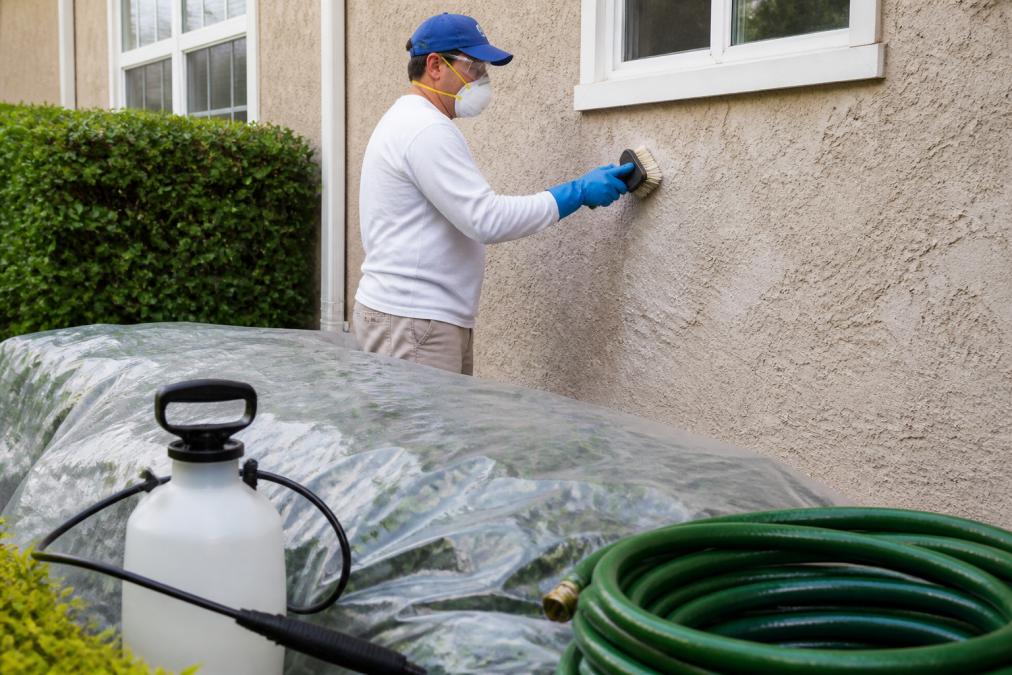
- A pump sprayer or a pressure washer with a low-pressure setting
- A pH-neutral cleaner or a mild masonry cleaner
- A soft-bristle brush with an extension handle
- A garden hose with a fan spray nozzle
- Plastic sheeting to protect landscaping
- Protective gear: gloves, eye protection, and non-slip shoes
According to the National Park Service’s guidance on masonry cleaning, cement-based surfaces like stucco respond best to gentle, low-pressure methods combined with the right cleaning solution, not brute force.
Never use a zero-degree or 25-degree nozzle on stucco. Those concentrated streams force water into hairline cracks, and once water gets behind the finish, you’re looking at water infiltration and subsurface moisture that shows up as bubbling or soft spots weeks later.
Step-by-Step: How to Safely Clean Stucco Siding
The safest method combines low water pressure, a mild chemical solution, and enough dwell time for the cleaner to do the work. Pressure alone should never be your primary tool on stucco. But before any water touches the wall, you need to confirm the wall can take it, most guides skip this, and it’s the step that prevents the most expensive damage.
Step 1: Inspect the Stucco Before You Wet It
Walk the wall and look for the failure signs that mean cleaning should wait:
- Hairline and map cracks. Fine shrinkage cracks are normal in cement stucco. Cracks wider than a credit card, or cracks that step in a stair pattern, suggest movement or water getting behind the finish.
- Hollow or drummy patches. Tap the wall with a screwdriver handle. A dull, hollow sound means the stucco has debonded from the substrate. Pressure washing a drummy patch can blow it off the wall.
- Soft spots, bubbling, or crumbling. These point to moisture already trapped behind the finish. Washing adds more water and makes it worse.
- Efflorescence. The white, powdery mineral bloom is a symptom of water moving through the wall, not a stain sitting on it.
If you find hollow patches, active crumbling, or repeated efflorescence in one area, stop. That’s a repair scope, not a cleaning scope, and washing first can turn a patching job into a re-stucco job. A common pattern is homeowners chasing a stain that keeps returning because the moisture source, a failed sealant joint, a leaking downspout, a crack at a window corner, was never addressed.
Step 2: Prepare the Site and Protect Your Landscaping
Move furniture, grills, and potted plants away from the wall. Cover shrubs and flower beds with plastic sheeting, and pre-wet the ground so any runoff gets diluted. This step matters more than most guides admit: overspray and runoff are the fastest way to kill grass along a foundation.
Step 3: Apply the Cleaning Solution and Let It Dwell
Mix your cleaner per the label, then apply it from the bottom up with a pump sprayer or a pressure washer on its lowest setting. Working bottom-up prevents streaking, because you aren’t letting cleaner run down over dry, already-treated areas. Let it dwell for the time the product specifies, usually a few minutes. Dwell time is what actually breaks down mildew and algae growth, not scrubbing harder.
Step 4: Rinse with Low Pressure and Let It Dry
Rinse top-to-bottom with a fan spray pattern and gentle water pressure. Work in sections so dirty water doesn’t dry on clean stucco. Let the wall dry fully before you judge the result, since stucco holds moisture and can look darker while damp, a wall that looks blotchy at hour two often dries even by the next day.
Never use a zero-degree or 25-degree nozzle on stucco. Those concentrated streams force water into hairline cracks, and once water gets behind the finish, you’re looking at water infiltration and subsurface moisture that shows up as bubbling or soft spots weeks later.
Inspect first, protect second, clean third. If the inspection turns up hollow patches or active moisture, the correct next step is a stucco contractor, not a pressure washer.
Soft Washing Stucco Siding vs. Pressure Washing
Soft washing is the better choice for stucco in nearly every case. Soft washing relies on a low-pressure setting and a cleaning solution to lift dirt, while pressure washing uses force that can chip the finish and drive water into the wall. For textured stucco, a soft-bristle brush and a pH-neutral cleaner will outlast and outperform a high-pressure wand.
That said, pressure washing still has a place on concrete walkways and driveways where the surface can take it. The mistake is treating stucco like concrete.
Not All Stucco Is the Same, Match the Method to the Finish
This is where most guides fall short: “stucco” describes at least two very different wall systems, and the cleaning method that’s safe on one can ruin the other.
- Traditional cement (hard-coat) stucco. A portland-cement-based finish, usually applied in three coats over a wire lath and sheathing. It’s dense, mineral, and relatively tolerant of a mild cleaner and low pressure. It can still be damaged by concentrated force, and it’s vulnerable at cracks.
- Synthetic stucco, commonly called EIFS (Exterior Insulation and Finish System). A thin acrylic or polymer finish coat over a foam insulation board. It looks similar from the curb but behaves very differently: the finish is thin, softer, and far easier to gouge, and the system is designed to shed water at the surface. High pressure can crack the finish coat, and once water gets behind an EIFS wall, it has nowhere good to go.
If you’re not sure which you have, look at how the wall meets the ground and how thick the finish reads at a corner or an outlet cover. A thin, slightly flexible finish over what feels like foam is a strong signal of EIFS. When in doubt, treat the wall as the more delicate of the two and use the gentlest method that works.
Method Comparison
| Method | Water Pressure | Best For | Risk to Stucco |
|---|---|---|---|
| Soft washing | Low | Cement stucco, EIFS, painted siding | Minimal when pressure and chemistry are controlled |
| Pressure washing | High | Concrete, driveways, brick | Surface damage, water infiltration, finish gouging |
| Hand scrubbing | None | Small stained patches, delicate EIFS finishes | None if brush is soft |
On EIFS, skip the pressure washer entirely and use a garden hose, a soft brush, and a cleaner approved for the finish. The finish coat is thin enough that a wrong nozzle choice shows up as a permanent scar.
Never mix cleaning chemicals, particularly anything containing bleach with anything containing ammonia. The reaction produces a toxic gas. Use one product at a time and rinse between applications.
Best Pressure Washer Settings for Stucco
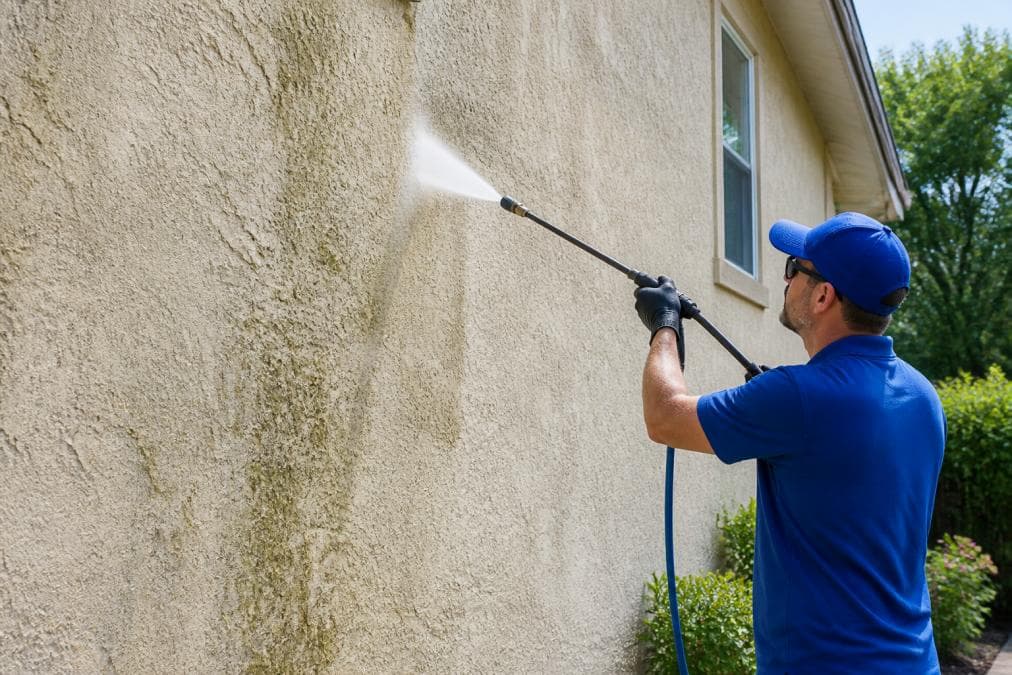
If you use a pressure washer at all, keep it at the lowest pressure setting your unit offers and use a wide fan spray pattern, ideally a 40-degree nozzle or wider. Hold the wand at least two feet from the wall and keep it moving. Never let the stream dwell in one spot, because standing pressure erodes the cementitious finish fast.
For most residential pressure washers, that means staying under roughly 1,000 to 1,500 PSI on stucco, and lower if your unit allows it (nps.gov). If your machine only has high settings, skip it and use a garden hose instead. The Occupational Safety and Health Administration’s guidance on pressure washing safety is a useful reminder that water pressure is a hazard, not just a cleaning tool.
How to Remove Mold from Stucco (and Keep It Gone)
Mold and mildew removal on stucco comes down to killing the growth, not just bleaching the stain. A cleaner that only lightens the color leaves the spores behind, and they return within weeks, especially in shaded areas that stay damp.
A common approach is a diluted oxygen bleach or a purpose-made masonry cleaner, applied and allowed to dwell before a gentle rinse.
Common Mistakes to Avoid When Cleaning Stucco
Test any cleaner on a small, hidden patch first. Stucco finishes vary, and what’s safe on a painted synthetic stucco may dull an unpainted cementitious finish.
Conclusion
Frequently Asked Questions
Is it safe to use a pressure washer on stucco?
Pressure washing stucco is risky. High pressure can crack the surface, force water behind the wall, and strip paint. If you use a pressure washer, keep it on the lowest setting, use a wide fan spray pattern, and never aim it directly at cracks or the base of the wall. Soft washing with low pressure and a cleaning solution is the safer method for stucco siding.
What is the best cleaner to use on stucco siding?
A pH-neutral cleaner or a masonry cleaner designed for stucco works best. For mildew and algae, a diluted bleach solution or oxygen bleach is effective. Vinegar and baking soda can handle light stains but may not kill mold spores. Always test any chemical solution on a small hidden area first, and avoid acidic cleaners that can etch the surface.
How do I remove mold and mildew from stucco?
To remove mold from stucco, apply a diluted bleach solution (1 part bleach to 3 parts water) or a commercial mildew removal product. Let it dwell for 10-15 minutes, then scrub with a soft-bristle brush and rinse with low pressure. Wear protective gear and cover plants. For stubborn mold, repeat the process or call a professional.
How often should stucco siding be cleaned?
Most stucco siding should be cleaned every 12 to 18 months. In humid or coastal areas, or if you notice algae growth or staining, clean every 6 to 12 months. Regular cleaning prevents mildew from setting in and helps you spot small cracks before they become costly water infiltration problems.