

Last Updated: October 27, 2026
Quick Summary
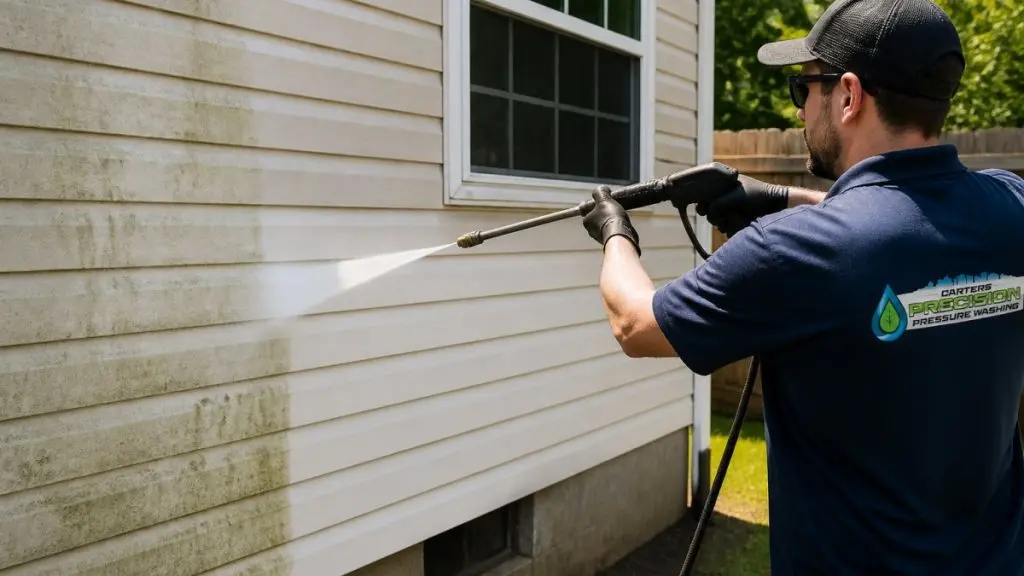
The best pressure washing techniques for siding match pressure, nozzle, and method to the material: vinyl takes 1,200-1,500 PSI with a fan tip, while stucco and painted wood need soft washing under 500 PSI. Use a white tip with a steady, sweeping motion and a cleaning solution instead of red or yellow tips.
- Vinyl siding is safely pressure washed at 1,200-1,500 PSI with a fan tip.
- Stucco and painted wood should be soft washed only, under 500 PSI.
- Fiber cement needs soft washing at low pressure under 800 PSI.
- Aluminum siding can be pressure washed at 1,000-1,200 PSI with a wide fan.
- Red or yellow tips can etch vinyl and gouge wood, so use a white tip instead.
Table of Contents
- Pressure Washing Techniques for Siding: What Actually Works
- Pressure Washer PSI for Siding: The Numbers That Keep You Safe
- The Best Pressure Washer Nozzle for Siding and Why It Matters
- How to Clean Vinyl Siding With a Pressure Washer, Step by Step
- Soft Washing House Siding: The Safer Route for Stucco and Paint
- Common Mistakes That Damage Siding and How to Avoid Them
- Book a Free Estimate Before You Risk Your Siding
- Frequently Asked Questions
Pressure Washing Techniques for Siding: What Actually Works
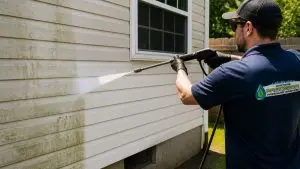
Siding is the most misunderstood surface in pressure washing. Blast it too hard and you strip paint, crack stucco, or force water behind the panels. Too soft and the mildew stays put. The best pressure washing techniques for siding follow one rule above all: match the pressure, nozzle, and method to the material in front of you.
Pressure Washer PSI for Siding: The Numbers That Keep You Safe
| Siding Material | Safe PSI | Method |
|---|---|---|
| Vinyl | 1,200-1,500 | Pressure wash with fan tip |
| Stucco | Under 500 | Soft wash only |
| Painted wood | Under 500 | Soft wash only |
| Fiber cement | Under 800 | Soft wash, low pressure |
| Aluminum | 1,000-1,200 | Pressure wash, wide fan |
The Pressure Washer Manufacturers Association cleaning guidance treats pressure and distance as a single setting. Change one, and you change the other.
The Best Pressure Washer Nozzle for Siding and Why It Matters
A common mistake is using the red or yellow tip because it “cleans faster.” It does. It also etches vinyl and gouges wood. The white tip with a steady, sweeping motion cleans just as well once you add a cleaning solution.
How to Clean Vinyl Siding With a Pressure Washer, Step by Step
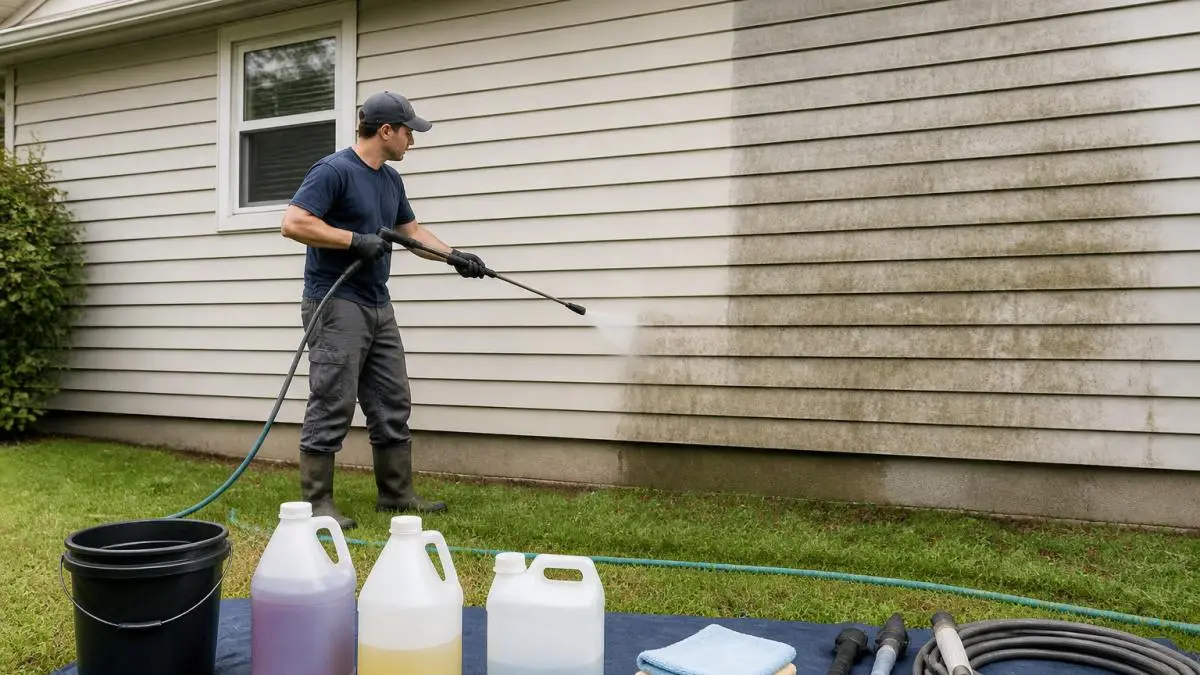
Follow these steps:
For a fuller walkthrough, our guide on how to clean siding without damage covers safe techniques, proper PSI settings, and the right solutions in more depth.
Soft Washing House Siding: The Safer Route for Stucco and Paint
If your home has stucco, our guide to safely cleaning stucco siding walks through the mix ratios and dwell times that protect the finish.
Common Mistakes That Damage Siding and How to Avoid Them
We keep a longer list of pressure washing mistakes in our guide on common pressure washing mistakes to avoid, including the ones that cost homeowners the most in repairs.
Book a Free Estimate Before You Risk Your Siding
Carters Precision Pressure Washing specializes in soft washing for roofs and houses, and pressure washing for driveways, patios, and other hard surfaces. See our house washing service in Los Angeles to book it locally. Our team restores appearance and enhances curb appeal.
Call for a free estimate and let us make your property shine. You can also get a free pressure washing estimate online.
Frequently Asked Questions
What PSI should I use to pressure wash siding?
For vinyl siding, stay between 1,300 and 1,600 PSI at the nozzle, and keep the tip about 12 to 18 inches from the surface. Wood and painted siding need less, often 500 to 1,000 PSI, and stucco should not be pressure washed at all. Higher PSI does not clean faster on siding, it just forces water behind the panels and strips paint. If your machine does not adjust down that far, use a wider nozzle or switch to soft washing.
Can pressure washing damage vinyl siding?
Yes. Water driven above roughly 1,600 PSI at a narrow angle can crack panels, loosen caulk lines, force moisture behind the siding, and strip the finish. The most common damage comes from holding the wand too close or pointing it upward under the panel seams. Keep the spray angled down at about 30 to 45 degrees, work in small sections, and test on a hidden corner first. Older or brittle siding is better handled with soft washing.
Should you pressure wash siding from top to bottom or bottom to top?
Work top to bottom on the wall so dirty water runs over clean surface instead of streaking what you already finished. Within each section, start at the top and move down in overlapping passes. The one exception is rinsing: start at the top and rinse downward in the same order. If you see streaks forming, you are either moving too fast or letting detergent dry on the siding, so rinse sooner.
Is soft washing safer than pressure washing siding?
For most house siding, yes. Soft washing uses low pressure, usually under 500 PSI, plus a cleaning solution that kills mold, mildew, and algae at the root. It is the standard approach for stucco, painted wood, and older vinyl because it cannot gouge or crack the surface. Pressure washing still has a place on concrete, brick, and hard flat surfaces. On siding, low pressure with the right detergent usually gets better long-term results than high pressure alone.
Your siding has one job: protect the house. Letting the wrong pressure or tip near it puts that at risk. Carters Precision Pressure Washing brings soft washing for roofs and houses, pressure washing for hard surfaces, and a focus on curb appeal that helps homes and businesses look their best. Get started with Carters Precision Pressure Washing and restore your property’s appearance with a free estimate.