Table of Contents
- Using Incorrect Pressure Settings for Your Surface
- Pressure-Washer Nozzle Guide: Choosing the Right Angle
- Pressure Washing House Siding Safely: Avoiding Common Damage
- Soft Washing vs. Pressure Washing: Knowing When Each Applies
- Pressure-Washing Safety Tips You Cannot Ignore
- Skipping Preparation and Causing Property Damage
- When to Call a Professional Instead of DIY
- Frequently Asked Questions
Last Updated: October 21, 2026
Using Incorrect Pressure Settings for Your Surface
The biggest mistake homeowners make when pressure washing is cranking the pressure up to maximum and hoping for the best. That approach destroys more driveways and siding than it cleans.
Different surfaces need different pressure levels. Concrete can handle 3,000-4,000 PSI. Wood siding needs 1,200-1,500 PSI. Vinyl requires even less. Blast wood with concrete-level pressure and you’ll strip the finish, leaving gray, splintered damage that takes years to recover.
The rule is simple: start low and work up. If the dirt isn’t coming off at 1,500 PSI, bump it to 2,000. Most jobs get done at pressures far below maximum. Going higher doesn’t mean faster results, it means expensive repairs.
The cost of fixing pressure-washing damage often exceeds what a professional cleaning would have cost in the first place.
Pressure washing at the wrong setting can crack stucco, dent aluminum, and strip paint permanently. Once the damage is done, it cannot be undone, only repaired or replaced.
Pressure-Washer Nozzle Guide: Choosing the Right Angle
Your nozzle angle matters more than most people realize. The nozzle controls both pressure and spray pattern. Choose wrong and you concentrate force into a dangerous point instead of spreading it safely across the surface.
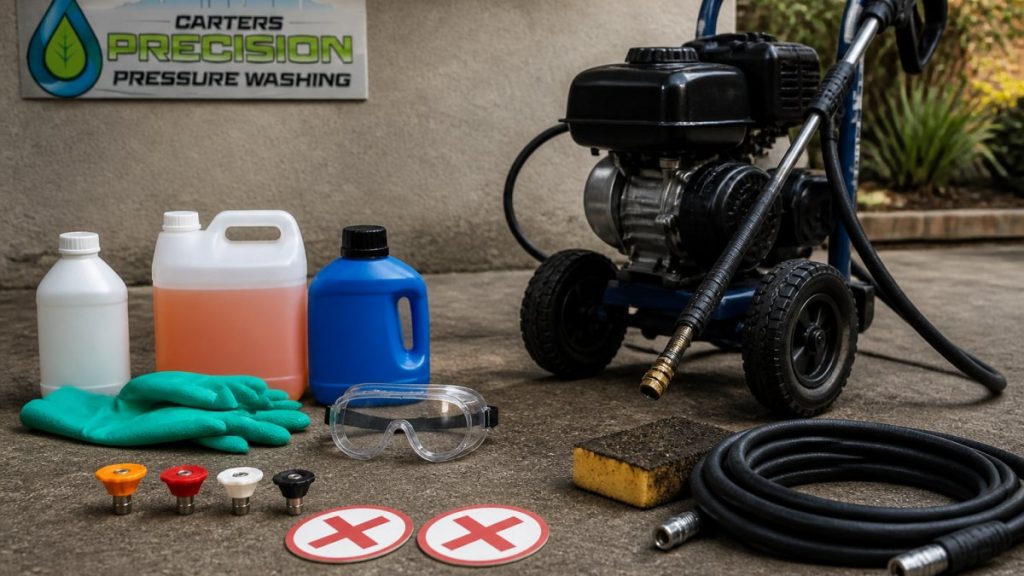
Most pressure washers come with multiple nozzles:
- 0-degree nozzle (red): Concentrated stream. Use only for stubborn concrete stains. Never use on wood, vinyl, or painted surfaces.
- 15-degree nozzle (yellow): Medium pressure. Good for concrete and stone. Still too harsh for most house siding.
- 25-degree nozzle (green): Wider spray. Safer for wood and composite materials. This is the workhorse nozzle for most residential jobs.
- 40-degree nozzle (white): Gentle spray. Use for delicate surfaces, plants, and soft-wash applications.
The angle spreads the force over a larger area. A 0-degree nozzle at 3,000 PSI hits like a spike. The same 3,000 PSI through a 40-degree nozzle feels like a firm rinse. That’s the difference between cleaning and destruction.
A common mistake is keeping one nozzle on the wand and using it for everything. That forces you to either compromise on cleaning power or risk damaging surfaces. Switching nozzles takes 10 seconds. Not switching costs thousands in repairs.
Keep all nozzles attached to your equipment bag. Changing nozzles between surfaces takes less time than explaining to a homeowner why their siding is damaged.
Pressure Washing House Siding Safely: Avoiding Common Damage
House siding is fragile compared to concrete. Most homeowners don’t realize this until water starts leaking behind the siding or paint begins peeling in patches.
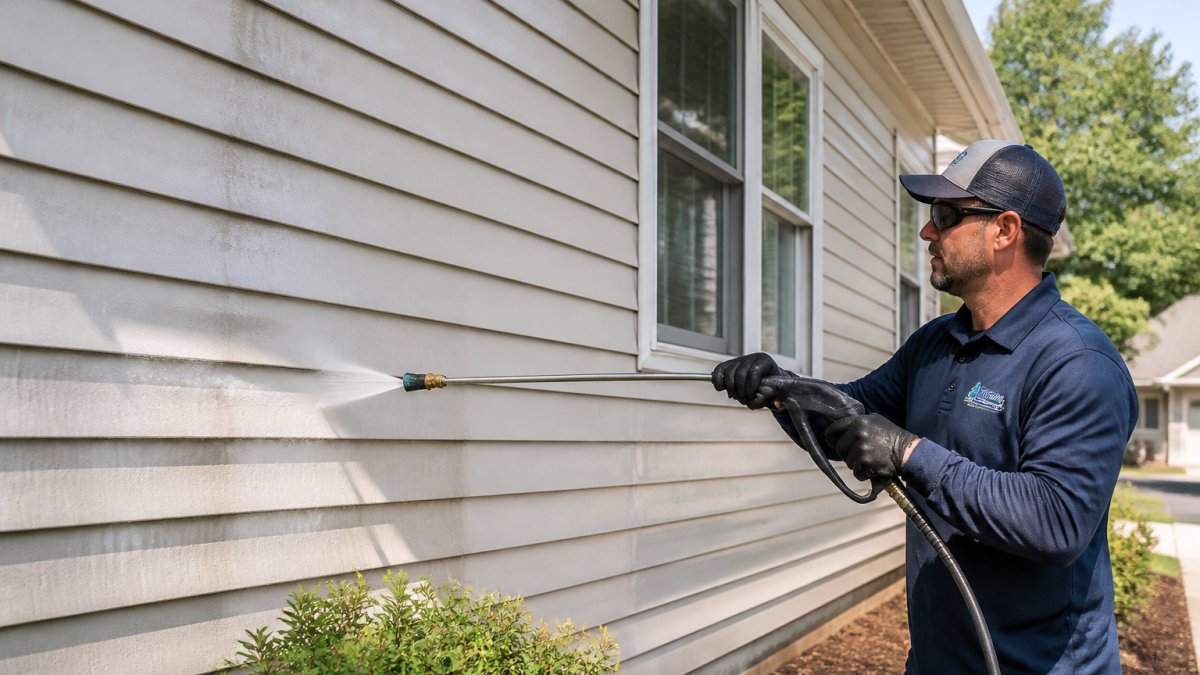
Pressure washing house siding safely means respecting the material. Vinyl siding can warp if you use pressure above 1,500 PSI or aim the nozzle at seams where water can get behind panels. Wood siding splinters and grays if you exceed 1,200 PSI. Stucco cracks under pressure above 1,500 PSI.
The safest approach for house siding is soft washing, not pressure washing. Soft washing uses low pressure (under 500 PSI) combined with cleaning solutions to break down mold, mildew, and grime. The solution does the work. Water just rinses it away. No risk of damage. Better results that last longer.
If you must pressure wash siding, follow these rules:
- Keep the nozzle at least 12 inches away from the surface
- Use a 25-degree or 40-degree nozzle only
- Stay below 1,500 PSI
- Never aim at seams, corners, or edges where water can get behind panels
- Test on an inconspicuous area first
Professionals often recommend soft washing for house siding because the climate here creates persistent mold and mildew. Pressure washing kills the mold temporarily. Soft washing kills it and prevents regrowth for months.
Soft Washing vs. Pressure Washing: Knowing When Each Applies
Understanding when to use soft washing versus pressure washing separates professionals from amateurs who cause damage.
Soft washing uses low pressure (under 500 PSI) and cleaning solutions. It works on delicate surfaces like roof shingles, wood siding, painted surfaces, and stucco. The cleaning solution kills organic growth like mold, mildew, and algae at the source. Results last longer because the organism is dead, not just knocked off. No risk of stripping paint or damaging materials.
Pressure washing uses high pressure (2,000-4,000 PSI) with minimal or no chemicals. It works on hard surfaces like concrete, stone, brick, and sealed asphalt. It removes dirt, grime, and stains through force alone. Results are immediate and dramatic. But the risk of damage is high if pressure is mismatched to the surface.
The mistake most people make is using pressure washing on everything because it looks more impressive. A pressure-washed driveway looks stunning. A pressure-washed roof looks destroyed. The same tool works perfectly for one and ruins the other.
Commercial property managers often face this choice for entryways and storefronts. Concrete and sealed pavers can handle pressure washing. But if the building has painted surfaces, wood trim, or plants nearby, soft washing is safer and often produces better results because it cleans without risking collateral damage.
Soft washing is for surfaces that can be damaged by pressure. Pressure washing is for surfaces tough enough to handle force. Choosing wrong is the difference between a clean property and a repair bill.
Pressure-Washing Safety Tips You Cannot Ignore
Safety mistakes with pressure washers cause injuries that could have been prevented. The equipment is powerful enough to cut skin and damage eyes. Respect it.
Wear protective gear every time:
- Safety glasses or face shield to protect eyes from debris and spray kickback
- Closed-toe shoes with thick soles (pressure washers can penetrate thin shoe material)
- Gloves to protect hands from high-pressure spray
- Long pants to protect legs from splash and debris
- Hearing protection if the unit is loud
Never point the wand at people, pets, or yourself. A pressure washer stream can cause serious injury (the CDC). Never aim at windows, light fixtures, or electrical outlets. Never pressure wash while standing on a ladder, the recoil can throw you off balance.
Keep bystanders away from the work area. Debris and spray can travel farther than you expect. If you’re cleaning in a residential area in Los Angeles, tell neighbors you’re working so they don’t walk into the spray zone.
Never use pressure washers on electrical equipment or near power lines. Never leave the equipment running unattended. Never modify the equipment or use it with incorrect fuel or oil.
Most pressure-washing injuries happen to people who’ve used the equipment a dozen times and stopped being careful. Complacency is the real danger. Every use carries the same risk.
Skipping Preparation and Causing Property Damage
Preparation determines whether pressure washing cleans or damages. Most DIY attempts fail because people skip this step.
Before you pressure wash anything, inspect the area:
- Check for cracks in concrete or stucco where water can get inside
- Look for gaps in siding or trim where water can penetrate
- Identify electrical outlets, light fixtures, or equipment that shouldn’t get wet
- Move or cover plants, outdoor furniture, and decorations
- Close windows and doors
- Cover air conditioning units and heat pumps
Water getting behind siding or into foundation cracks causes mold, rot, and structural damage. Electrical damage from water spray can be expensive and dangerous. Damaged plants and equipment add up fast.
The preparation phase takes 20 minutes. Skipping it to save time costs thousands in repairs. It’s not worth it.
Also prepare the surface itself. Sweep loose debris away. Remove items from the area. If you’re pressure washing a driveway in Los Angeles during dry season, wet the surrounding lawn first so water doesn’t leave mineral deposits on plants.
Water damage inside walls or under siding often goes unnoticed for months before mold and rot become visible. By then, the damage is expensive to repair. Prevention through proper preparation is far cheaper than remediation.
When to Call a Professional Instead of DIY
Some pressure-washing jobs are worth doing yourself. Others should go to professionals. Knowing the difference saves money and prevents disaster.
Call a professional if:
- The surface is delicate (roof, painted siding, stucco, wood)
- The job requires soft washing instead of pressure washing
- You’re uncomfortable with heights or working on ladders
- The area includes electrical equipment or fixtures
- The job is large (full house exterior, large commercial property)
- You’re unsure about the correct pressure or nozzle
- The surface has existing damage you’re worried about worsening
DIY pressure washing makes sense for:
- Concrete driveways in good condition
- Sealed stone patios
- Brick surfaces without mortar issues
- Hard surfaces with no nearby delicate materials
Professionals have equipment, experience, and insurance. They know the common mistakes to avoid when pressure washing because they’ve seen the damage caused by making them. They can handle delicate surfaces safely. They work faster and produce better results.
For residential property owners preparing to list a home or commercial property managers maintaining storefronts, professional cleaning is an investment that pays back immediately through improved curb appeal.
Carters Precision Pressure Washing specializes in both pressure washing for hard surfaces and soft washing for delicate materials. We handle the mistakes so you don’t have to. Call for a free estimate and let professionals handle the work.
Pressure washing can restore your property’s appearance or destroy it. The difference comes down to knowing the common mistakes to avoid when pressure washing and taking time to do the job correctly. Start with the right pressure for your surface, use the correct nozzle, prepare the area, and know when to call a professional instead of risking damage yourself. For properties in Los Angeles that need expert restoration, Carters Precision Pressure Washing delivers professional results with soft washing for roofs and delicate siding, plus pressure washing for driveways and patios. Contact us today for a free estimate and see how we can make your property shine.
Frequently Asked Questions
What is the most common pressure washing mistake?
The most common mistake is using too much pressure on delicate surfaces like wood siding, stucco, or roofing. Many homeowners assume higher pressure equals better cleaning, but excessive force strips paint, cracks siding, and causes costly damage. Starting with lower pressure settings and testing on an inconspicuous area first prevents most damage. If you’re uncertain about the right pressure for your surface, professional assessment saves money in the long run.
Can pressure washing damage siding or concrete?
Yes, pressure washing can damage both if done incorrectly. Concrete can develop erosion patterns and pitting at pressures above 3000 PSI, while wood and vinyl siding suffer paint stripping, splintering, and water infiltration at high pressures. Stucco and brick are equally vulnerable. Using the correct nozzle angle, maintaining proper distance (typically 12 inches or more), and applying appropriate pressure for each material prevents damage. When in doubt, soft washing is a safer alternative.
What pressure-washer nozzle should you use on different surfaces?
Different nozzles deliver different spray widths and pressure concentrations. A 0-degree nozzle (red) concentrates pressure into a fine point, use only on concrete and metal. A 15-degree yellow nozzle works for driveways and patios. A 25-degree white nozzle suits wood decks and siding. A 40-degree black nozzle is gentlest for delicate surfaces. A soap nozzle (black with larger opening) applies detergent. Always start with a wider angle and work down to narrower angles only if cleaning isn’t effective.
Is it safe to pressure wash a roof?
Direct pressure washing can damage roof shingles, strip protective granules, and force water under shingles, causing leaks and rot. Roofs are better cleaned with soft washing, which uses low pressure and biodegradable detergent to kill mold and mildew without structural damage. If your roof needs cleaning, hire a professional who understands the risks and can assess whether soft washing or gentle pressure washing is appropriate for your specific roofing material.