
Last Updated: October 22, 2026
Quick Summary
Yes, for most Los Angeles homeowners, professional roof cleaning is worth it because it protects roof lifespan, not just appearance. A soft wash removes the organic growth and trapped moisture that shorten roof life, and the result holds for multiple seasons instead of returning within weeks like DIY.
- Los Angeles roofs stay dirty year-round because dry deposition bakes on and the marine layer feeds mold.
- High pressure strips shingle granules and drives water past tile glaze, causing permanent damage.
- We quote each roof cleaning job on site because size, pitch, material, access, and severity all move the price.
- Photograph the roof before and after cleaning and keep the invoice for insurance records.
- Ask providers about method, plant and drain protection, insurance, and before-and-afters before booking.
Table of Contents
- Why Los Angeles Roofs Get Dirty So Fast
- Professional Roof Cleaning vs. DIY: What the Comparison Really Shows
- What Roof Cleaning Cost Los Angeles Homeowners Should Expect
- Soft Wash Roof Cleaning in Los Angeles: How It Protects Tile and Shingle
- Roof Cleaning for Insurance in Los Angeles: What Carriers Actually Look At
- Is Professional Roof Cleaning Worth It in Los Angeles? A Cost-Benefit Verdict
- How to Vet a Roof Cleaning Company Before You Book
- Frequently Asked Questions
Why Los Angeles Roofs Get Dirty So Fast
Roof cleaning in Los Angeles is not the seasonal chore it is in wetter climates. It is a year-round fight against dry deposition, and the city’s own weather makes it worse. Months without rain let dust, brake dust, pollen, and airborne grit settle onto tile and shingle, where they bake in the sun instead of washing away.
Then the marine layer rolls in. Coastal moisture condenses on those dirty surfaces overnight, and that thin film of water is all mold and mildew need to take hold. A roof that looks merely dusty in April can carry dark streaking by August.
Fire season adds another layer. Ash and soot settle after nearby blazes, and in the hillside neighborhoods they land on roofs alongside leaf litter from eucalyptus and pine. That combination holds moisture against the roof surface far longer than either would alone.
At Carters Precision Pressure Washing, we see the result every week: north-facing slopes and shaded valleys go green and black while sun-facing planes stay merely brown. The gap tells you the growth is biological, not just dirt. Treat it as dirt and it comes back.
Professional Roof Cleaning vs. DIY: What the Comparison Really Shows
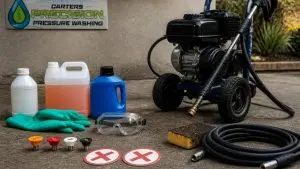
The honest comparison comes down to method, risk, and how long the result lasts. Professional roof cleaning pairs the right cleaning agent with controlled low pressure and a plan for runoff. DIY usually means a rented machine, a garden hose, and guesswork.
| Factor | Professional Roof Cleaning | DIY Roof Cleaning |
|---|---|---|
| Method | Soft wash at low pressure, chemistry does the work | Often high pressure or a harsh bleach mix |
| Surface risk | Low when matched to the roof type | High on tile glaze, shingle granules, and paint |
| Runoff control | Plants and drains protected before the wash | Rarely planned for |
| Time | Half a day, done once | A full weekend, often repeated |
| Typical result | Clean for multiple seasons | Streaks return within weeks |
The pattern is consistent: DIY costs less on the day and more over a year, because the growth returns and the surface damage is permanent. That is the trade most homeowners miss.
What DIY Roof Cleaning Gets Wrong
The biggest mistake is pressure. A pressure washer aimed at asphalt shingles strips the mineral granules that protect the mat underneath, and those granules never grow back. On clay and concrete tile, high pressure drives water past the glaze and into the underlayment.
The second mistake is chemistry. Pool chlorine splashed on a roof kills mildew but also oxidizes paint, etches metal flashing, and sterilizes the soil below. A common approach is to soak the plants first and rinse constantly, but most weekend jobs skip that step entirely.
The third mistake is timing. Cleaning at midday on a hot day dries the cleaning solution before it can work, so people add more pressure to compensate. That is how a simple wash turns into a repair bill.
Never walk a steep or fragile tile roof in sneakers. Tiles crack underfoot and the fall risk is real. If you cannot reach a section safely from a ladder, that section is a job for a professional.
What Roof Cleaning Cost Los Angeles Homeowners Should Expect
Roof cleaning cost in Los Angeles depends on roof size, pitch, material, and how much biological growth has taken hold. A single-story ranch with a low-slope shingle roof sits at the low end. A two-story tile roof with steep pitches, valleys, and heavy shade sits at the high end.
The factors that move the number most:
- Square footage and pitch. Steeper roofs need more safety setup and slower work.
- Roof material. Tile and shingle need different cleaning agents and pressures.
- Access. Gated yards, tight driveways, and neighboring structures slow the job.
- Severity. Light dust is a quick wash. Years of black streaking take dwell time and sometimes a second pass.
- Runoff protection. Landscaping, gutters, and drains all need covering before a drop of solution lands.
We quote each job on site rather than over the phone, because a roof that looks simple from the street rarely is. For current pricing, call Carters Precision Pressure Washing for a free estimate and we will walk the roof with you.
Soft Wash Roof Cleaning in Los Angeles: How It Protects Tile and Shingle
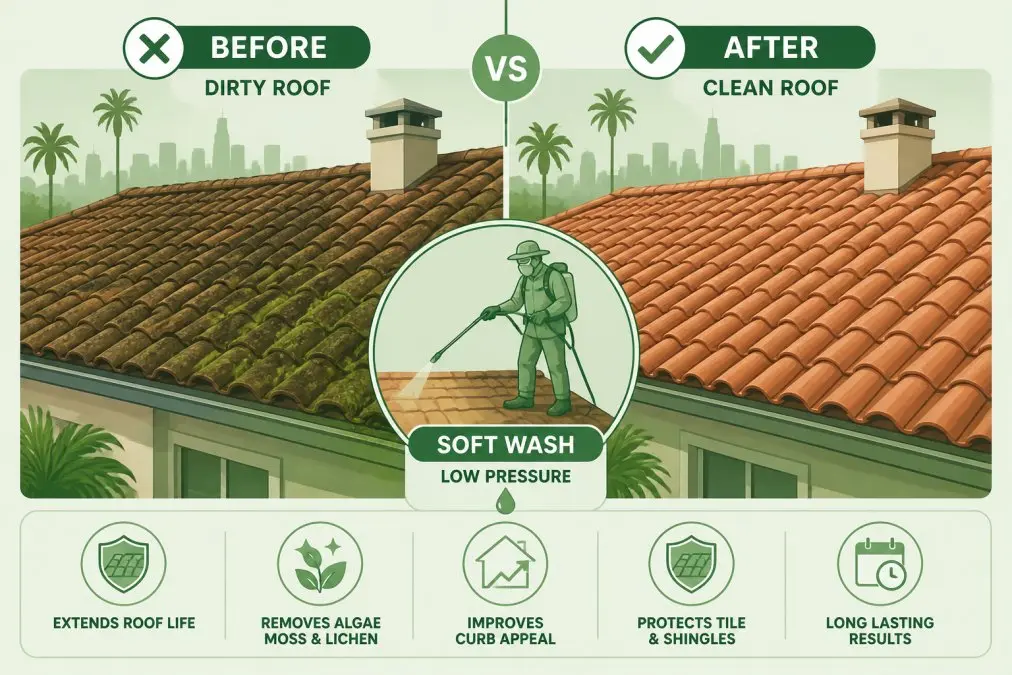
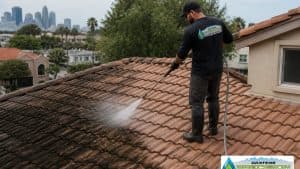
Soft wash roof cleaning is a low-pressure method that relies on a cleaning solution to kill and lift organic growth, then a gentle rinse to carry it away.
The process matters as much as the chemistry. We start by protecting landscaping, covering plants and wetting down beds. Next comes the application, worked from the ridge down so the solution dwells evenly. Then a rinse that moves top to bottom and pushes debris toward the gutters, not into them.
On Los Angeles tile roofs, the payoff is obvious. Clay and concrete tile hold their color for decades if the surface stays intact, and soft washing preserves that. On asphalt shingles, keeping the granules in place is the whole game. Once they are gone, the roof ages fast.
Ask any provider what pressure they plan to use on your roof and how they will protect your plants. A crew that answers vaguely is a crew that will blast the surface and leave your landscaping to chance.
Roof Cleaning for Insurance in Los Angeles: What Carriers Actually Look At
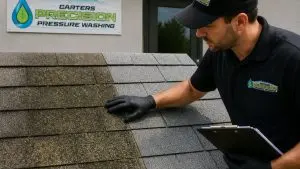
Roof cleaning for insurance in Los Angeles is not about making a roof pretty. Carriers look for evidence of neglect, because neglect is what turns a small claim into a total loss. When an adjuster inspects, dark organic streaking, moss in the valleys, and debris packed behind chimney flashing all read as deferred maintenance.
That matters most when you are renewing a policy or filing a claim after a wind or fire event. A roof that has been maintained is easier to argue for. A roof covered in growth invites questions about how long the problem has been ignored.
The practical takeaway is simple: keep records. Photograph the roof before and after cleaning, keep the invoice, and note the date. If your carrier ever asks, you have a paper trail showing the roof was cared for.
Many homeowners find that a cleaning before renewal removes the one visible reason an underwriter might flag the property. That alone can justify the cost.
Is Professional Roof Cleaning Worth It in Los Angeles? A Cost-Benefit Verdict
Yes, for most Los Angeles homeowners, professional roof cleaning is worth it, and the reason is not appearance. It is lifespan. A roof is one of the most expensive components on the property, and the things that shorten its life, organic growth, trapped moisture, and abrasive dirt, are exactly what cleaning removes.
Run the comparison honestly. A DIY wash costs a weekend and a rental, and it often returns within weeks because the growth was never killed at the root. A professional soft wash costs more up front, protects the surface, and holds the result for multiple seasons. Over a few years the math favors the professional job.
Curb appeal is the second payoff, and in a market where buyers judge a house from the curb, a clean roof changes the first impression. If you are listing in the next few months, a roof cleaning is one of the cheapest visual upgrades you can make.
The value of professional roof cleaning is measured in years of roof life and a stronger position at insurance renewal, not in how the roof looks the day after.
How to Vet a Roof Cleaning Company Before You Book
Vetting comes down to four questions, and any reputable provider will answer all of them without flinching. Ask about method, protection, insurance, and references, in that order.
- What method do you use? The answer should be soft washing at low pressure, matched to the roof material.
- How do you protect plants and drains? Look for a specific pre-wash plan, not a promise to be careful.
- Are you insured? Ask for a certificate. Roof work carries real liability.
- Can I see before-and-afters of roofs like mine? Tile, shingle, and commercial flat roofs are different jobs.
- Will you walk the roof or spray from the ground? Ground-only washing misses the growth that matters.
- What is your runoff plan? Cleaning solution should never run straight into a storm drain.
A common mistake is booking on price alone. The lowest quote usually reflects the cheapest method, and on a roof that means pressure and harsh chemicals. The damage shows up months later, after the check has cleared.
If you are searching for roof cleaning near me, ask for a provider who will inspect the roof in person and explain the plan before quoting. That conversation tells you more than any advertisement.
Los Angeles roofs take a beating from sun, dust, and coastal moisture, and the growth that follows does not fix itself. If your roof is streaking, green in the shade, or due for an insurance renewal, the smart move is to get ahead of it. Carters Precision Pressure Washing specializes in soft washing for roofs and houses, plus pressure washing for driveways, patios, and hard surfaces, all aimed at restoring your property’s appearance and curb appeal. Call for a free estimate and let us show you what a properly cleaned roof does for your home.
Frequently Asked Questions
How often should a roof be cleaned in Los Angeles?
Most Los Angeles roofs need cleaning every 18 to 24 months. The schedule shifts with your surroundings: homes near the coast deal with heavier salt and marine moisture, properties under mature trees collect leaf litter and bird droppings faster, and north-facing slopes stay damp longer and grow mildew sooner. After a dry, dusty stretch or a wildfire season, a roof can look noticeably worse within a single year. A quick inspection each spring tells you whether the buildup is cosmetic or already holding moisture.
Can roof cleaning damage shingles or roof tiles?
High-pressure washing can, which is why it should never be used on roofing. Pressure strips granules from asphalt shingles, cracks aged clay and concrete tile, and forces water under flashing. Soft wash roof cleaning in Los Angeles relies on low pressure and a cleaning solution to kill organic growth instead of blasting it off. Applied correctly, it leaves the roof surface intact. Ask any provider to confirm they soft wash rather than pressure wash, and get that in writing before work starts.
Does roof cleaning help with homeowners insurance in Los Angeles?
It can. Carriers increasingly send inspectors to look at roof condition, and heavy moss, lichen, or dark streaking reads as deferred maintenance, which can affect renewal or a claim review. A documented cleaning shows the roof is being maintained. It does not guarantee a policy outcome, and it will not fix a roof that is already failing, but it removes one common reason an adjuster flags a property. Keep the invoice and before-and-after photos for your records.
Can I clean my roof myself, or should I hire a professional?
You can rinse light dust and debris yourself with a garden hose. Removing black streaking, moss, or lichen is a different job: it requires the right solution strength, plant protection, and safe footing on a pitched surface. DIY attempts often go wrong in two ways, using too much pressure and damaging the roof, or using too little and watching the growth return within weeks. Professional roof cleaning vs. DIY comes down to whether the growth is surface dust or living organisms rooted in the roof material.