
Table of Contents
- What Is Soft Wash Roof Cleaning?
- How Soft Wash Roof Cleaning Works
- Soft Wash vs Pressure Wash Roof Cleaning
- What Soft Washing Removes: Algae, Moss, Lichen, and Stains
- Do You Rinse a Roof After Soft Washing?
- How Long Does Roof Soft Washing Last?
- Roof Soft Wash Cost and What Affects Pricing
- Safety, Materials, and Protecting Your Landscaping
- Frequently Asked Questions
Last Updated: October 6, 2026
What Is Soft Wash Roof Cleaning?
Soft wash roof cleaning is a low-pressure chemical treatment that safely removes algae, moss, lichen, and organic stains from roof surfaces without the damage of traditional pressure washing. Instead of high-pressure jets that crack shingles, strip granules, or force water under flashing, soft washing applies specialized cleaning solutions at low pressure, letting the chemicals do the work while water rinses away the dead growth.
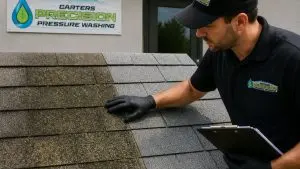
This approach is now the standard for residential roof maintenance because it addresses the root cause of staining rather than just the visible symptoms. Those black streaks on asphalt shingles are Gloeocapsa magma, an algae that feeds on the limestone filler in shingle granules. Pressure washing removes the discoloration temporarily but doesn’t kill the organism; soft washing kills the algae at the source, so results last significantly longer.
Homeowners often confuse soft washing with pressure washing because both involve water and cleaning solutions. The critical difference is pressure: soft wash systems operate at 100-300 PSI, versus 3,000-4,000 PSI for standard pressure washers. That lower pressure, plus the right chemical formulation, keeps your roof intact while eliminating the organic growth eating away at it.
How Soft Wash Roof Cleaning Works
The Chemical Treatment Process
The effectiveness of soft wash roof cleaning depends on understanding what you’re treating. Most roof staining isn’t dirt but living organisms: algae, moss, and lichen that thrive in moisture and shade. A soft wash solution typically contains sodium hypochlorite (a bleach-based disinfectant) plus surfactants that help it adhere to the roof and penetrate organic matter.
Sodium hypochlorite breaks down algae cell walls and kills moss at the root level, while surfactants lower water’s surface tension so the solution spreads evenly across shingles and into hiding spots. That combination is what separates soft washing from simply spraying diluted bleach: the formulation matters. A professional-grade solution is pH-balanced to work efficiently without harming shingles or the surrounding environment.
Applied correctly, the treatment needs no scrubbing or agitation, it works through contact and dwell time. The solution sits on the roof for a set period, penetrating and killing organic growth from the inside out, which is why dwell time is critical to success.
Low-Pressure Application and Dwell Time
Low-pressure application defines soft wash roof cleaning. Rather than a pressure washer’s aggressive spray, a soft wash system uses a low-volume, low-pressure pump to apply solution evenly across the roof, just enough pressure to deliver the chemical without damage.
Dwell time is where the real work happens. Typical dwell times range from 15 minutes to several hours, depending on staining severity and the solution used. During this period, the sodium hypochlorite and surfactants penetrate the algae, moss, and lichen, breaking them down at a cellular level, the organisms are dying but still visible. Once dwell time ends, a final low-pressure rinse removes the dead growth and excess solution.
This staged approach, apply, wait, rinse, is why soft washing takes longer than pressure washing but lasts months or years rather than weeks. The organisms are dead, not just displaced, so any new growth starts from scratch rather than from surviving root systems.
Soft Wash vs Pressure Wash Roof Cleaning
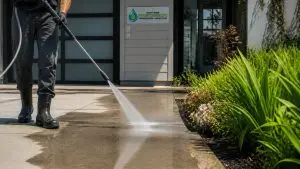
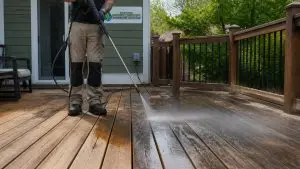
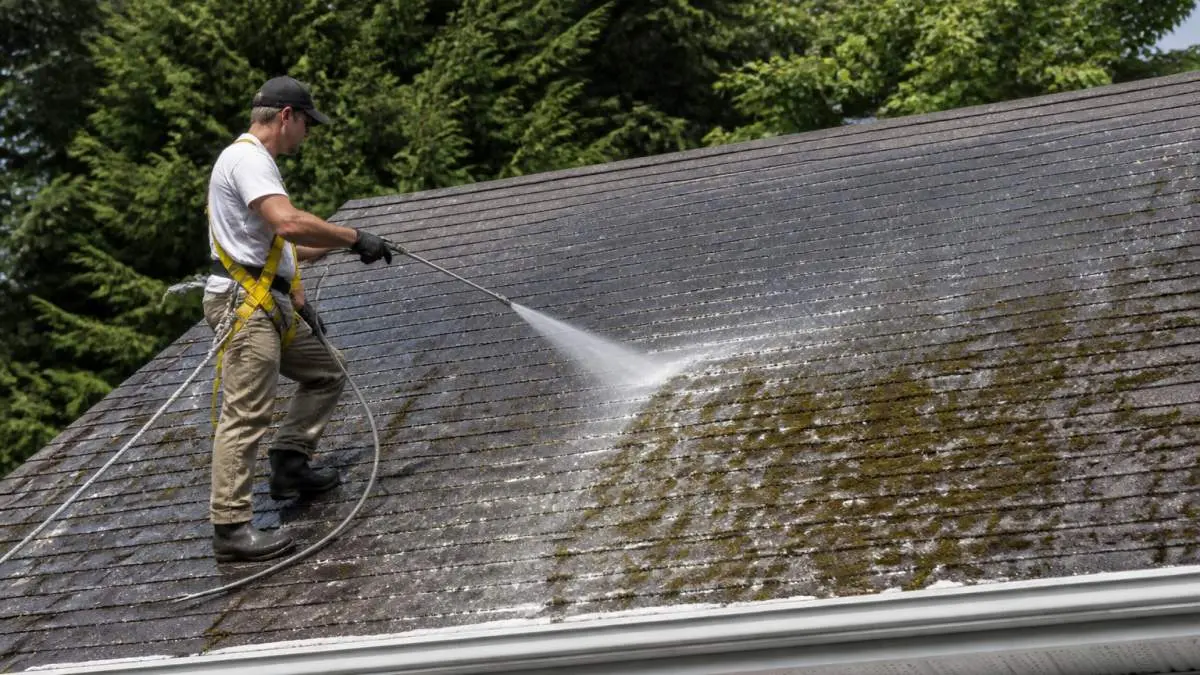
The comparison between soft wash and pressure washing comes down to pressure levels, effectiveness, and long-term outcomes. Pressure washing uses 3,000-4,000 PSI or higher, stripping surface contaminants quickly, fine for concrete and driveways, but problematic on roofs.
High-pressure water dislodges shingle granules essential to durability and UV protection, leaving asphalt vulnerable to sun damage. It can also force water under shingles and flashing, causing leaks and wood rot. And because it removes staining without killing the organisms, algae and moss return within weeks.
Soft washing operates at 100-300 PSI, low enough to avoid damaging shingles or forcing water into vulnerable areas, while the solution chemically breaks down organic growth. Results take longer because of dwell time, but the roof stays clean much longer since the organisms are dead, not just displaced, gentler on the structure and more effective at preventing regrowth.
For asphalt shingles, wood shakes, or other delicate materials, soft washing is the only method that balances cleaning effectiveness with material safety; pressure washing risks damage to both appearance and structural integrity.
What Soft Washing Removes: Algae, Moss, Lichen, and Stains
Soft wash roof cleaning targets specific types of organic growth and staining that accumulate on roofs over time. Understanding what you’re removing helps explain why soft washing works and why results last.
Algae is the most common cause of black streaks on asphalt shingles. Gloeocapsa magma feeds on the limestone filler in shingle granules and thrives in moisture and shade, making north-facing sections and areas under trees most vulnerable. It doesn’t just discolor the roof, it consumes the shingles. Soft washing kills the algae, stopping the damage and restoring appearance.
Moss grows in cool, moist environments and, unlike algae, has root-like structures that penetrate and lift shingles while trapping moisture against the surface. Soft washing solutions kill moss so the dead growth rinses away, preventing further structural damage.
Lichen is a composite of fungus and algae living together, appearing as crusty, often colorful patches. It’s particularly persistent and can spread across large roof areas if untreated; soft washing breaks down its structure and kills both components.
Stains from mildew, mold, and weathering are also addressed by soft washing. These are byproducts of the moisture conditions that let algae, moss, and lichen thrive, so removing the organisms eliminates both the visible staining and the conditions promoting regrowth.
Do You Rinse a Roof After Soft Washing?
Yes, rinsing is an essential final step in soft wash roof cleaning. After dwell time ends, a low-pressure rinse, similar to the initial application, removes dead organic growth and remaining solution without the damage risks of high-pressure water.
The rinse removes visible dead growth, clears excess solution, and prevents residue buildup on the roof or in the gutters, carrying dead organisms and solution into the drainage system where they disperse safely.
Proper rinsing also prevents the solution from drying on the roof and leaving residue or discoloration. A professional soft wash service includes this final rinse, it’s not optional.
How Long Does Roof Soft Washing Last?
Longevity is a primary advantage of soft wash roof cleaning over pressure washing. Because it kills the organisms causing the staining rather than just removing surface discoloration, results typically last 12-24 months or longer, depending on environmental conditions and roof exposure.
Shaded, high-moisture roofs see regrowth sooner because conditions stay favorable for algae, moss, and lichen; roofs with good sun exposure and airflow may stay clean 2-3 years or more. Tree coverage, humidity, and roof orientation all influence how quickly new growth appears.
Unlike pressure washing, soft wash results are durable because they’re based on organism elimination, not surface removal. When algae or moss returns, it’s new growth from airborne spores, not regrowth from surviving roots, which is why many homeowners choose soft washing as a long-term maintenance strategy.
Roof Soft Wash Cost and What Affects Pricing
Soft wash roof cleaning pricing varies by several factors, and understanding them helps you evaluate quotes fairly. Roof size is the primary driver, larger roofs need more solution, time, and labor. Pitch and complexity matter too: steep roofs or those with multiple levels, skylights, or obstacles require more careful, time-consuming application.
Staining severity also affects pricing: light algae discoloration needs less solution and shorter dwell time than thick moss or heavy lichen. Roof material matters too, since some require gentler concentrations or more careful application.
Geographic location and local market conditions also play a role. Pricing in different regions reflects local labor costs, material availability, and competition. Rather than assuming a specific price range applies universally, it’s important to get quotes from local providers who understand your specific roof and conditions.
When comparing quotes, look beyond the price and consider what’s included. Does the quote cover the full treatment including dwell time and final rinse? Are gutters being protected or cleaned? Is there a warranty on the work? A lower price that skips important steps or uses lower-quality solutions may result in poor results or regrowth within weeks. A comprehensive quote that includes proper technique and follow-up protection is typically a better value.
Safety, Materials, and Protecting Your Landscaping
Soft wash roof cleaning involves chemical solutions that require careful handling to protect your property and the environment. The sodium hypochlorite used in professional soft wash solutions is a disinfectant, not a harsh industrial chemical, but it still demands respect and proper application protocols.
Roof and shingle safety is built into the soft wash method itself. The low pressure ensures that shingles, flashing, and underlying structure remain intact. However, the chemical solution itself can affect certain materials if applied improperly.
Landscaping and plant protection is a legitimate concern when bleach-based solutions are used on your roof. Runoff from the roof can affect plants, grass, and shrubs below.
Before any soft wash treatment, communicate with your service provider about plants or landscaping features you want protected. They can cover sensitive plants, redirect gutters temporarily, or use specific solution concentrations that minimize risk.
Safety precautions also extend to roof access and worker protection. Roofs are inherently hazardous environments, and soft wash work requires fall protection, proper equipment, and trained technicians. Professional companies carry liability insurance and follow safety protocols that protect both workers and your property during the cleaning process.
Soft wash roof cleaning is an investment in your roof’s longevity and your home’s curb appeal. The method works because it addresses the biological root of roof staining rather than just treating the symptom.
| Factor | Impact on Results | Impact on Durability |
|---|---|---|
| Solution concentration | Effectiveness at killing organisms | Potential for residue if too strong |
| Dwell time | More time allows deeper penetration | Longer dwell often means longer-lasting results |
| Roof pitch and exposure | Steeper, sunnier roofs dry faster | Better sun exposure slows regrowth |
| Tree coverage and shade | Shaded areas harder to treat | Shade promotes faster regrowth |
| Roof material | Affects safe solution strength | Delicate materials require gentler approach |
Frequently Asked Questions
Is soft washing your roof a good idea?
Yes, soft wash roof cleaning is an effective and safe method for removing algae, moss, lichen, and black streaks from asphalt shingles and other roof surfaces. Unlike pressure washing, it uses low-pressure application combined with biodegradable cleaning solutions to eliminate organic growth without damaging shingle granules or causing leaks. It’s especially recommended if you want long-lasting results and protection for your roof’s lifespan.
How much should a roof soft wash cost?
Roof soft wash pricing depends on several factors including roof size, pitch, the extent of algae and staining, and your location. Rather than estimate costs that may not reflect current pricing, contact Carters Precision Pressure Washing for a free estimate tailored to your specific roof. This ensures you receive accurate pricing based on your property’s unique needs.
Can soft washing damage roof shingles?
No, soft washing is designed to be gentle on roof surfaces. The low-pressure application protects asphalt shingle granules and prevents the damage that high-pressure washing can cause, such as stripping granules or creating entry points for water damage. The cleaning solution does the work, not force, making it safe for older roofs and various roofing materials when applied by professionals.
What cleaning solution is used for soft washing a roof?
Soft wash roof cleaning typically uses biodegradable solutions containing sodium hypochlorite (a mild bleach), surfactants to improve coverage, and water. These solutions are formulated to kill algae, moss, lichen, and bacteria at the source while being safe for landscaping when properly applied. The exact concentration and dwell time depend on the type and severity of organic growth on your roof.
How long do the results of roof soft washing last?
Soft wash roof cleaning results typically last 2-5 years or longer, depending on climate, roof exposure, and maintenance. Because the cleaning solution kills organic growth at the source rather than just removing surface stains, regrowth is slower than with pressure washing alone. Regular roof maintenance and inspections help extend the results and prevent premature algae and moss return.
Will soft washing kill my plants and landscaping?
Professional soft wash roof cleaning uses biodegradable solutions designed to minimize harm to plants and landscaping. Proper application techniques, including protecting vegetation before treatment and rinsing runoff away from garden areas, protect your yard. Always discuss landscaping protection with your cleaning provider to ensure they take precautions for your specific plants and outdoor space.