
Table of Contents
- Understanding Concrete Driveway Restoration
- The Concrete Driveway Restoration Process Step-by-Step
- Concrete Driveway Curing Time: What to Expect
- Pressure Washing Concrete Driveway Before Resurfacing
- Concrete Driveway Resurfacing Time by Method
- Factors That Affect Restoration Timeline
- Creating a Realistic Restoration Project Schedule
- Frequently Asked Questions
Last Updated: October 5, 2026
Understanding Concrete Driveway Restoration
Concrete driveway restoration repairs, resurfaces, and protects damaged concrete to restore appearance and functionality without the expense of full replacement. Driveways develop cracks, stains, and deterioration from weather, heavy use, and age.
Timeline varies by damage severity, repair method, and weather, typically a few days to several weeks. Understanding each stage helps you plan realistically.
This guide breaks down the concrete driveway restoration process step-by-step, explains curing timelines, and answers key questions: How long will this take? When can I drive on it? What affects the timeline?
The Concrete Driveway Restoration Process Step-by-Step
Concrete driveway restoration follows a logical sequence where each step builds on the previous one. Skipping or rushing any phase compromises results and extends the timeline.
Step 1: Surface Inspection and Assessment
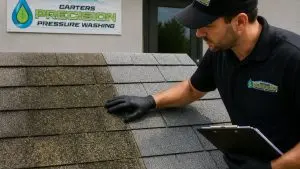
A thorough inspection identifies cracks, spalling, stains, and structural issues, typically taking 30 minutes to an hour. The professional evaluates crack depth and surface condition to guide decisions about patching materials and resurfacing methods.
Step 2: Cleaning and Pressure Washing
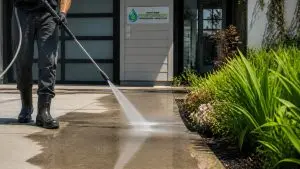
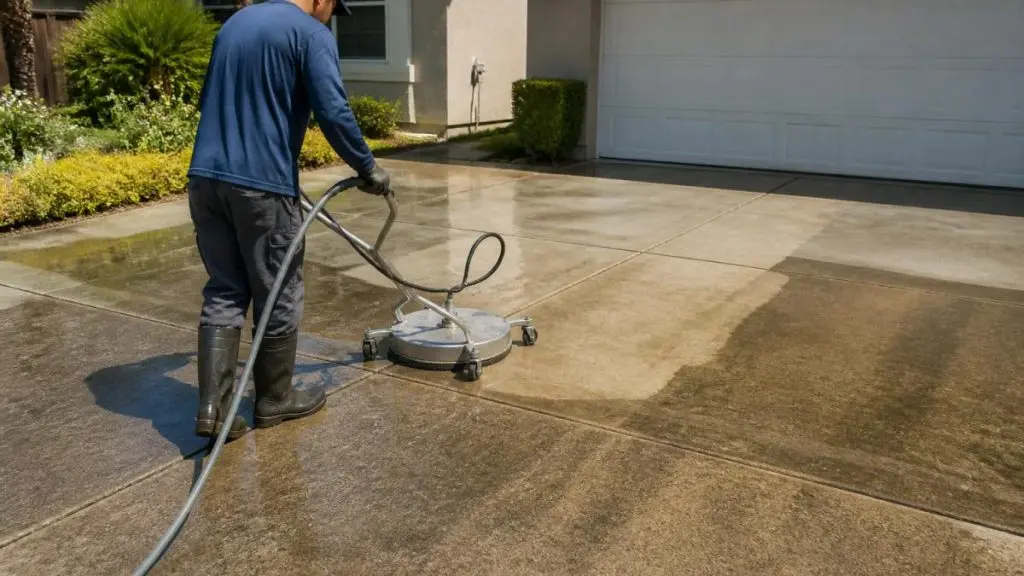
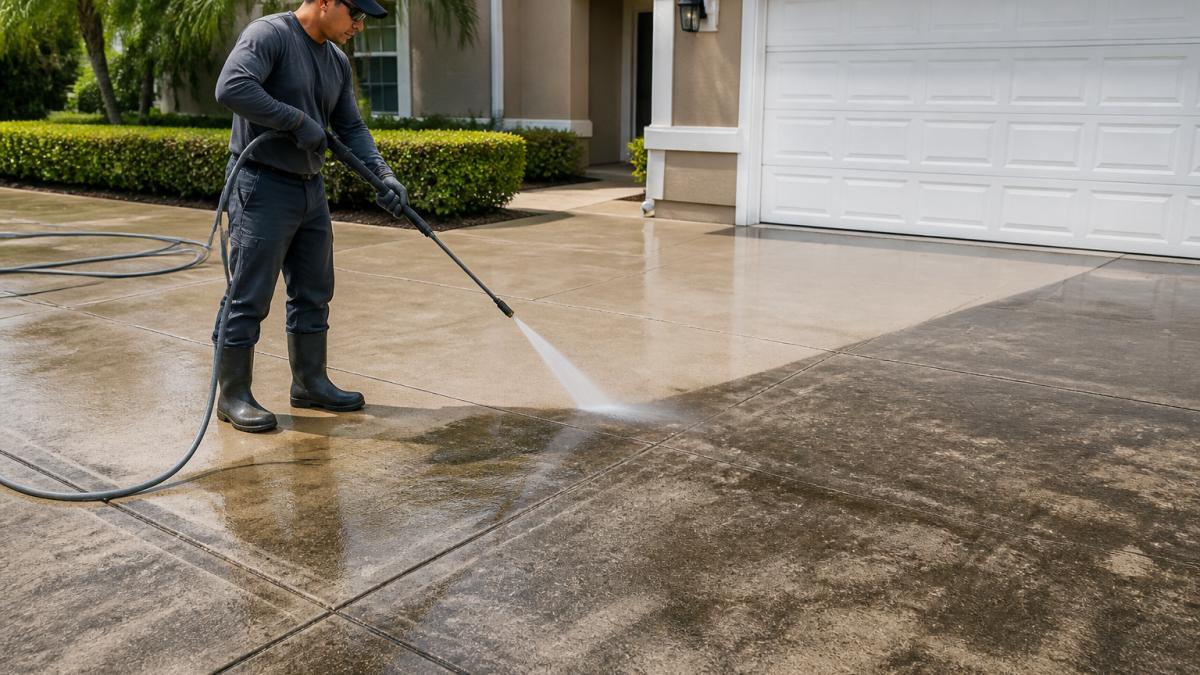
Pressure washing concrete driveway surfaces removes dirt, algae, mold, and stains in 2-4 hours, opening concrete pores for proper bonding. The surface must dry completely, typically 24-48 hours, before the next step.
Step 3: Repair and Patching
Small cracks are sealed with crack filler; larger cracks or spalling areas need patching compound. This stage takes 4-8 hours, with patches reaching initial set within 24 hours.
Step 4: Resurfacing Application
Resurfacing products like concrete overlays apply a new protective layer in 4-6 hours, creating a smooth, uniform surface. The new surface must cure before traffic returns, the longest part of the timeline.
Concrete Driveway Curing Time: What to Expect
Curing (the chemical process where concrete develops strength) differs from drying (moisture evaporation). Understanding this distinction is critical for planning.
Initial Set and Early Strength Development
Initial set occurs within 24-48 hours; early strength development continues for 5-7 days. Light foot traffic is safe after one week, but avoid heavy objects, children playing, or impact activities during this period.
When Foot Traffic Is Safe
Light foot traffic becomes safe after 5-7 days of curing. This means walking across the driveway is fine, but avoid dragging heavy items or standing in one spot for extended periods. The surface has developed enough strength to handle normal walking patterns. However, the concrete is still gaining strength during this window. Jumping, running, or impact activities should still be avoided. Most people can resume normal foot traffic patterns after one week without risk.
When Vehicles Can Return
Light vehicle traffic (cars and small trucks) is safe after 7-10 days. Heavy vehicles like trucks or RVs should wait 14-21 days to avoid cracking or surface damage.
Full Cure and Maximum Strength
Concrete reaches full cure and maximum strength at 28 days, the industry standard. After 28 days, the surface handles any normal residential use without concern.
Pressure Washing Concrete Driveway Before Resurfacing
Pressure washing concrete driveway surfaces is critical for proper bonding. Inadequate cleaning leads to adhesion failure and premature peeling.
Professional pressure washing removes contaminants and opens concrete pores for proper bonding. Allow 24-48 hours drying before resurfacing; moisture trapped underneath causes bubbling and failure.
Concrete Driveway Resurfacing Time by Method
Different resurfacing methods have distinct application, curing, and recoat windows. Manufacturer instructions supersede generic timelines.
Concrete Resurfacer and Overlay Products
Concrete resurfacers (thin bonded overlays, 1/8 to 1/2 inch thick) are the most common method. Application takes 3-6 hours; initial set occurs within 24 hours. Cure time to vehicle traffic varies significantly by product:
- Fast-set resurfacers (acrylic or polymer-modified) may allow light vehicle traffic after 5-7 days and full traffic after 10-14 days.
- Standard Portland-cement resurfacers typically require 7-10 days before light vehicles and 14-21 days before heavy vehicles or parking.
- Self-leveling resurfacers often cure slower due to thicker application and may extend timelines by 3-5 days.
Always check the product data sheet for the specific cure schedule. Manufacturers specify cure times at standard conditions (70°F, 50% humidity); deviations extend these windows. Some resurfacers require a second coat, which adds 24-48 hours between applications plus full cure time after the final coat.
Concrete Crack Fillers and Repair Compounds
Crack repair runs parallel to other work. Cure times vary by filler type:
- Polyurethane crack sealants cure in 24-48 hours and allow light foot traffic immediately after application (once surface is no longer tacky).
- Epoxy crack fillers cure in 24-72 hours and develop full strength by day 7; they tolerate moisture better than polyurethane and are preferred for active cracks.
- Concrete patching compounds (for spalling or deep cracks) cure in 24 hours to initial set but require 3-7 days before the area can bear vehicle weight, depending on patch depth and product type.
Repair compounds must cure before resurfacer application; applying resurfacer over incompletely cured patches risks delamination. Most contractors allow 48 hours minimum between patch application and overlay application.
Concrete Sealers and Protective Coatings
Sealing is applied after the base resurfacer has cured sufficiently. Sealant cure times are critical to plan:
- Acrylic sealers (water-based) cure in 24-48 hours and allow light traffic after 24 hours; full cure is 7 days.
- Polyurethane sealers (solvent-based) cure in 48-72 hours and require 3-7 days before vehicle traffic; they offer superior durability but longer cure windows.
- Penetrating sealers (silane or siloxane) cure in 24-48 hours and allow traffic sooner, but they do not build a surface film and require less downtime.
Most sealers require the substrate to be completely dry (moisture content below 5-8%) before application. If the resurfacer was applied during humid conditions or recent rain, add 24-48 hours drying time before sealing. Some premium sealers specify a minimum cure window for the base layer (e.g., “do not apply until base has cured for at least 7 days”) to ensure adhesion.
Substrate Moisture and Recoat Windows
Substrate moisture blocks sealant adhesion and traps moisture, causing bubbling or peeling. Before applying topcoat or sealant: measure moisture with a meter (target: below 5% for sealers, below 8% for overlays); allow 48-72 hours drying after pressure washing; use tarps if rain is forecast.
Recoat windows also matter: if you apply a second coat of sealant or resurfacer, most products specify a minimum recoat time (e.g., “recoat after 24 hours but before 7 days”). Missing the recoat window may require sanding or surface prep before the next coat.
Creating a Product-Specific Timeline
To build an accurate schedule, gather: resurfacer type and cure schedule; ambient temperature and humidity (cure times double or triple in cold/humid conditions); substrate moisture level; number of coats and recoat intervals; sealant type and cure window.
A typical restoration timeline: Days 1-2 inspection and pressure washing; Days 3-4 crack repair; Days 5-6 resurfacer application; Days 7-10 light foot/vehicle traffic safe; Days 11-14 sealant application; Days 15-21 heavy vehicles safe. If using polyurethane sealant or temperatures below 60°F, add 5-7 days. Always defer to manufacturer instructions.
Factors That Affect Restoration Timeline
Several factors influence how long concrete driveway restoration takes and when the driveway is truly ready for use. Understanding these variables helps you plan accurately and avoid costly mistakes like applying sealant to a wet substrate or driving on concrete that looks dry but hasn’t developed adequate strength.
Temperature and Its Effect on Curing Speed
Temperature is the most powerful variable affecting cure time. Optimal range is 50-85°F; below 50°F, cure times double; below 32°F, many products fail to cure. Above 85°F, products may cure too quickly or unevenly. A project at 55°F takes 20-30% longer than at 75°F. Plan work for late spring through early fall.
Humidity and Substrate Moisture
Ideal humidity is 40-60%. Above 70%, drying extends to 5-7 days and bubbling risk increases. Below 30%, rapid drying can trap moisture underneath. Before sealing, use a moisture meter: below 5% is safe for sealant; 5-8% is acceptable for overlays; above 8%, allow additional drying.
Concrete Slab Thickness and Existing Condition
Standard residential driveways are 4-6 inches thick. Thicker slabs extend cure times by 2-3 days; thin overlays cure faster, allowing foot traffic in 3-5 days.
Sound concrete with minor cracks follows standard timelines. Extensively cracked concrete may require 10-14 days before heavy traffic. Concrete with active moisture (efflorescence, wet spots) requires addressing the water source before resurfacing; add 5-7 days for remediation.
Rain and Weather Interruptions
Do not apply resurfacer, sealant, or filler if rain is forecast within 24 hours. Protect fresh applications with tarps for 24-48 hours. During the first 7-14 days, rain extends drying times; avoid parking heavy vehicles during or after rain. High wind (above 15 mph) can cause weak bonds and should be avoided for sealant application.
Seasonal Considerations and Planning
Spring and fall offer ideal conditions. Summer heat (above 90°F) can cause problems; apply in early morning or late afternoon. Winter slows curing dramatically and risks frost damage; if unavoidable, expect timelines to extend 50-100%.
How to Tell When a Restored Driveway Is Ready
Readiness depends on observable conditions: surface should feel dry with no visible moisture; fingernail should not leave an indent (24-48 hours); no tackiness after 5-7 days; hard surface with no flex under vehicle weight by 7-10 days; no cracks or damage after 14-21 days of light vehicle use; full strength at 28 days.
If your driveway shows cracks, soft spots, or damage before the expected timeline, stop using it and contact your contractor. Premature failure often indicates inadequate substrate prep, moisture problems, or product application errors.
Creating a Realistic Restoration Project Schedule
Planning your concrete driveway restoration timeline requires accounting for all stages and variables. Here’s a practical schedule framework:
Days 1-2: Inspection and Planning
- Professional assessment and quote
- Material selection
- Schedule confirmation
Days 3-4: Pressure Washing and Drying
- Pressure washing concrete driveway surface
- Allow 24-48 hours drying time
Days 5-6: Repair and Patching
- Crack repair and patching application
- Initial curing of patches
Days 7-9: Resurfacing Application
- Overlay or resurfacer application
- Initial 24-48 hour curing period
Days 10-14: Early Traffic Phase
- Light foot traffic safe after 7 days
- Light vehicle traffic safe after 10 days
Days 15-21: Heavy Traffic Phase
- Heavy vehicle traffic safe after 14-21 days
- Full normal use begins
Days 22-28: Final Curing
- Continued strength development
- Full cure completion at 28 days
This schedule assumes moderate temperatures, dry conditions, and standard concrete thickness. Adjust timelines based on your specific weather conditions, concrete slab characteristics, and the restoration method chosen. Unexpected weather delays can extend any phase.
Concrete driveway restoration is a significant investment in your property’s appearance and functionality. The timeline from start to finish typically ranges from two to four weeks, depending on the restoration method and environmental conditions.
When you’re ready to restore your driveway, professional guidance makes all the difference. Carters Precision Pressure Washing specializes in expert pressure washing for various exterior surfaces to restore their appearance and cleanliness.
Frequently Asked Questions
How long does concrete driveway restoration take from start to finish?
Total time ranges from 5-14 days depending on the restoration method and weather. Surface preparation and pressure washing take 1-2 days, resurfacing application takes 1-3 days, and full curing takes 3-7 days before the driveway is ready for vehicle traffic. Sealing adds another 1-2 days. Cold or humid conditions extend timelines significantly.
How long should a restored concrete driveway cure before you drive on it?
Light foot traffic is safe after 24-48 hours on most resurfacing products. Vehicle traffic should wait 3-7 days, depending on temperature, humidity, and the specific curing compound used. Full cure and maximum strength develop over 28 days, though the driveway is functional well before that point. Check product instructions for exact recoat and return-to-use windows.
What factors affect how long concrete driveway restoration takes?
Temperature, humidity, concrete slab thickness, and the severity of existing damage are the primary factors. Warm, dry weather speeds curing; cold, wet conditions slow it significantly. Thick slabs cure more slowly than thin ones. The restoration method chosen also matters: overlay products cure faster than full resurfacing. Proper surface preparation time adds 1-2 days upfront.
Can you drive on a concrete driveway after four days?
In most cases, yes, light vehicle traffic is typically safe after 3-7 days, depending on weather and product type. However, four days is borderline and depends on temperature and humidity. Warm, dry conditions allow faster curing; cool, damp weather may require waiting longer. Always follow the manufacturer’s specific curing guidelines for the resurfacing product used.