
Table of Contents
- Why Professional Driveway Pressure Washing Matters for Your Property
- Enhanced Curb Appeal and First Impressions
- Preventing Structural Damage and Surface Erosion
- The Best Way to Remove Oil Stains From Concrete
- How Often to Pressure Wash Concrete for Optimal Results
- Average Cost to Pressure Wash a Driveway and ROI
- Safety, Environmental Benefits, and Long-Term Property Value
- Professional Equipment vs. DIY Pressure Washing
- Frequently Asked Questions
Last Updated: September 20, 2026
Why Professional Driveway Pressure Washing Matters for Your Property
A clean driveway does more than look good. It protects your concrete, prevents damage, and signals that your property is well-maintained. A clean driveway does more than look good. It protects your concrete, prevents damage, and signals that your property is well-maintained. Homeowners often underestimate how much grime accumulation, oil stains, and mold growth can compromise their concrete’s structural integrity and curb appeal. Homeowners often underestimate how much grime accumulation, oil stains, and mold growth can compromise their concrete’s structural integrity and curb appeal.
The difference between a DIY attempt and professional-grade pressure washing is significant. DIY equipment typically operates at 2,000-2,500 PSI, while professional systems reach 3,000-4,000 PSI with precise control and proper detergent application. That difference matters when you’re trying to remove stubborn stains without damaging your surface.
This guide covers the key benefits of professional driveway pressure washing, from protecting your investment to preparing for resurfacing or sealing. Whether you’re selling your home, maintaining curb appeal, or preventing structural damage, understanding these benefits helps you make an informed decision about professional cleaning versus attempting it yourself.
Enhanced Curb Appeal and First Impressions
Your driveway is one of the first things people notice about your property. A clean, bright concrete surface dramatically improves curb appeal and creates an immediate positive impression.
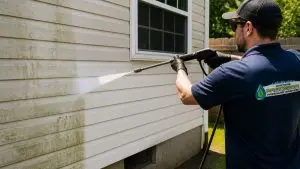
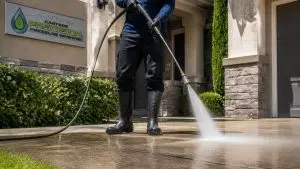
Professional pressure washing removes years of accumulated grime, tire marks, dirt, and discoloration that regular cleaning cannot touch. The results are visible immediately. A restored driveway makes your entire home look newer and better-maintained, which matters whether you’re selling, hosting guests, or simply taking pride in your property.
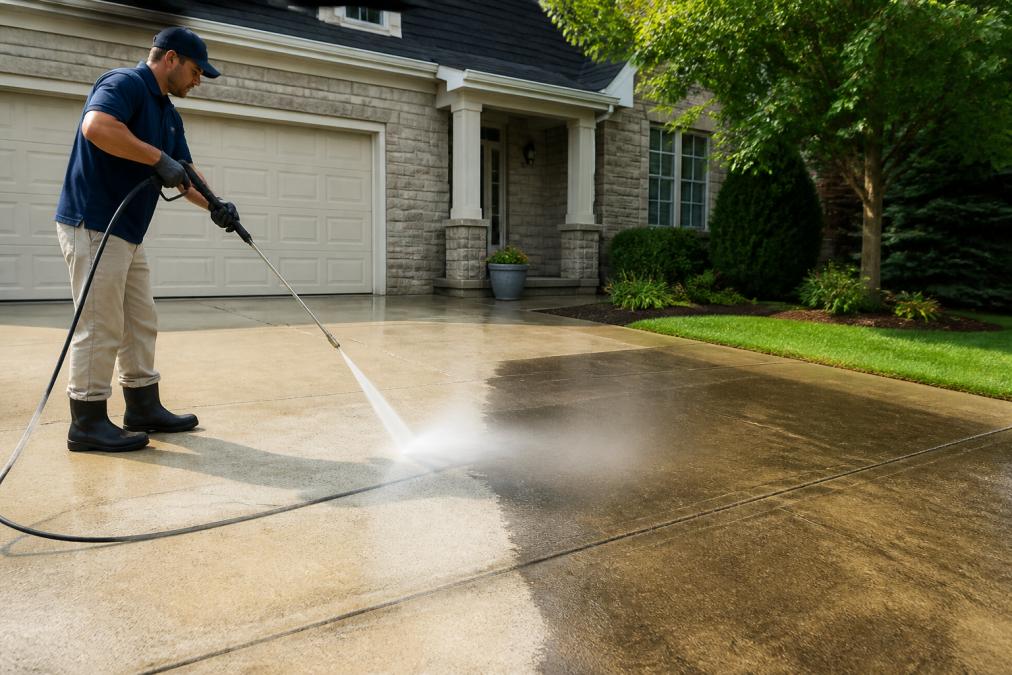
For homeowners preparing to list their property, curb appeal is critical. A clean driveway and entryway signal that the home has been well-cared-for, which influences buyer perception before they even step inside. The investment in professional cleaning often pays for itself through stronger first impressions and competitive market positioning.
Commercial properties benefit equally. Clean entryways, storefronts, and parking areas convey professionalism and attention to detail. Customers and clients form opinions based on what they see, and a grimy parking lot or stained concrete sends the wrong message about your business standards.
Preventing Structural Damage and Surface Erosion
Grime, mold, mildew, and algae growth aren’t just cosmetic problems. They actively damage concrete over time.
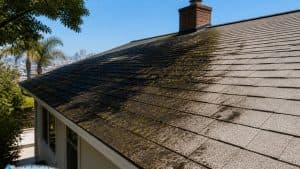
Mold and mildew trap moisture against the surface, which leads to freeze-thaw cycles in colder months. Water penetrates the concrete, freezes, expands, and cracks the surface. This cycle repeats and worsens each year, eventually requiring expensive repairs or full replacement. Regular professional cleaning removes these moisture-trapping contaminants before they cause structural damage.
Oil stains and chemical residues also degrade concrete. They break down the surface binder and allow water to seep deeper into the material. Professional pressure washing removes these contaminants before they become permanent damage.
Preventative maintenance is far cheaper than repair. A professional cleaning every 1-2 years costs a fraction of what concrete repair or replacement would cost. Think of it as an investment in your property’s longevity, not just its appearance.
The Best Way to Remove Oil Stains From Concrete
Oil stains are among the most stubborn driveway problems because they penetrate deep into porous surfaces and resist casual cleaning. However, the removal strategy depends significantly on your driveway material, which most DIY attempts and generic pressure washing fail to account for.
Concrete Driveways
Concrete is porous and absorbs oil readily. Professional pressure washing combined with alkaline degreasers is an effective approach for concrete. The degreaser breaks down oil molecules and lifts them to the surface, then high-pressure water removes the loosened residue.
Concrete’s porosity means incomplete removal leaves residual oil that will resurface and spread. This is why pressure alone is insufficient, the chemical component is essential.
Asphalt Driveways
Asphalt requires a different approach because it is softer than concrete and vulnerable to damage from excessive pressure. Asphalt requires a different approach because it is softer than concrete and vulnerable to damage from excessive pressure. Instead of relying on pressure, chemical treatment with degreasers can penetrate the asphalt and dissolve oil. The degreaser sits on the surface to allow chemical action, then gentle pressure and soft-bristle agitation remove the residue.
Permeable Pavers and Decorative Concrete
Permeable pavers and stamped or decorative concrete require even more caution. These surfaces are often sealed, and high-pressure washing can strip the sealant, damage grout lines, or crack individual pavers. Professional crews use low-pressure techniques combined with specialized biodegradable degreasers that break down oil without harming the sealant. For pavers, the degreaser is critical because pressure alone will not remove oil from sealed surfaces.
Why Professional Expertise Matters
The difference between effective cleaning and surface damage comes down to material knowledge. A technician assesses your driveway material, stain age and severity, and existing sealant condition before selecting the appropriate PSI, water temperature, dwell time, and chemical treatment. DIY pressure washers lack this diagnostic capability. Many homeowners rent a consumer-grade unit, apply maximum pressure uniformly, and inadvertently etch concrete, strip asphalt, or crack pavers, damage that costs far more to repair than the original stain.
Fresh oil stains respond faster to pressure washing than aged stains. Professional technicians understand this timeline and adjust their approach accordingly. They also know which detergents work best for different stain types without harming surrounding landscaping, sealing, or leaving chemical residue that attracts new dirt accumulation.
How Often to Pressure Wash Concrete for Optimal Results
Frequency depends on your location, climate, and property type.
Most homeowners benefit from professional pressure washing every 1-2 years. This schedule prevents heavy grime accumulation and keeps mold and mildew growth minimal. Properties in humid climates or areas with heavy tree coverage may need annual cleaning because moisture and organic growth accelerate. Commercial properties with foot traffic or vehicle use typically need cleaning 1-2 times per year.
The best approach is to establish a maintenance schedule based on how quickly your driveway accumulates visible grime. If stains and discoloration appear within 6 months, annual cleaning is justified. If your driveway stays relatively clean for 18-24 months, scheduling every other year works fine.
Seasonal factors matter too. Fall and spring are ideal times for pressure washing because weather is mild and you can address mold growth before winter moisture problems or summer heat damage occurs. A spring cleaning removes winter’s accumulation, while fall cleaning prepares surfaces for winter conditions.
Average Cost to Pressure Wash a Driveway and ROI
Professional driveway pressure washing delivers strong return on investment, but understanding both the cost structure and long-term financial benefit requires looking beyond the service price alone.
Cost Factors and Typical Pricing Structure
Several variables influence professional pressure washing pricing: driveway square footage, surface condition and stain severity, material type (concrete vs. asphalt vs. pavers), travel distance from the service provider, and local market rates. Most professionals charge either by square footage or as a flat rate for standard residential driveways. Several variables influence professional pressure washing pricing: driveway square footage, surface condition and stain severity, material type (concrete vs. asphalt vs. pavers), and local market rates. Commercial properties with larger surface areas or heavy contamination typically involve higher investment but spread across a larger area.
The key is that professional pricing is transparent and based on measurable factors. Requesting a site assessment allows technicians to evaluate your specific driveway and provide accurate pricing rather than generic estimates.
ROI Calculation: Cleaning vs. Replacement
The financial case for professional cleaning becomes clear when compared against driveway repair or replacement costs. A concrete driveway typically lasts 25-30 years with proper maintenance, but only 15-20 years if neglected. The difference, 5-10 years of extended lifespan, translates directly to avoided replacement costs.
A full concrete driveway replacement costs $3,000-$10,000+ depending on size and local labor rates. Asphalt resurfacing runs $1,500-$3,000. Even accounting for multiple professional cleanings over a decade (10-15 cleanings at $200-$300 each = $2,000-$4,500 total), the investment is a fraction of replacement cost. If professional cleaning extends your driveway’s life by even 3-5 years, you’ve avoided tens of thousands in replacement expense.
For homeowners selling their property, the ROI is more immediate.
Commercial Property ROI
Maintenance Schedule and Long-Term Cost Efficiency
Safety, Environmental Benefits, and Long-Term Property Value
Professional pressure washing removes slip hazards that pose safety risks. Mold, mildew, and algae growth create slippery surfaces, especially when wet. This is a genuine liability concern for residential properties with children or elderly residents, and a critical issue for commercial properties where customer or employee injuries carry legal consequences.
Professional Equipment vs. DIY Pressure Washing
The gap between DIY and professional pressure washing equipment is substantial.
Frequently Asked Questions
Is professional driveway pressure washing worth the cost?
Yes. Professional driveway pressure washing removes deep grime, oil stains, and mold that damage concrete over time. The service extends your driveway’s lifespan, improves curb appeal for home sales, and prevents costly repairs. When you factor in the cost of concrete replacement or sealing work that becomes necessary without preventative maintenance, professional pressure washing delivers measurable ROI.
How often should you pressure wash concrete driveways?
Most concrete driveways benefit from professional pressure washing every 1-2 years, depending on climate and traffic. In areas with high humidity or frequent rain, annual cleaning prevents mold and mildew buildup. Driveways with heavy vehicle use or visible oil stains may need cleaning more frequently. A professional can assess your specific surface and recommend a maintenance schedule tailored to your property.
Can professional pressure washing damage my driveway or nearby plants?
Professional pressure washing uses controlled hydrostatic pressure and proper techniques to clean without causing surface erosion or damage. Trained technicians adjust pressure levels based on your surface material (concrete, asphalt, or decorative finishes). Many services apply eco-friendly detergents that break down naturally and won’t harm landscaping, pets, or soil when used correctly. Always confirm your provider uses safe practices and protective measures for surrounding vegetation.
What makes professional pressure washing better than DIY cleaning?
Professional equipment delivers higher pressure and volume than rental machines, removing stubborn stains and embedded grime in a single pass. Technicians understand surface-specific damage analysis, knowing how much pressure different materials can handle. They apply detergents strategically, manage runoff to prevent environmental impact, and complete the job in hours rather than days. Professional results last longer because deep cleaning removes the conditions that allow mold and algae to regrow quickly.
Your driveway is a significant investment that deserves professional care. Neglecting surface maintenance leads to expensive repairs and diminished property value. Carters Precision Pressure Washing provides expert pressure washing that removes stubborn stains, prevents structural damage, and restores your driveway’s appearance. Call for a free estimate today and discover how professional cleaning transforms your property.