

Table of Contents
- Why Gum Bonds to Concrete and Why Cold Weather Makes It Worse
- What You’ll Need Before You Start
- Step 1: Freeze the Gum with Butane or Compressed Air
- Step 2: Scrape and Lift with the Right Tools
- Step 3: Apply Chemical Solvents and Degreasers Safely
- Step 4: Pressure Wash with Hot Water and the Correct Nozzle Tip
- How Long Does It Take to Remove Gum from Sidewalks?
- How to Remove Oil Stains from Concrete After Gum Removal
- Frequently Asked Questions
Last Updated: September 16, 2026
Why Gum Bonds to Concrete and Why Cold Weather Makes It Worse
Chewing gum is engineered to stay soft, sticky, and pliable, which is exactly why it clings to concrete so stubbornly and why you need to remove gum carefully. Concrete is a porous surface, full of tiny pits and channels that gum seeps into as pedestrians press it down with every footstep. Once it cools and sets, it fuses to the surface like a temporary adhesive.
Cold weather makes the problem worse in an unexpected way. Gum becomes brittle and hard in low temperatures, so it chips into fragments instead of lifting cleanly. Those fragments scatter into the pores of the concrete, turning a single blob into a dozen stubborn specks. This is why winter is the hardest season for sidewalk maintenance, and why freezing is also the secret to removal: if cold breaks gum apart, controlled freezing lets you shatter it on purpose.
According to American Concrete Institute guidance on concrete surface durability, porous concrete holds onto organic residue more aggressively than smooth pavement, which is why gum stains often leave a shadow even after the bulk is gone.
Gum bonds because concrete is porous and foot traffic presses it in. Cold makes it brittle, which is bad for natural wear but useful for removal: freeze it deliberately, and it shatters instead of smearing.
What You’ll Need Before You Start
Before you touch a single wad, gather the right equipment. Rushing in with a scraper and no plan is how sidewalks end up scratched and stained.
- Protective eyewear and nitrile gloves
- Compressed air can or butane freezing kit
- Putty knife and a stiff brush
- Concrete-safe degreaser or white vinegar
- Pressure washer with a 25-degree nozzle tip
- Bucket of hot water and clean rags
For larger jobs, OSHA guidance on personal protective equipment is worth a quick read, since chemical solvents and pressurized equipment both carry real risks when handled casually.
A common mistake is buying the cheapest scraper available. A dull, flexible blade skips over gum instead of lifting it, and you end up pressing the residue deeper into the pores.
Step 1: Freeze the Gum with Butane or Compressed Air
Freezing is the single most effective first move, and it works on both fresh and hardened gum. Hold a can of compressed air upside down and spray directly at the gum for 10 to 20 seconds. The propellant comes out as a super-cold liquid that hardens the gum until it turns frosty and brittle.
Butane freezing kits work the same way with more control and less waste. Aim the nozzle at the center of the wad, not the edges, so the whole piece freezes evenly.
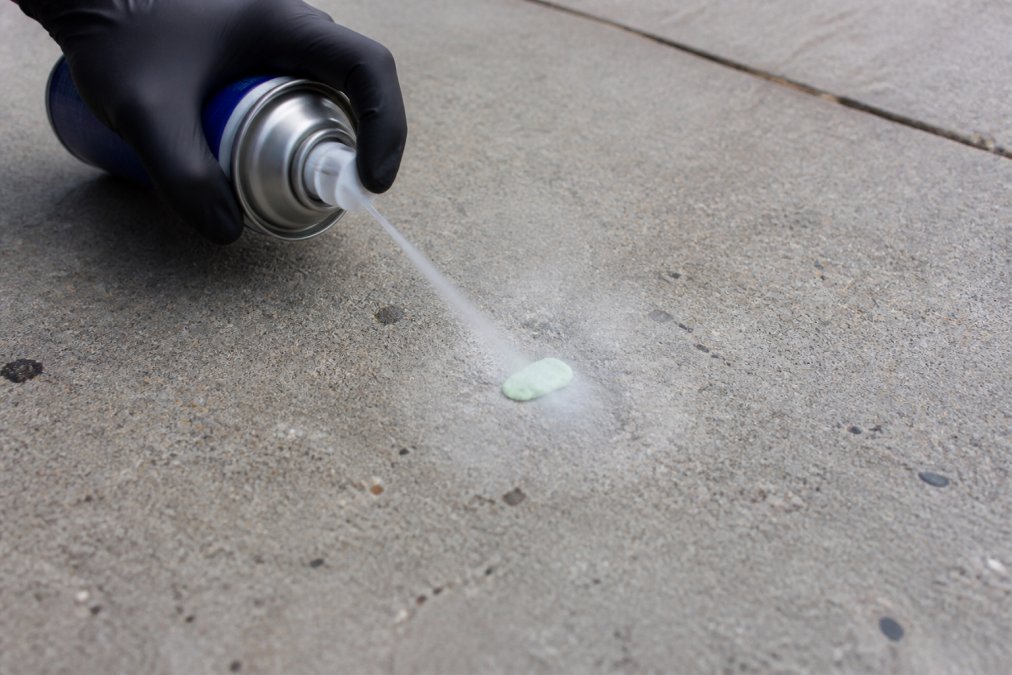
Never spray compressed air at your skin or eyes. The propellant reaches temperatures cold enough to cause instant frostbite, and the vapor is not meant to be inhaled in a confined space.
Step 2: Scrape and Lift with the Right Tools
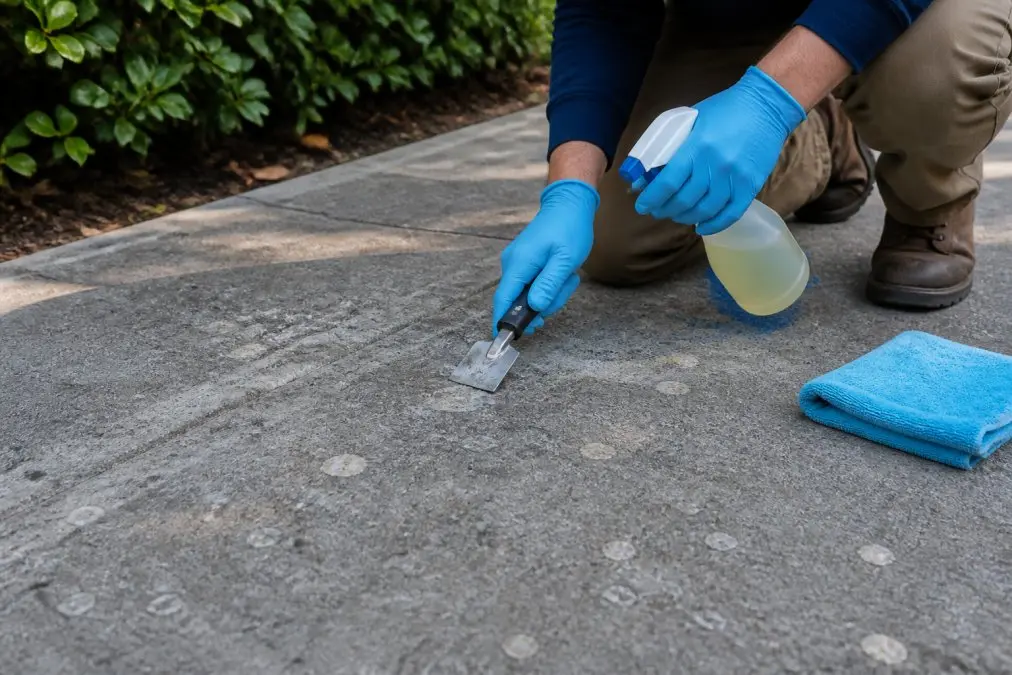
Once the gum is frozen solid, it should pop off with light pressure. Slide a putty knife or scraper under one edge and lift upward in a single motion rather than sawing back and forth.
For gum pressed deep into the pores, follow with a stiff brush to dislodge the fragments. Work in short strokes and keep the surface dry, since moisture softens the frozen gum and undoes your work.
If a thin film of adhesive residue remains, that is normal.
Step 3: Apply Chemical Solvents and Degreasers Safely
Chemical solvents handle the residue that mechanical removal leaves behind. The mistake most people make is grabbing a random cleaner and hoping. Match the agent to the residue, and give it the full dwell time on the label.
- Diluted white vinegar. Mix one part white vinegar to one part warm water. Safe on most concrete, including colored and sealed surfaces. Dwell time: 10 to 15 minutes. Best for light adhesive film.
- Citrus-based d-limonene cleaner. Sold as an adhesive remover or citrus degreaser. Dilute per the label, typically 1:4 with water for light residue. Dwell time: 5 to 10 minutes. Strong smell, so ventilate.
- Commercial concrete degreaser. Look for a butyl- or surfactant-based product labeled safe for concrete. Apply undiluted to the spot, dwell 10 to 15 minutes, agitate with a stiff brush.
- Mineral spirits or acetone. Reserve these for hardened, set-in residue on unsealed concrete only. Dwell time is short, 1 to 3 minutes, because they evaporate fast. Never use on sealed, stamped, or colored concrete without a test patch.
Never mix solvents. Combining bleach with vinegar or ammonia, or mixing acetone with other cleaners, can create toxic fumes. Use one agent at a time, rinse between products, and keep the area ventilated.
For a gentler approach, hot water and a few drops of dish soap often loosen light residue without any harsh chemicals. It takes longer, but it is safer around plants, pets, and storm drains.
What to do with the runoff
Solvent-laden rinse water should not go straight into a storm drain. Storm drains in most municipalities flow untreated to creeks and rivers, and many local ordinances prohibit discharging wash water with cleaners, oils, or heavy residue. For a single spot, a bucket and a mop are enough. For larger jobs, contain the runoff with a berm or absorbent socks, then dispose of it per your local wastewater authority’s guidance.
Step 4: Pressure Wash with Hot Water and the Correct Nozzle Tip
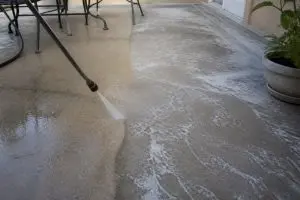
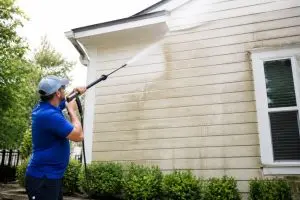
Pressure washing is the finishing move, not the opening one. Blasting gum with a pressure washer before freezing and scraping just drives the residue deeper into the concrete.
The shadow problem no one talks about
Even after the gum is gone and the residue is dissolved, most sidewalks still show a faint dark patch where the gum sat. This is the shadow, and it is not leftover gum. It is a combination of three things: oils and plasticizers from the gum that soaked into the pores, embedded dirt that collected around the wad, and in older cases, a slight biological film from moisture trapped under the gum.
- Scrub with a stiff brush and a concrete-safe degreaser. Work the product into the pores in a circular motion, not back and forth. Dwell 10 minutes, then rinse.
- Treat with an oxygen bleach powder (sodium percarbonate, sold as OxiClean or a generic equivalent). Mix per the label, apply to the shadow, and let it sit 15 to 30 minutes. This lifts the organic component that degreasers miss. Do not use chlorine bleach on concrete; it can leave its own stain and is harsh on nearby plantings.
- Rinse and inspect. If the shadow persists, repeat the oxygen bleach step once. Two passes handle most shadows. A third rarely helps and risks etching.
- Seal the surface once it is fully dry. A penetrating silane or siloxane sealer, or a film-forming acrylic sealer on decorative concrete, blocks the pores so new gum cannot soak in as deeply and future shadows are far easier to remove. Most manufacturers recommend resealing every 3 to 5 years on high-traffic sidewalks.
Equipment cleanup after the job
Adhesive residue is sticky and it transfers. After the job, rinse your pressure washer wand and nozzle tip with hot water to clear gum residue from the orifice. A clogged tip sprays unevenly and can etch the concrete on the next job. Wipe scraper blades with mineral spirits or citrus cleaner, then dry them to prevent rust. Stiff brushes should be rinsed and hung to dry, not left in a bucket where the bristles deform.
This is where professional equipment makes a visible difference.
How Long Does It Take to Remove Gum from Sidewalks?
A single piece of gum takes about 2 to 5 minutes to remove with the freeze-and-scrape method. A full sidewalk with dozens of spots takes considerably longer, and the total depends on how much gum is present and how porous the surface is.
| Situation | Typical Time | Best Approach |
|---|---|---|
| One fresh spot | 2-5 minutes | Compressed air and putty knife |
| Scattered spots on a walkway | 30-60 minutes | Freeze, scrape, spot-treat residue |
| Heavy buildup on a commercial entryway | Several hours | Full sequence plus pressure washing |
| Large parking lot or plaza | Half a day or more | Professional equipment and scheduling |
How to Remove Oil Stains from Concrete After Gum Removal
Freshly cleaned concrete makes old oil stains stand out, and the same porous surface that traps gum also absorbs oil. The fix is a degreaser with real dwell time, not a quick wipe.
Frequently Asked Questions
What removes chewing gum from concrete?
Freezing is the most reliable method. Spray the gum with compressed air or butane until it turns brittle, then lift it with a putty knife or scraper. For stubborn spots, follow with a citrus-based degreaser and a stiff brush. Pressure washing with hot water works well on large areas, but you need the right nozzle tip and PSI to avoid etching the concrete surface.
Why does gum turn black on the sidewalk?
Chewing gum is oil-based, so it acts like a magnet for dirt, exhaust, and grime. Over time, foot traffic presses that debris into the gum, and the sun bakes it in. The result is a black stain that sits on the surface and inside the pores of the concrete. Removing the gum entirely, not just scraping the top, is the only way to get rid of the dark mark.
Is pressure washing the best way to remove gum?
Pressure washing works well for large-scale gum removal on sidewalks and parking lots, especially with hot water and a rotating nozzle. But it is not always the best first step. High PSI on a narrow nozzle tip can etch concrete or leave streaks. For a few spots, freezing and scraping is faster and safer. For hundreds of spots, a professional hot water pressure washer saves hours.
Can chemicals damage concrete when removing gum?
Some solvents can. Acid-based cleaners etch concrete, and bleach can discolor it. Stick to pH-neutral or citrus-based degreasers, and always test on a small hidden area first. Rinse thoroughly after use so residue does not stain the surface or run into storm drains. Wear protective eyewear and gloves, and keep pets away until the area is dry.