
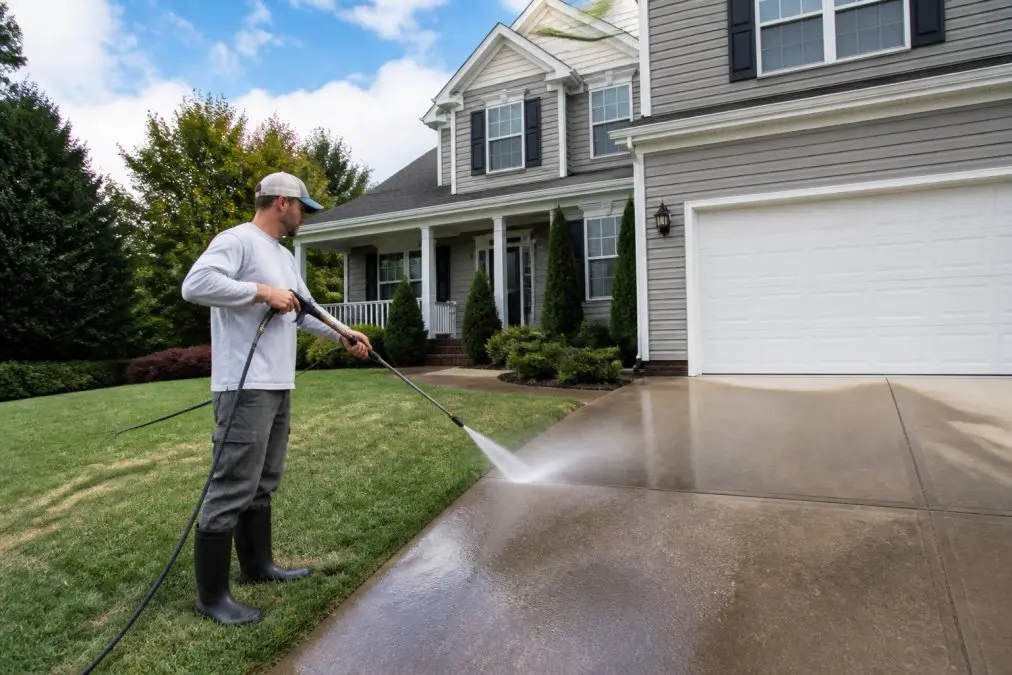
Table of Contents
- Why Pressure Washing Before Selling Pays Off at the Closing Table
- How Curb Appeal and Property Value Climb After a Professional Cleaning
- Stopping Structural Damage and Removing Organic Buildup Early
- The Average Cost of House Pressure Washing and What Drives the Price
- Pressure Washing vs Soft Washing for Home Sale: Which Surface Needs What
- Preparing Home Exterior for Listing Photos and Open Houses
- Pros, Cons, and Safety: What Homeowners Should Know Before Booking
- Frequently Asked Questions
Last Updated: September 16, 2026
Why Pressure Washing Before Selling Pays Off at the Closing Table
The benefits of pressure washing before selling come down to one thing: buyers judge a house in the first few seconds, and grime on the siding or driveway reads as neglect before they ever step inside. A home that looks cared for invites higher offers and fewer repair demands. A home with black streaks and stained concrete invites doubt.
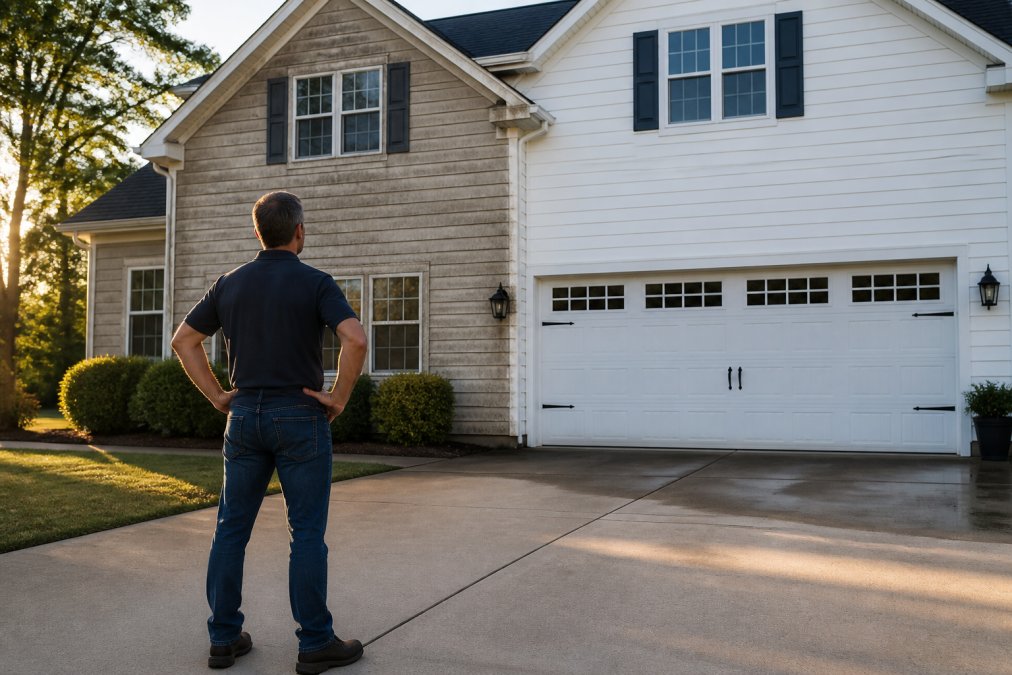
Here’s the part most sellers miss: exterior condition is one of the few things you can change quickly and cheaply before listing. Paint takes weeks. Landscaping takes a season. Cleaning happens in an afternoon.
Exterior appearance shapes a buyer’s first impression before they read a single listing detail. Cleaning is the fastest, lowest-cost way to change that impression.
How Curb Appeal and Property Value Climb After a Professional Cleaning
Curb appeal is the perceived value of a property based on how it looks from the street, and it directly shapes how buyers price your home in their heads. A clean exterior signals a maintained home. A dirty one signals deferred maintenance, and buyers discount accordingly.
Real estate agents consistently report that well-presented homes attract more showings and stronger opening offers. According to the National Association of Realtors’ guidance on curb appeal, exterior appearance influences buyer decisions from the moment they pull up. The practical takeaway: spend a small amount on cleaning before you spend anything on staging.
- Clean siding and walkways photograph better for the listing
- A spotless driveway suggests the owner kept up with maintenance
- Bright, streak-free surfaces make rooms look larger in photos
Stopping Structural Damage and Removing Organic Buildup Early
Organic buildup is the accumulation of mold, mildew, algae, and lichen on exterior surfaces, and left alone it works its way into the material beneath. What most sellers don’t realize is that the damage mechanism differs by growth type and by surface, which is why a single cleaning method applied across an entire house is a risk, not a shortcut.
How each growth type attacks a surface:
- Algae (the dark streaking on roofs and north-facing siding) feeds on moisture and the fillers in asphalt shingles and vinyl. It doesn’t just sit on top, it roots into the substrate, and the streaks return within a season if the growth isn’t killed, not just rinsed.
- Mildew thrives on painted wood and stucco, breaking down the paint film from underneath. Once the film fails, moisture reaches bare wood, and that’s where rot begins.
- Lichen is the most aggressive. It anchors into brick, stone, and stucco with a root-like structure that pulls mineral content out of the surface. Even after the lichen is removed, the etching it leaves behind is permanent.
- Moss on roofs and in gutter lines holds water against shingles and flashing, accelerating granule loss and, over time, edge decay.
Why this matters at inspection: A home inspector will flag active organic growth and any resulting material damage. Once it’s in the report, buyers either walk or negotiate the price down, and the repair line item is almost always larger than the cleaning would have been. Cleaning removes the growth before it becomes a repair negotiation.
Surface-specific damage risk, the part most guides skip:
| Surface | Risk from high pressure | Why |
|---|---|---|
| Stucco | Cracking, water intrusion behind the wall | Stucco is a brittle, porous finish; forced water finds hairline cracks and drives them wider |
| Painted wood siding | Paint stripping, wood fiber raising, rot acceleration | High pressure opens the grain and pushes water past the paint film |
| Vinyl siding | Water forced behind panels, moisture trapped in the wall cavity | Panel seams and weep holes are not designed for pressurized water |
| Asphalt shingles | Granule loss, shortened shingle life | The granules are the UV protection; once they’re gone, the mat degrades |
| Brick and stone | Generally durable, but mortar joints can erode | Mortar is softer than the brick or stone it holds |
| Concrete | Withstands high pressure | Dense, non-porous relative to the surfaces above |
Pressure washing a wood-sided or stucco home at full force can strip paint, crack the surface, and force water behind the siding. That damage costs far more to fix than the cleaning would have. Match the method to the material, soft washing for stucco, painted wood, vinyl, and roofs; pressure washing for concrete, brick, and stone.
The takeaway for sellers: The goal before listing isn’t the most aggressive clean. It’s the correct clean for each surface, so you remove the growth without creating a new defect the buyer’s inspector will find.
The Average Cost of House Pressure Washing and What Drives the Price
The average cost of house pressure washing depends on the size of the home, the number of surfaces, the level of buildup, and how accessible each area is. There is no single flat rate, and any provider quoting one without seeing the property is guessing.
Pricing typically reflects:
- Square footage of siding, driveway, and walkways
- Whether the roof needs soft washing
- How much organic growth has to be removed
- Accessibility, including two-story sections and tight side yards
A cost-to-value framework for sellers:
Instead of asking “what does cleaning cost,” ask “what does cleaning cost relative to what it protects.” A common pattern among sellers is that exterior cleaning is one of the smallest pre-listing line items and one of the few that touches every photograph, every showing, and the inspection report at once.
- Paint: weeks of lead time and a five-figure line item on most homes.
- Landscaping: a full season to establish, and weather-dependent.
- Staging: typically a per-room or per-month cost, and it only affects the interior.
- Exterior cleaning: an afternoon, and it improves the first photo a buyer sees.
What actually moves the price up or down:
- Home size and stories. Two-story walls and steep rooflines require more setup, safety equipment, and time.
- Surface mix. A single driveway is a different job than siding, roof, walkways, and gutters together.
- Buildup severity. Light dusting is faster than years of algae and lichen that need dwell time and possibly a second pass.
- Access. Fenced side yards, tight setbacks, and landscaping that needs protection all add labor.
- Method. Soft washing uses detergent and dwell time; pressure washing uses volume and force. The method is dictated by the surface, not the price.
Pressure Washing vs Soft Washing for Home Sale: Which Surface Needs What
Pressure washing vs soft washing for home sale is not a preference question, it’s a materials question. High-pressure water cleans concrete, brick, and stone. Low-pressure soft washing with detergent cleans roofs, painted siding, stucco, and wood.
| Surface | Recommended Method | Why |
|---|---|---|
| Concrete driveway | Pressure washing | Withstands high pressure |
| Asphalt shingle roof | Soft washing | Pressure strips granules |
| Painted wood siding | Soft washing | Preserves paint and wood |
| Stucco | Soft washing | Prevents cracking |
| Brick and stone | Pressure washing | Durable surface |
| Vinyl siding | Soft washing | Avoids water intrusion |
Preparing Home Exterior for Listing Photos and Open Houses
Preparing home exterior for listing photos means cleaning every surface the camera can see, then clearing debris so the lines of the house read clean. Photographers shoot wide, and they capture the driveway, walkways, and roofline in almost every frame.
Before the shoot:
- Clean siding, driveway, and walkways
- Soft wash the roof to remove streaks
- Clear leaves, branches, and debris from beds and gutters
- Wash the front door, porch, and garage door
Pros, Cons, and Safety: What Homeowners Should Know Before Booking
Ask any provider what they use around landscaping and how they protect it. A professional will explain their process for rinsing plants and controlling runoff before they start.
Safety matters most on roofs and two-story walls. Falls are the leading risk in exterior cleaning, and it’s the main reason homeowners should leave roof work to a trained crew.
Frequently Asked Questions
Does pressure washing actually increase home value before selling?
A clean exterior helps buyers see the home as well-maintained, which supports a stronger asking price and fewer repair requests. Real estate agents often note that curb appeal influences first impressions during showings. While no single cleaning task guarantees a specific dollar increase, combining pressure washing with other exterior maintenance gives your listing a competitive edge in a crowded market.
How far in advance of an open house should I pressure wash my home?
Schedule cleaning 5 to 10 days before your first showing or open house. This window lets surfaces dry completely and gives you time to spot any areas that need a second pass. Cleaning too early means pollen, dust, or rain can dull the results before buyers arrive. Cleaning too late risks wet walkways and lingering moisture during the walkthrough.
What are the cons of pressure washing before selling?
High-pressure water can strip paint, crack stucco, force water behind siding, and damage wood if the wrong nozzle or technique is used. Older homes with fragile materials are especially at risk. That is why matching the method to the surface matters: soft washing for roofs, siding, and painted wood, and controlled pressure for concrete driveways and patios. Hiring a professional reduces the chance of costly damage right before a sale.
Is it better to pressure wash or soft wash a home before listing?
It depends on the surface. Soft washing uses lower pressure with cleaning solutions and works best for roofs, stucco, painted siding, and wood. Pressure washing suits concrete driveways, walkways, and patios that can handle higher force. Many homes need both methods in different areas. A professional can assess each surface and choose the right approach so nothing gets damaged before showings.
Selling a home is stressful enough without discovering exterior damage during inspection. Carters Precision Pressure Washing specializes in expert pressure washing for roofs, houses, and exterior surfaces, restoring appearance and enhancing curb appeal so your property shows at its best. Our team delivers top-tier results and free estimates. Call for a free estimate and get your home ready to impress.