
Table of Contents
- The Real Math Behind Pressure Washing Cost
- Average Cost of House Pressure Washing: What Homeowners Actually Pay
- DIY vs Professional Power Washing: A Side-by-Side Comparison
- Benefits of Professional Pressure Washing That DIY Can’t Match
- Pressure Washing vs Soft Washing: Which Method Fits Your Surface?
- Damage, Liability, and What Homeowners Insurance Covers
- Does Pressure Washing Increase Home Value? The ROI Question
- Frequently Asked Questions
Last Updated: September 19, 2026
The Real Math Behind Pressure Washing Cost
Is pressure washing worth the cost? For most homeowners, yes, provided the surface suits the method and you weigh the full expense rather than the sticker price alone, though whether is pressure washing worth the cost depends on the same three variables. The honest answer depends on three variables: surface type, square footage, and how much prep work the job needs.
Pressure washing is the use of a high-pressure water spray, typically measured in PSI (pounds per square inch) and GPM (gallons per minute), to strip dirt, mold, and algae from exterior surfaces.
That definition matters because pressure is not a single setting. A concrete driveway tolerates far more force than a painted wood deck. Get the PSI rating wrong and you’re not cleaning; you’re carving.
What Drives the Price Up or Down
Square footage pricing anchors most quotes, but it’s rarely the whole story. A few factors move the number more than homeowners expect:
- Surface type. Concrete and brick handle high pressure. Stucco, painted siding, and older wood demand lower pressure or a soft wash approach.
- Height and access. Two-story siding and steep rooflines slow the work and require safety gear.
- Grime severity. Years of algae growth, mold and mildew remediation, and oil stains take longer than routine seasonal cleaning.
- Method. Hot water vs cold water changes results on grease and organic growth, and detergent injection adds material cost.
A simple single-story driveway and a mold-covered roof are different jobs.
Average Cost of House Pressure Washing: What Homeowners Actually Pay
Here’s how the common pricing models compare:
| Pricing Model | How It Works | Best For | Watch Out For |
|---|---|---|---|
| Square footage | Rate per sq ft of surface | Driveways, patios, large flat areas | Excludes setup and detergent |
| Hourly labor | Rate per hour plus materials | Complex or mixed surfaces | Open-ended if scope creeps |
| Flat project fee | One all-in number | Roofs, full-house washes | Confirm what’s included |
Ask any provider whether the quote includes detergent injection, surface cleaner attachment work, and post-cleaning rinse. The cheapest quote often excludes these, and the final bill lands well above the original number.
The SERP is crowded with marketplaces quoting national averages. Those figures rarely survive contact with a real property. Your roof, your siding, and your region’s climate all shift the number.
DIY vs Professional Power Washing: A Side-by-Side Comparison
DIY looks cheaper until you price the whole picture. The honest comparison is not the hourly rate, it is total cost of ownership across the life of the surface, including the parts nobody puts on the sticker.
Equipment Cost vs Rental Fees
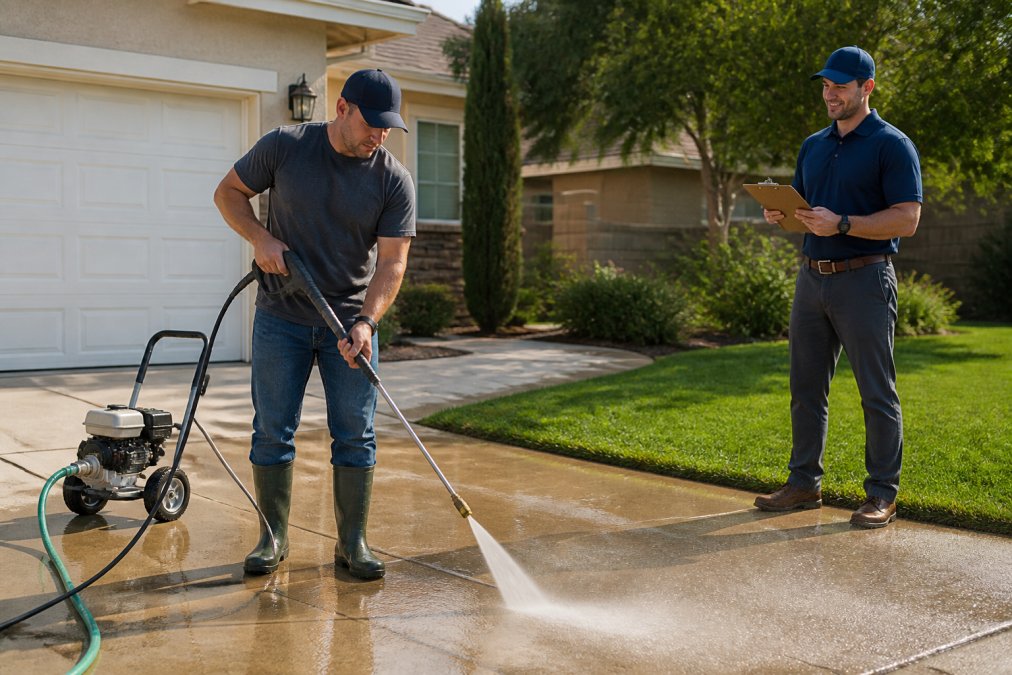
A consumer-grade electric pressure washer typically runs $100-$200, and a gas unit with enough GPM to move a driveway in reasonable time runs $300-$500. That sounds like a one-time buy until you price what keeps it running:
- Pump oil and seals. Gas units need pump oil changes, and seals fail under repeated use. A rebuild kit or replacement pump often costs $40-$120.
- Nozzle tips. Tips wear and clog; a replacement set runs $15-$40, and a 0-degree tip used carelessly is what etches concrete and strips paint.
- Surface cleaner attachment. Needed to avoid zebra striping on concrete; $40-$150.
- Detergent and downstream injector. $20-$60 per season for a quality house wash mix.
- Winterization. Freeze damage cracks pumps and manifolds; antifreeze and storage prep are on you.
The Hidden Cost Competitors Skip: Damage and Repair
This is the line item most DIY guides leave out. Improper pressure does not just under-clean, it destroys:
- Wood decking. A narrow high-pressure tip furs and splinters boards, and can drive water into the grain. Replacing even a few boards plus refinishing runs into the hundreds.
- Painted siding. Stripped paint means scraping, priming, and repainting a whole wall section, often more than the entire professional cleaning would have cost.
- Stucco and mortar. High pressure gouges stucco and blows out mortar joints, which is a masonry repair, not a cleaning job.
- Water intrusion. Forcing water behind siding or into window and door frames creates hidden moisture damage that shows up months later as rot or mold.
The most common DIY mistake is using a narrow high-pressure spray on painted wood or stucco. It strips paint and etches the surface, and repainting costs far more than the cleaning would have.
When DIY Actually Makes Sense
DIY is defensible when the surface is forgiving and the scope is small: a single concrete driveway, a flat patio, or a walkway, on a machine you already own, with a surface cleaner attachment and a willingness to test PSI on an inconspicuous spot first. It stops making sense the moment the job includes siding, a roof, a deck, or any surface where the wrong pressure causes permanent damage.
Benefits of Professional Pressure Washing That DIY Can’t Match
Professional service delivers consistency, safety, and results that last. The benefits of professional pressure washing go beyond a clean surface: trained operators match pressure and detergent to each material, which protects the surface while removing grime.
- Correct pressure for every surface, from concrete to delicate siding.
- Proper detergent use that lifts organic growth instead of blasting it.
- Safety gear and technique that reduce injury and property damage risk.
- Results that last longer, because the root cause is treated, not just the visible stain.
The most common DIY mistake is using a narrow high-pressure spray on painted wood or stucco. It strips paint and etches the surface, and repainting costs far more than the cleaning would have.
Pressure Washing vs Soft Washing: Which Method Fits Your Surface?
Soft washing uses low pressure and specialized cleaning solutions to treat mold, mildew, and algae on delicate surfaces. Pressure washing vs soft washing is not a preference; it’s a material decision. Roofs, painted siding, and older stucco belong in the soft wash category.
When You Should Never Use High Pressure
High-pressure spray never belongs on asphalt shingles, painted wood, or deteriorated stucco. On these surfaces, the right approach is low pressure with detergent, letting the solution do the work. This is also where a provider’s experience shows: knowing which method fits saves the surface.
Damage, Liability, and What Homeowners Insurance Covers
Damage from improper pressure washing is a real risk, and liability usually lands on whoever held the wand. Water forced behind siding can cause hidden moisture damage, and stripped paint or cracked stucco is expensive to repair. Many homeowners policies exclude damage caused by negligent work, so verify a provider carries proper coverage before work begins.
The cheapest quote often skips insurance and proper technique. A single damaged surface can cost more to repair than the entire cleaning job.
Does Pressure Washing Increase Home Value? The ROI Question
Most guides answer this with a shrug and a sentence about curb appeal. The useful answer is mechanical: exterior cleaning does not change the house, it changes how the house is perceived at three specific points in the sale process, and each of those points has a dollar consequence.
Where Curb Appeal Actually Shows Up in the Numbers
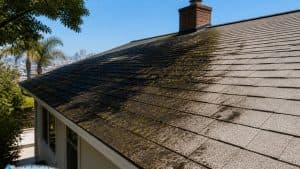
1. The listing photos. Buyers filter listings online before they ever drive by. A green-stained roof, black-streaked siding, or a mildewed driveway reads as deferred maintenance in a thumbnail. Cleaning the exterior is one of the cheapest ways to change the first image a buyer sees.
What the ROI Is, and Isn’t
There is no credible national figure that says ‘pressure washing adds X percent to your home’s value,’ and any article that hands you one is guessing. What is defensible is the direction and the mechanism: exterior cleaning is a low-cost, high-visibility improvement that supports the condition and presentation a property is judged on.
The Long-Term Value Beyond the Sale
Even if you are not selling, exterior maintenance pays in service life. Algae, mold, and mildew hold moisture against siding, deck boards, and concrete. Left alone, that accelerates rot, paint failure, and surface degradation, the expensive repairs. Regular cleaning removes the growth before it does structural work.
Pressure washing does not add a guaranteed dollar figure to your home’s value. It removes the visible signals of neglect that cost you at the photo, the showing, and the appraisal, and it protects the surfaces themselves from the moisture damage that turns a cleaning job into a repair job.
Appraisal Foundation guidance on property condition and comparable sales
Frequently Asked Questions
How much should I charge to pressure wash a 2,000 sq ft house?
Pricing for a 2,000 sq ft house depends on the surface type, level of grime, and whether you need soft washing or high pressure. Most companies quote by square footage, but extras like mold and mildew remediation or siding restoration add to the total. Carters Precision Pressure Washing offers free estimates, so you can get a clear number without guessing.
What are the downsides of using a pressure washer?
The main risks are surface damage and water intrusion. Too much PSI can strip paint, crack stucco, and force water behind siding. You also need safety gear to avoid cuts and eye injuries. Without proper nozzle tips and a surface cleaner attachment, you can leave streaks or etch concrete. Professional providers match pressure and detergent to each surface to avoid these problems.
Does pressure washing increase home value?
A clean exterior improves curb appeal, which is one of the first things buyers notice. Real estate agents often recommend pressure washing before listing because it makes the home look maintained and move-in ready. While no formula guarantees a specific dollar increase, the ROI comes from a faster sale and fewer buyer objections about deferred maintenance.
How often should I pressure wash my house exterior?
Most homes benefit from a professional cleaning every 12 to 18 months. In humid or shaded areas where algae growth and mold and mildew are common, annual service is better. Driveways and patios may need attention more often if they see heavy traffic or oil stains. Seasonal cleaning in spring or fall keeps grime from bonding to the surface.
Selling a home or maintaining a commercial storefront means curb appeal has to hold up under close inspection. Carters Precision Pressure Washing restores roofs, houses, and exterior surfaces so your property looks its best, with expert pressure washing that protects delicate materials and results that last. Call for a free estimate and see the difference precision cleaning makes.