
Table of Contents
- Identifying Hard Water Stains vs. Other Concrete Stains
- What You’ll Need: Tools, Equipment, and Safety Gear
- Best Concrete Cleaner for Mineral Deposits
- Step-by-Step Process for Removing Hard Water Stains
- How to Use Muriatic Acid on Concrete Safely
- Pressure Washing Techniques for Stubborn Mineral Buildup
- When to Hire Professional Pressure Washing Services
- Preventative Maintenance and Post-Cleaning Sealing
- Frequently Asked Questions
Last Updated: September 26, 2026
Identifying Hard Water Stains vs. Other Concrete Stains
Hard water stains concrete as mineral deposits left when water containing calcium and magnesium evaporates. They sit on the surface rather than penetrating deep, appear light-colored and gritty to the touch, and differ from dark, fuzzy mold or mildew.
Hard water stains are purely mineral buildup, appearing as white or light gray deposits in patterns where water pools or runs off, unlike mold, rust, or oil stains.
Test by spraying the stain with vinegar. If it fizzes, you have mineral deposits; no reaction indicates mold or another source.
Stamped and porous concrete are especially prone to hard water stains because water settles into textured areas and evaporates slowly, concentrating minerals.
Inspect your concrete patio after rain or watering. Mineral stains are easiest to spot when wet. If you see white residue appearing regularly in the same spots, hard water is your culprit.
What You’ll Need: Tools, Equipment, and Safety Gear
Essential Tools:
- Scrub brush with nylon bristles
- Spray bottle or garden sprayer
- Bucket for mixing solutions
- Squeegee or mop for rinsing
For Pressure Washing:
- Pressure washer with adjustable PSI (1,500-2,500 PSI)
- Surface cleaner attachment
Safety Gear:
- Chemical-resistant gloves
- Safety glasses or goggles
- Respirator rated for acid vapors
- Long sleeves, long pants, closed-toe shoes
Acidic cleaners produce fumes that irritate lungs and eyes. Never skip the respirator; if you’re sensitive to chemicals or have respiratory issues, hire professionals.
Mixing cleaning products is dangerous. Never combine acidic cleaners with bleach or ammonia. The chemical reaction produces toxic chlorine gas. Use one solution at a time and rinse thoroughly between applications.
Best Concrete Cleaner for Mineral Deposits
The best cleaner depends on stain severity and your comfort with chemicals. Effective solutions break down the mineral bonds holding deposits to concrete.
Acidic Solutions (Most Effective):
Muriatic acid is the industry standard for hard water stains, dissolving calcium deposits quickly. Dilute to 1 part acid to 10 parts water for moderate stains.
Phosphoric acid is a gentler alternative, working slower but posing fewer safety risks.
Natural Alternatives:
Vinegar works for light stains: spray undiluted, wait 30 minutes, scrub and rinse. Safe but requires multiple applications for stubborn deposits.
Citric acid offers middle-ground effectiveness: mix one cup powder with one gallon water. Safer than muriatic acid, more effective than vinegar.
Trisodium phosphate (TSP) is a degreaser that lifts mineral deposits. Less harsh than acids but requires longer dwell time.
The choice depends on stain severity. Light stains respond to vinegar or citric acid. Moderate to heavy deposits need phosphoric or muriatic acid. Always test any solution on an inconspicuous area first.
Acidic solutions work fastest on hard water stains because they chemically dissolve mineral bonds. Natural options take longer but are safer for beginners and environmentally sensitive areas.
Step-by-Step Process for Removing Hard Water Stains
Removing hard water stains requires patience and proper technique. Follow these steps to achieve the best results without damaging your concrete.
Testing Your Solution on an Inconspicuous Area
Test on a hidden spot first. Apply the solution, wait 15 minutes, scrub gently, and rinse. If the concrete shows discoloration or etching, dilute further or choose a gentler alternative.
Applying and Dwell Time
Dwell time is how long the solution sits before scrubbing, allowing it to break down mineral bonds.
Wet the area, apply cleaner from top to bottom, and allow dwell time: 15-30 minutes for vinegar, 20-40 minutes for phosphoric acid, 10-20 minutes for muriatic acid. Don’t let the solution dry completely. Longer dwell time improves results but increases damage risk with strong acids.
Scrubbing and Rinsing
After dwell time, scrub the stained area with a stiff nylon brush. Use circular motions and moderate pressure. Don’t scrub so hard that you damage the concrete surface.
Rinsing Process:
- Rinse with clean water from a hose, using moderate pressure
- Repeat rinsing until no cleaning solution remains
- For acidic cleaners, apply a neutralizing agent (baking soda mixed with water) to raise the pH back to neutral
- Final rinse with fresh water
- Allow the concrete to dry completely
Incomplete rinsing leaves residue that can attract dirt and cause new stains. Take time with this step. If you used muriatic acid, neutralization is essential to prevent ongoing chemical reactions that can etch the concrete.
How to Use Muriatic Acid on Concrete Safely
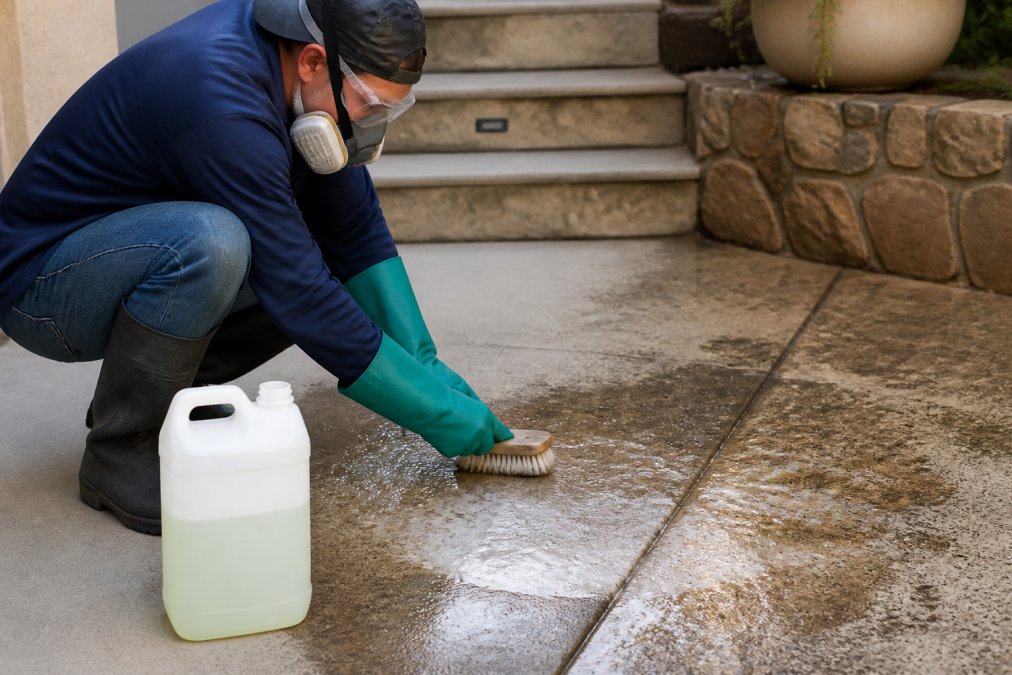
Muriatic acid is highly effective but demands respect. One mistake can cause chemical burns, respiratory damage, or concrete etching. Safety is non-negotiable.
Preparation:
- Work outdoors only, never in enclosed spaces
- Ensure good ventilation; position yourself upwind of the work area
- Wear full protective gear: respirator, gloves, goggles, long sleeves, long pants
- Have water and a first-aid kit nearby
- Keep children and pets away from the work area
Dilution:
Never use muriatic acid at full strength on concrete. Dilute it to 1 part acid to 10 parts water for standard applications. For lighter stains, use 1 part acid to 15 parts water. Always add acid to water, never water to acid. Adding water to concentrated acid causes violent reactions and splashing.
Application:
Apply the diluted solution with a plastic brush or sprayer. Avoid metal tools; acid corrodes them. Work in small sections. Allow 10-20 minutes dwell time. Don’t let it dry on the surface.
Rinsing and Neutralization:
Rinse thoroughly with water. Then apply a neutralizing solution: mix baking soda with water to create a paste or spray. This raises the pH and stops the acid reaction. Rinse again with clean water until no baking soda residue remains.
Disposal:
Never pour muriatic acid down drains.
Muriatic acid fumes can cause permanent lung damage with prolonged exposure. A regular dust mask is insufficient. Use a respirator rated for acid vapors. If you experience shortness of breath, dizziness, or chest pain, stop immediately and seek medical attention.
Pressure Washing Techniques for Stubborn Mineral Buildup
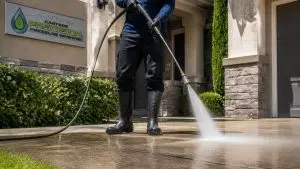
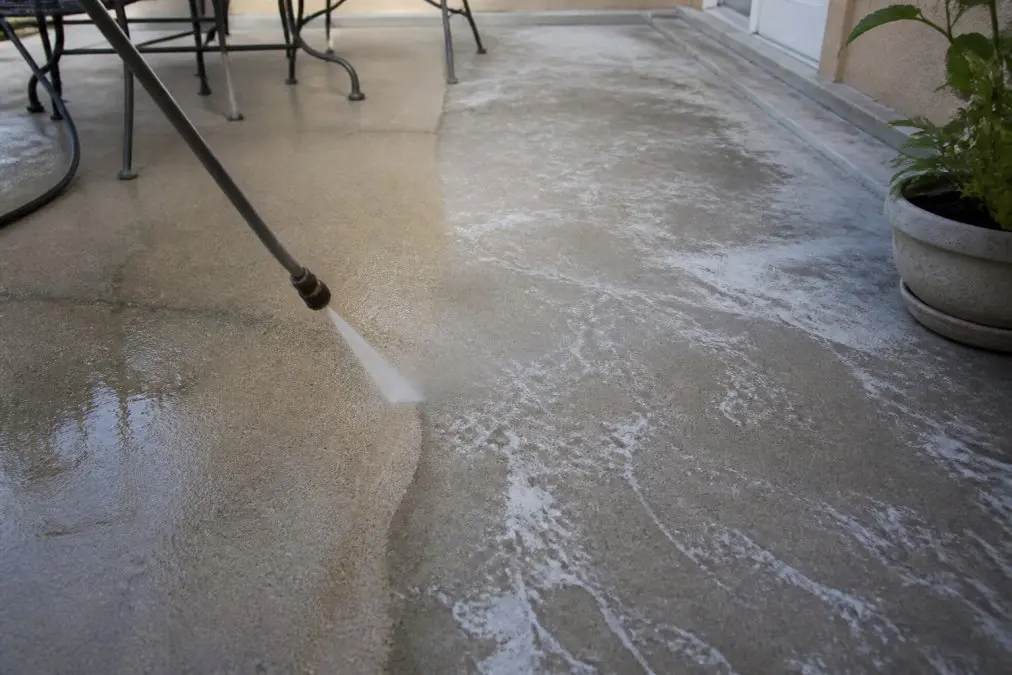
Pressure washing removes hard water stains concrete effectively when done correctly. The key is matching PSI (pounds per square inch) to your concrete type and stain severity.
PSI Guidelines:
- Soft or older concrete: 1,500-2,000 PSI
- Standard concrete: 2,000-2,500 PSI
- Heavy buildup: up to 3,000 PSI (use with caution)
When to Hire Professional Pressure Washing Services
Some situations call for professional help. Carters Precision Pressure Washing handles complex jobs that pose safety risks or require specialized equipment.
Hire professionals if:
- The staining covers a large area (over 500 square feet)
- Stains are severe or have been present for years
- Your concrete is old, delicate, or stamped and you’re concerned about damage
- You have health conditions that make chemical exposure risky
- You lack proper safety equipment or experience with pressure washers
- The patio has sealer that could be damaged by DIY cleaning
What professionals do differently:
- Assess concrete type and condition before choosing a method
- Use commercial-grade cleaners and equipment
- Apply protective sealer after cleaning to prevent future stains
- Ensure proper drainage to prevent environmental runoff
Preventative Maintenance and Post-Cleaning Sealing
Once you’ve removed hard water stains, prevent them from returning. The most effective strategy is applying a concrete sealer after cleaning.
Types of Sealers:
- Penetrating sealers: absorb into concrete, protecting from within (best for hard water prevention)
- Topical sealers: form a protective layer on the surface (easier to apply, visible sheen)
- Combination sealers: offer both benefits
Ongoing Maintenance:
- Rinse your patio regularly with fresh water to prevent mineral accumulation
- Avoid letting water pool on the surface for extended periods
- Clean debris promptly to prevent organic staining
- Inspect for new stains monthly and address them quickly
| Solution Type | Best For | Dwell Time | Safety Level |
|---|---|---|---|
| Vinegar | Light stains | 30 minutes | Very safe |
| Citric acid | Moderate stains | 20-40 minutes | Safe |
| Phosphoric acid | Moderate to heavy stains | 20-40 minutes | Moderately safe |
| Muriatic acid | Heavy, stubborn stains | 10-20 minutes | Requires caution |
Common Hard Water Stain Mistakes:
- Skipping the test patch and damaging visible areas
- Using full-strength acid without dilution
- Applying cleaner and letting it dry completely on the surface
- Forgetting to neutralize after using muriatic acid
- Pressure washing without pre-treatment (less effective)
- Neglecting sealer application after cleaning (stains return quickly)
- Mixing different cleaning products
- Working in enclosed spaces with acidic fumes
Frequently Asked Questions
Are hard water stains on concrete permanent?
Hard water stains are not permanent, but they become harder to remove if left untreated. Calcium deposits and efflorescence form on the surface and can etch into porous concrete over time. Early treatment with acidic solutions or professional pressure washing removes them effectively. The longer stains sit, the deeper they penetrate, making prevention and prompt cleaning your best defense against lasting damage.
What is the best concrete cleaner for mineral deposits?
Acidic cleaners work best for mineral deposits. Muriatic acid (hydrochloric acid) is highly effective but requires careful handling and safety precautions. Trisodium phosphate (TSP) offers a safer alternative for moderate buildup. For mild efflorescence, vinegar solutions work, though they’re slower. Always test on an inconspicuous area first, follow dilution ratios exactly, and wear protective gear. For stubborn calcium deposits, professional-grade pressure washing with surface cleaner attachments often produces the best results.
How do I prevent hard water stains from returning to my patio?
Apply a concrete sealer after cleaning to create a protective barrier against water absorption and mineral buildup. Improve drainage around your patio to reduce standing water. Rinse your patio regularly with fresh water to prevent mineral accumulation. If you have a sprinkler system, adjust it to avoid spraying the patio directly. Regular maintenance, cleaning monthly or quarterly depending on your water quality, stops efflorescence before it builds up significantly.
When should I hire professional pressure washing services instead of cleaning myself?
Hire professionals if stains cover large areas, have etched deep into stamped or decorative concrete, or if you’re uncomfortable handling muriatic acid. Professional services use industrial-grade equipment, proper PSI ratings, and surface cleaner attachments that prevent damage. For patios larger than 500 square feet or stains that don’t respond to DIY methods after two attempts, professional results justify the investment and ensure your concrete isn’t damaged in the process.