

Table of Contents
- Start With the Signs: A Step-by-Step Guide to Roof Mold vs Algae
- Black Streaks on Roof: Why Algae Leaves Lines, Not Patches
- Roof Algae Identification: Color, Texture, and Location Clues
- Mold on a Roof: What It Looks Like and Where It Grows
- How to Remove Algae From Roof Surfaces Safely
- Soft Washing Roof Shingles: The Low-Pressure Approach
- When to Call a Professional Roof-Cleaning Service
- Conclusion
- Frequently Asked Questions
Last Updated: October 20, 2026
Start With the Signs: A Step-by-Step Guide to Roof Mold vs Algae
Those dark streaks running down your shingles are almost never mold. In most cases, they are algae, and knowing the difference changes how you treat them. At Carters Precision Pressure Washing, we understand that the distinction between roof mold and algae matters for both safety and cost.
Here is the core difference in one line: roof algae is a thin, staining film that grows in streaks, while roof mold is a fuzzier, patchy growth that clusters in damp, shaded spots. Algae feeds on shingle filler and spreads downhill with rain. Mold feeds on organic debris and needs constant moisture.
That single difference drives everything else, from how you clean the roof to whether you can clean it yourself.
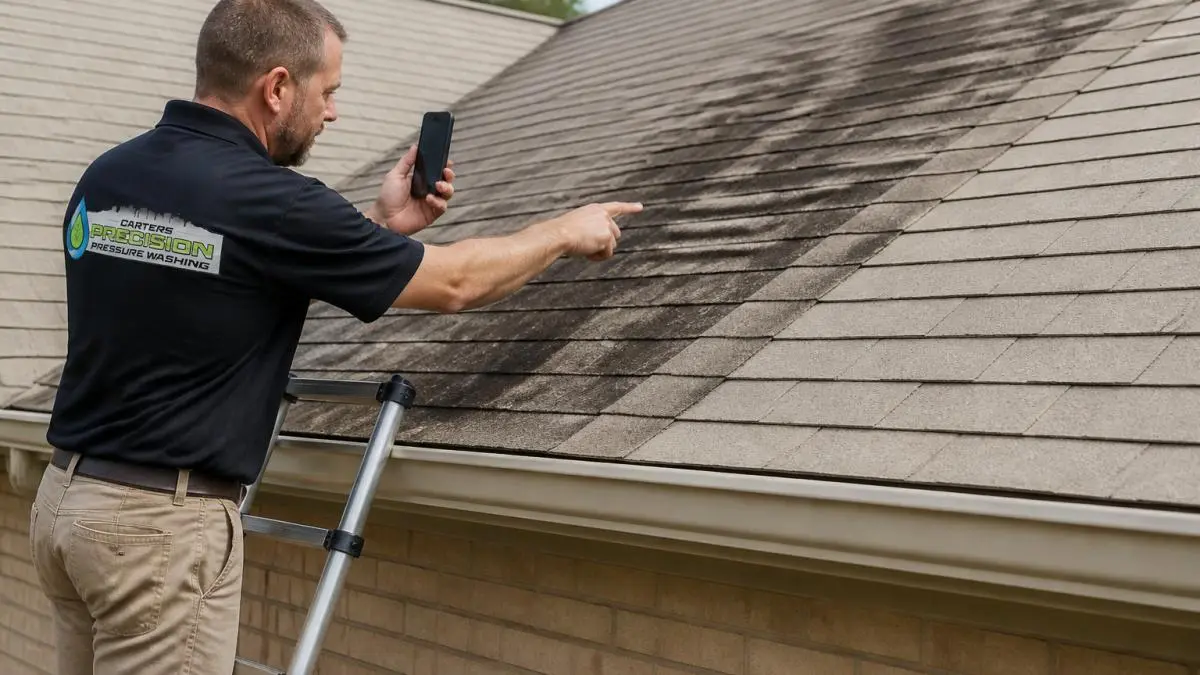
Follow this five-step check to tell them apart:
- Look at the shape. Long vertical lines point to algae. Round patches point to mold.
- Check the texture. Algae feels like a stain. Mold feels soft, fuzzy, or powdery.
- Note the color. Blue-black or dark gray streaks mean algae. Green, brown, or black clumps suggest mold.
- Find the location. North-facing and shaded slopes favor both, but mold needs more trapped moisture.
- Test a small spot. A drop of bleach on algae will lighten the stain. Mold usually wipes away with light pressure.
If you are unsure after step five, treat it as mold and call a pro. Guessing wrong wastes money.
Never scrub a shingle roof with a stiff brush or high-pressure wand to “test” a spot. You can strip the mineral granules off asphalt shingles, and those granules protect the roof from sun and rain. Once they are gone, the shingle ages fast.
Black Streaks on Roof: Why Algae Leaves Lines, Not Patches
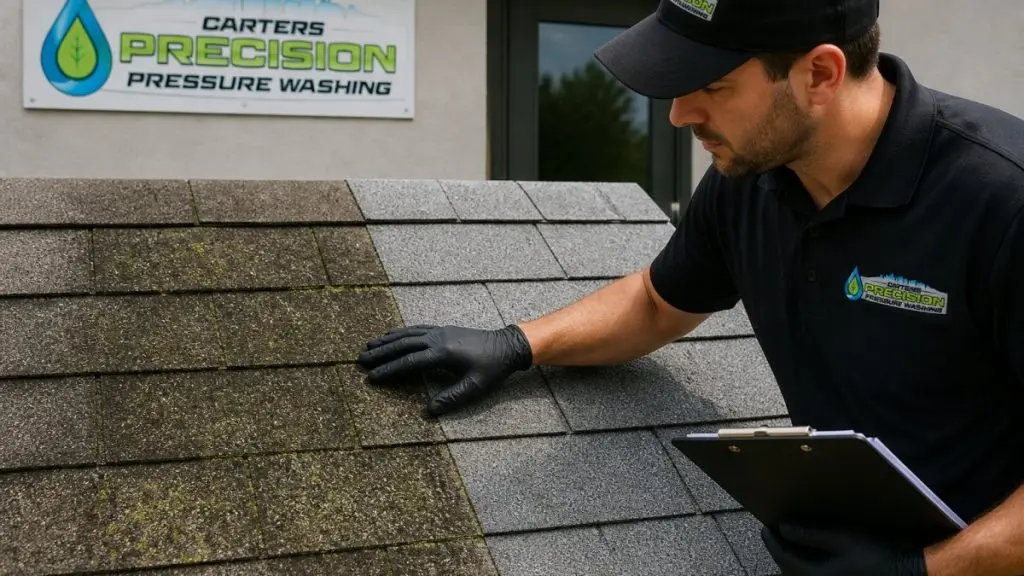
Black streaks on roof surfaces are the signature of a specific algae, and the pattern is not random. The organism spreads through airborne spores, then grows downward along the path water takes when it rains. That is why the streaks run vertically from the ridge toward the gutter.
Algae also prefers the shaded side of a roof. In Los Angeles, that usually means the north-facing slope, or any section under a tree canopy. The sun bakes the south side dry, which slows growth there.
The streaks are not dirt. They are a living colony plus the dark pigment it produces. That is why a plain garden hose will not remove them. The stain sits in the shingle surface and needs a chemical treatment to break down.
One more clue: algae streaks are usually uniform in width and run in parallel lines. Patches that spread outward in a circle are a different problem.
Roof Algae Identification: Color, Texture, and Location Clues
Roof algae identification comes down to three things: color, texture, and where it grows. Get those right and you will rarely misread a roof.
Color. Algae shows up as blue-black, dark gray, or brownish streaks. Fresh growth can look slightly green before it darkens.
Texture. Run a gloved hand over a dry patch. Algae feels flat and stains the glove. It does not flake or clump.
Location. Algae appears on the sloped, rain-washed parts of the roof, especially below the ridge and above the gutters. It favors shade but will grow in sun once established.
A quick side-by-side helps:
| Feature | Roof Algae | Roof Mold |
|---|---|---|
| Shape | Vertical streaks and lines | Round, irregular patches |
| Color | Blue-black, dark gray | Green, brown, black |
| Texture | Flat stain | Fuzzy, powdery, soft |
| Location | Shaded slopes, rain paths | Damp corners, debris piles |
| Moisture need | Moderate | High, constant |
Use this table as your first filter. If the growth is streaky and flat, you are dealing with algae.
Mold on a Roof: What It Looks Like and Where It Grows
Mold on a roof looks fuzzy, not streaky. It grows in clumps and patches, often near valleys, chimneys, skylights, and anywhere debris traps water. Those are the spots that stay damp longest.
Mold also tends to sit on organic material. Leaves, pine needles, and dirt piles on the roof feed it. That is a key difference from algae, which feeds on the shingles themselves.
Watch for these signs:
- Soft, green or black clumps that smear when touched
- Growth around roof penetrations and in low, flat areas
- A musty smell near attic vents
- Patches that return quickly after rain
If you see mold inside the attic or on ceiling boards, the roof may have a leak. That is a repair issue, not a cleaning issue, and you should call a roofer before anyone washes the surface.
How to Remove Algae From Roof Surfaces Safely
To remove algae from a roof safely, use a low-pressure chemical wash, not a pressure washer. The goal is to kill the organism and let rain rinse the dead growth away. Blasting the shingles does more harm than good.
Here is the approach we use and recommend:
- Protect the plants. Wet down landscaping below the roof and cover sensitive shrubs.
- Mix a cleaning solution. A diluted bleach or dedicated roof-cleaning product works. Follow the label ratios.
- Apply low and slow. Spray the solution from the bottom up so it does not streak.
- Let it dwell. Give the product time to kill the algae. Do not scrub.
- Rinse gently. Use low pressure and plain water to wash away the dead growth.
- Repeat in shaded areas. Those spots may need a second pass.
Always work on a cool, overcast day. A hot roof dries the solution before it can work, and wet shingles are less slippery than dry, sun-baked ones.
Apply your solution from the bottom of the slope upward. If you start at the top, the runoff streaks down over dry shingles and leaves clean lines that look worse than the original stain.
Soft Washing Roof Shingles: The Low-Pressure Approach
Soft washing roof shingles is the standard method for a reason. It uses low pressure and a cleaning solution to kill growth at the root, so the roof stays intact. High pressure can crack shingles and void warranties. Soft washing avoids that.
The process relies on chemistry, not force. The solution does the work, and a gentle rinse carries the debris away. This keeps the mineral granules in place and protects the shingle’s lifespan.
A few things to know before you start:
- Soft washing is safe for asphalt shingles, tile, and most roofing materials.
- It takes longer than pressure washing, but the results last.
- Rinsing plants before and after protects your yard.
- Never let the solution dry on the roof. Work in sections.
For homeowners who want the job done right without the ladder risk, Carters Precision Pressure Washing handles roof and house cleaning with low pressure and plant-safe methods.
Soft washing kills algae and mold at the source, so the growth does not bounce back in a few weeks. That is the difference between a treatment and a rinse.
When to Call a Professional Roof-Cleaning Service
Call a professional when the roof is steep, tall, or covered in heavy growth. Ladder work on a two-story home is a real fall risk, and slip injuries happen fast. If you are not confident on a roof, stay off it.
Reach out to a pro if any of these apply:
- The roof is steeper than a gentle slope
- Growth covers a large area or keeps returning
- You see mold near vents, skylights, or the attic
- Your shingles are old or already losing granules
- You want a result that holds up before listing your home
If you are selling and need the curb appeal to pop, a clean roof makes a strong first impression. Our team offers a free estimate and can walk you through what your roof actually needs. You can reach us for a free estimate.
Homeowners searching for roof cleaning “near me” in Los Angeles should ask about method, plant protection, and whether the company uses soft washing. Those three answers tell you a lot about the quality of the work.
Conclusion
Telling roof mold vs algae apart comes down to shape, texture, and location. Streaks mean algae. Fuzzy patches mean mold. Both need a low-pressure chemical wash, not a pressure wand.
If your roof is steep, heavily stained, or you want it looking its best before a sale, Carters Precision Pressure Washing can help. We specialize in soft washing for roofs and houses, use plant-safe methods, and restore curb appeal across Los Angeles, CA. Call for a free estimate and get your roof looking clean again.
Frequently Asked Questions
How can you tell the difference between mold and algae on a roof?
Algae usually shows up as dark green or black streaks that run vertically down the slope of the roof, often starting near the ridge. Mold tends to grow in irregular patches, clusters, or fuzzy spots, and it may appear green, black, or white. Algae is flat and streak-like; mold looks more textured. Check the location too: algae favors the shaded north side, while mold can grow anywhere moisture collects. If you’re unsure, a professional inspection can confirm what you’re dealing with.
Are black streaks on a roof mold or algae?
Black streaks are almost always algae, specifically a type called Gloeocapsa magma. These streaks start small and spread downward as rain carries spores across the shingles. Mold can also be black, but it usually forms patches rather than long, uniform lines. If the discoloration follows the flow of water and looks like dark stains rather than fuzzy growth, it’s algae. Soft washing is the recommended removal method for these streaks.
Can roof algae damage shingles?
Yes, over time. Algae itself doesn’t eat shingles, but it holds moisture against the surface, which can lead to granule loss and premature aging. The dark streaks also absorb heat, raising attic temperatures. If left untreated for years, the shingles may curl or crack. Regular cleaning and algae-resistant treatments help extend roof life. In Los Angeles, where sun exposure is high, addressing algae early prevents costly replacements.
Is it safe to clean roof mold yourself?
It can be risky. Walking on a roof, especially a steep or older one, invites falls. Pressure washing can blast granules off shingles and force water under flashing, causing leaks. Mold also releases spores that can irritate lungs. For small spots, a garden sprayer with a diluted bleach solution and a soft brush may work, but you must rinse plants thoroughly. For widespread mold or algae, a professional soft washing service is safer and more effective.