Table of Contents
- Why Driveway Cleaning Goes Wrong for Landscaping
- Checklist Before You Clean Driveway Surfaces
- How to Protect Plants During Pressure Washing
- How to Clean a Concrete Driveway Without a Pressure Washer
- Choosing a Plant-Safe Driveway Cleaner
- How to Remove Oil Stains From a Concrete Driveway
- When to Call a Professional Driveway Cleaning Service
- Conclusion
- Frequently Asked Questions
Last Updated: October 19, 2026
Why Driveway Cleaning Goes Wrong for Landscaping
Most driveway cleaning fails because of runoff, not scrubbing. Water carrying soap, bleach, or degreaser flows downhill into planting beds, and roots absorb it before anyone notices damage. In Los Angeles, where many driveways slope straight into drought-tolerant landscaping, that runoff reaches roots fast.
The problem is simple: cleaning products and pressure kill plants in three ways. Harsh chemicals burn roots and leaves. High-pressure spray strips bark and tears foliage. And overspray drifts onto nearby beds even when you aim carefully.
So the fix isn’t a gentler brush. It’s planning the water, the product, and the plants before you start. This guide covers each step.
Checklist Before You Clean Driveway Surfaces
Run through this list before any cleaner touches concrete. It takes ten minutes and prevents most plant damage.
- Check the forecast: no rain for 24 hours, so runoff doesn’t spread
- Note which way the driveway slopes and where water drains
- Move pots, planters, and yard decor off the concrete
- Cover beds and shrubs along the edges with plastic sheeting
- Water plants near the driveway deeply the day before
- Test your cleaner on a small hidden patch first
- Have a hose ready to dilute and flush runoff
- Close windows and doors on the driveway side
Deep watering matters more than people think. Hydrated plants handle stress better than dry ones, so a good soak the day before gives roots a buffer.
Photograph your beds before you start. If a plant reacts badly, you’ll know exactly what it looked like beforehand, which helps when adjusting your method.
How to Protect Plants During Pressure Washing
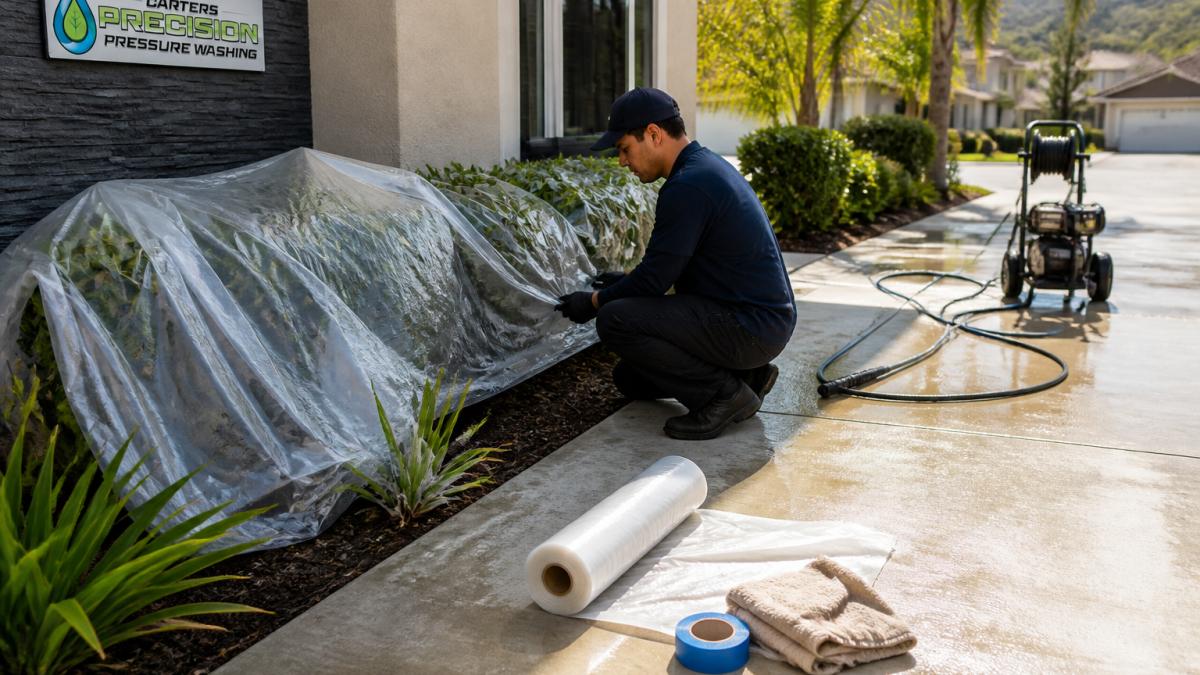
Protection comes down to three moves: cover, redirect, and rinse. Cover beds with plastic sheeting weighted at the edges. Redirect runoff by working from the low side of the driveway toward the drain. Rinse any overspray off leaves within minutes.
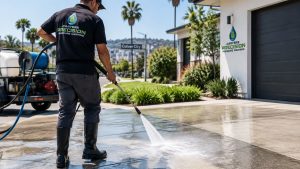
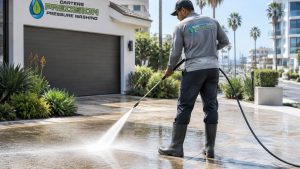
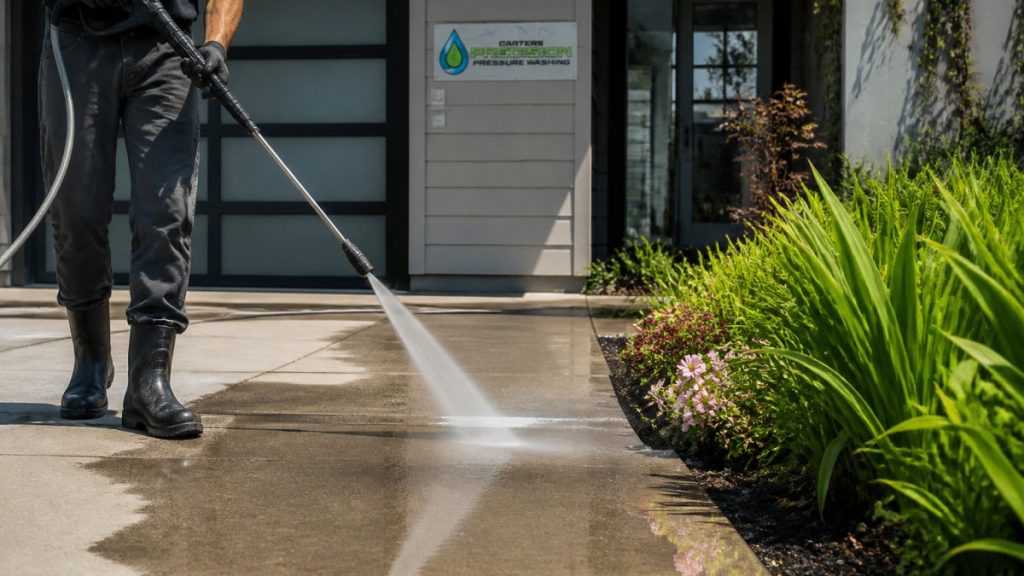
Pressure washing is the riskiest method for nearby plants, so slow down near the edges. Keep the wand moving and hold it at a shallow angle. Never blast soil, bark, or stems directly. A common mistake is spraying the concrete edge at full force, which sends a muddy mix straight into the beds.
Here’s how we’d set it up:
- Drape plastic over shrubs and secure it with bricks or stakes
- Keep the nozzle at least a foot from bed lines
- Work in sections, rinsing as you go
- Stop and flush any area where runoff pools
If you hire out, ask how the crew handles plant protection.
How to Clean a Concrete Driveway Without a Pressure Washer
You can clean a concrete driveway without a pressure washer using a scrub brush, a plant-safe cleaner, and a garden hose. It takes more elbow grease, but it’s the safest option when plants sit close to the concrete.
Start by sweeping off debris. Then mix your cleaner per the label and apply it to a small section. Let it sit for the listed time, scrub with a stiff brush, and rinse toward a drain, not the beds. Work in sections so the cleaner never dries on the surface.
For general grime, a mix of mild soap and water handles most of it. For tougher spots, use a dedicated concrete cleaner rated for plants. Avoid bleach near beds; it’s effective on stains but harsh on roots.
This method suits Los Angeles driveways with tight planting borders. It’s slower, but you control exactly where every drop lands.
Choosing a Plant-Safe Driveway Cleaner
A plant-safe driveway cleaner is a product formulated to break down grime without leaving residues that harm roots, leaves, or soil. Look for labels that say biodegradable, low-VOC, or safe around landscaping, and check the dilution ratio.
Not every “green” label means much. Read the ingredients and the application notes. Products with strong acids or caustics can burn plants even after dilution. Oxygen-based cleaners tend to be gentler on surrounding beds.
| Cleaner Type | Best For | Plant Risk | Notes |
|---|---|---|---|
| Mild soap and water | Light dirt | Low | Safe for most beds |
| Oxygen-based cleaner | General grime | Low | Follow dilution closely |
| Plant-safe concrete cleaner | Stubborn stains | Low to moderate | Rinse runoff well |
| Bleach-based cleaner | Mildew, algae | High | Keep away from beds |
| Acid-based cleaner | Rust, mineral stains | High | Pro use only |
Whatever you choose, test it on a small patch and keep runoff away from roots. When in doubt, dilute more than the label says.
How to Remove Oil Stains From a Concrete Driveway
Oil stains need a different approach than dirt. Start by blotting fresh oil with an absorbent material like cat litter or sand, then sweep it up. For set-in stains, apply a degreaser made for concrete and let it sit before scrubbing.
The tricky part is runoff. Degreasers are tough on plants, so work the stain with minimal water and soak up residue with rags instead of hosing it into the yard. For deep stains, a poultice of absorbent powder and solvent draws oil out of the concrete.
Repeat the process over a few days rather than flooding the area at once. Slow and controlled beats fast and messy every time.
Never rinse a degreaser into planting beds. The residue can linger in soil and harm roots long after the driveway looks clean. Soak it up with rags and dispose of them properly.
When to Call a Professional Driveway Cleaning Service
Call a professional when stains run deep, when your driveway is large, or when plants sit close enough that DIY runoff is risky. A pro crew has the equipment to control water flow and the know-how to pick products that won’t wreck your landscaping.
Selling a home is another good reason. Curb appeal shapes first impressions, and a clean driveway reads as a cared-for property (How to Boost Curb Appeal in Two Weekends or Less). If you’re listing soon, a professional clean saves time and gets a more even result.
We handle both residential and commercial driveways around Los Angeles, including storefronts and parking areas with heavy oil and grime. Pricing depends on size and condition, so call for a free estimate and we’ll walk you through the options.
Conclusion
Cleaning a driveway without harming your plants is doable. Protect the beds, pick a gentle cleaner, control the runoff, and slow down near the edges. The extra care pays off in a clean surface and a yard that stays green.
If you’d rather skip the risk, Carters Precision Pressure Washing offers pressure washing for driveways and patios, plus soft washing for roofs and siding. We plan water flow around your landscaping and restore curb appeal without the collateral damage. Call for a free estimate and let our team handle the dirty work.
Frequently Asked Questions
How do you clean a driveway without damaging nearby plants?
Wet the soil and plants around the driveway before you start, cover sensitive landscaping with plastic sheeting, and use plant-safe cleaners instead of bleach or heavy degreasers. Rinse runoff away from garden beds and work in small sections so you can control where the water and cleaner go. If you use a pressure washer, keep the nozzle angled away from plants and never spray directly into soil or foliage.
What driveway cleaners are safe to use around plants?
Mild dish soap, oxygen-based cleaners, and diluted vinegar are generally gentler on landscaping than bleach or solvent-based degreasers. Look for products labeled plant-safe or biodegradable, and always test on a small area first. Even gentle cleaners can harm plants in high concentrations, so dilute as directed and rinse the surrounding soil thoroughly with water after cleaning.
Can vinegar or bleach kill plants when cleaning a driveway?
Yes. Household bleach is highly toxic to plants and can kill grass, shrubs, and flowers on contact, and vinegar at high concentrations can lower soil pH and burn foliage. If you use either, keep them away from garden beds, cover plants with plastic, and flush the area with plenty of water afterward. Plant-safe alternatives are a safer choice near landscaping.
How do you remove oil stains from a driveway without harming plants?
Blot fresh oil with an absorbent material like cat litter or sand, then apply a paste of baking soda or a plant-safe degreaser and let it sit before scrubbing. Avoid solvent-based products that can leach into soil. Rinse the area with water and direct runoff away from plants, and repeat the process for stubborn stains rather than using a stronger chemical.