

Last Updated: November 3, 2026
Quick Summary
Commercial entryway mats stay worth the upkeep when you vacuum daily, deep clean by mat type on a weekly to monthly cadence, and run a monthly inspection checklist. Replace any mat that fails two or more checklist items, and pull mats from service immediately if they will not lie flat.
- Heavy traffic needs daily vacuuming and weekly deep cleaning; light traffic can deep clean monthly.
- Lift mats weekly to check edges, backing, and trapped moisture underneath.
- Two or more failed checklist items triggers a replacement plan.
- Rotate mats quarterly between high- and low-traffic doors to distribute wear.
- Schedule replacement in April or May, before summer dust season loads new mats.
Table of Contents
- Why Entryway Mats Earn Their Keep at Your Door
- How to Clean Commercial Entryway Mats
- High-Traffic Entryway Cleaning Frequency That Actually Works
- OSHA Floor Safety Requirements and Trip Hazard Checks
- Commercial Mat Lifespan Factors: What Wears Yours Out First
- When to Repair or Replace: A Los Angeles Inspection Checklist
- Your Seasonal Maintenance and Replacement Calendar
- Book a Deep Clean Before Your Next Mat Swap
- Frequently Asked Questions
Why Entryway Mats Earn Their Keep at Your Door
Commercial entryway mat maintenance and replacement schedule planning starts with one fact: the mat at your door is the cheapest floor-cleaning tool you own.
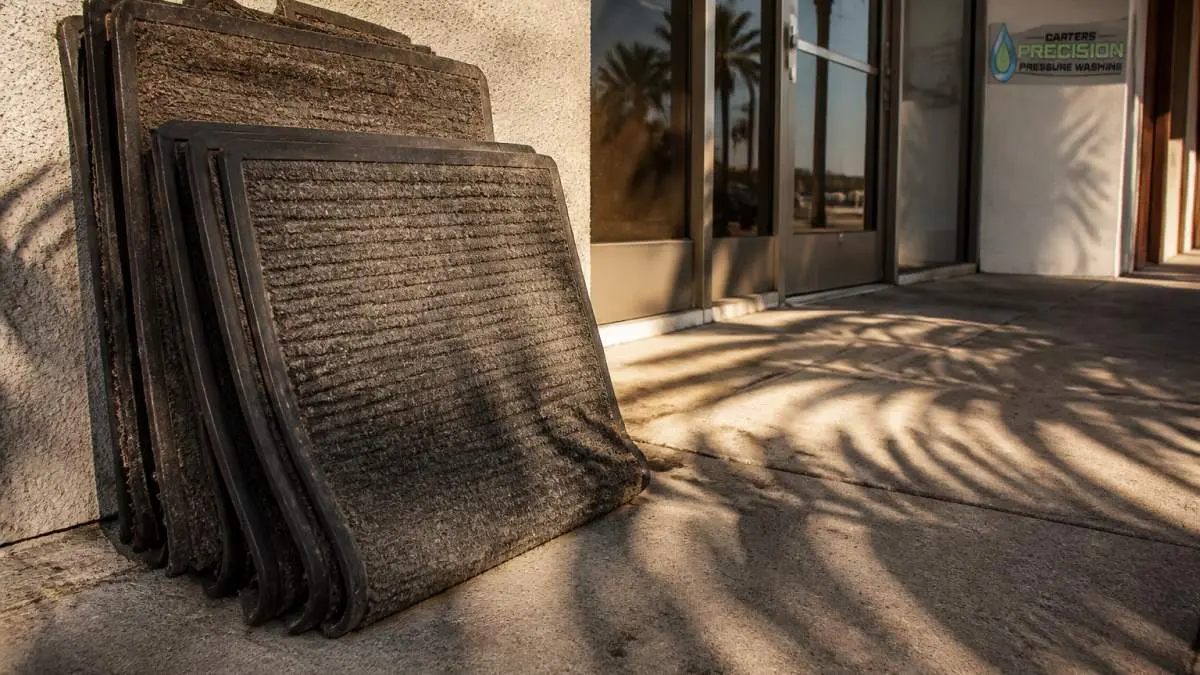
Walk into any Los Angeles storefront after a dry, dusty week and you will see the difference in minutes. Mats that get vacuumed daily tend to hold their pile and keep gripping.
Mats that are treated as routine stay in far better condition than those that are ignored.
How to Clean Commercial Entryway Mats
Cleaning depends on mat type, but the daily routine is the same: remove loose debris before it works into the fibers. Skip that step and deep cleaning just pushes dirt deeper.
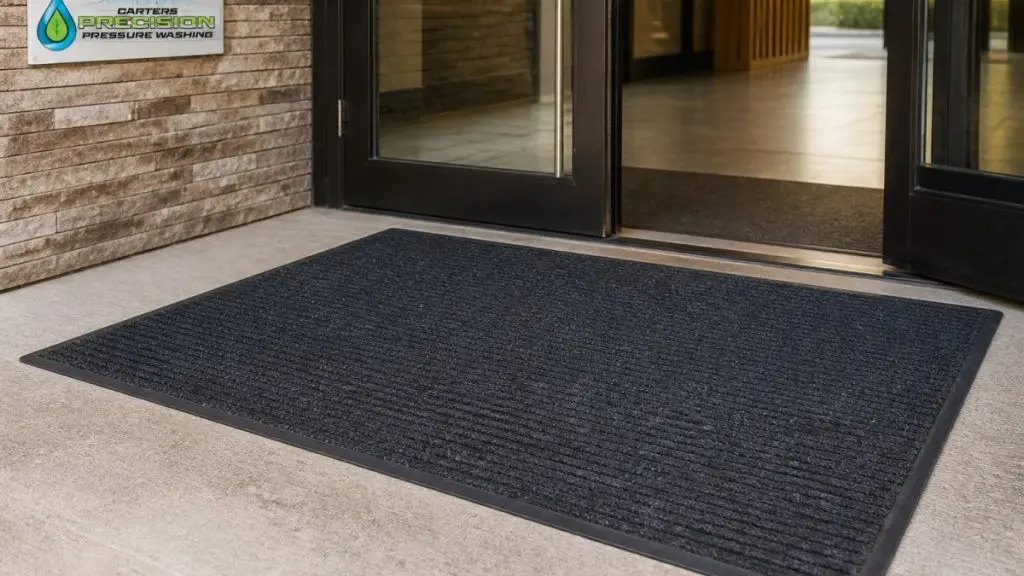
Mat construction decides your method:
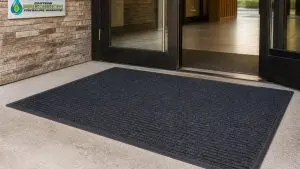
- Vinyl loop and rubber-backed mats: hose down, scrub, rinse, hang to dry
- Carpet-faced mats: vacuum daily, extract periodically
- Scraper/wiper systems: vacuum the scraper section, lift and clean beneath
Daily Vacuuming and Debris Removal
Daily vacuuming is the single highest-value task in any mat program. Pull grit out every morning before foot traffic grinds it into the backing.
Shake or sweep vinyl loop mats, then spot-clean spills immediately. Debris removal at the door keeps soil control working the way the mat was designed.
Deep Cleaning by Mat Type
Deep clean on a schedule, not only when the mat looks bad, and check backing condition as well as appearance.
- Vinyl loop: scrub with a mild detergent solution, rinse thoroughly, and dry flat before returning
- Carpet-faced: use hot water extraction or low-moisture cleaning to lift embedded soil
- Rubber-backed: avoid soaking the backing; moisture trapped underneath breeds odor and mold
Always check the floor beneath the mat after lifting it. Trapped moisture there damages tile, sealer, and concrete.
High-Traffic Entryway Cleaning Frequency That Actually Works
High-traffic entryway cleaning frequency should follow foot traffic, not the calendar alone. A busy retail door needs daily attention; a quiet office entrance can stretch to several days.
A practical baseline:
- Heavy traffic: vacuum daily, deep clean weekly
- Moderate traffic: vacuum daily, deep clean biweekly
- Light traffic: vacuum several times weekly, deep clean monthly
Adjust for weather. During Los Angeles dust season or after rain, increase frequency and add interim cleaning passes. For entrances that handle heavy foot and vehicle traffic, see drive-thru cleaning services in Los Angeles, CA.
OSHA Floor Safety Requirements and Trip Hazard Checks
OSHA floor safety requirements do not name mats specifically, but walking-working surface rules require employers to keep floors clean, dry, and free of hazards. A curled mat edge or saturated mat qualifies as a trip or slip hazard.
Check these every week:
- Edge curling or lifting corners
- Backing cracks or separation
- Visible moisture saturation
- Gaps between mats that catch a shoe
Walkways and entryways must stay clear. If a mat will not lie flat, pull it from service. For a deeper look at entryway safety, read our guide on preventing slip and fall accidents in commercial entryways.
Commercial Mat Lifespan Factors: What Wears Yours Out First
Commercial mat lifespan depends on traffic volume, mat quality, cleaning habits, and sun exposure. Most failures start at the edges and the backing, not the surface.
The usual culprits:
- Edge curling from foot drag and poor fit
- Backing breakdown from trapped moisture
- Fiber flattening from skipped vacuuming
- UV damage on mats left in direct sun
Rotation extends life. Swap mats between high-traffic and low-traffic doors to distribute wear. A mat that fails inspection should be repaired if the damage is minor and replaced if the backing is compromised.
When to Repair or Replace: A Los Angeles Inspection Checklist
Replacement is a decision, not a guess. A consistent checklist with pass/fail thresholds helps two inspectors reach the same conclusion. Run it monthly and log the results; the log becomes your replacement schedule.
Objective Inspection Checklist
- Flatness: Mat lies flat with no edge lift greater than roughly a quarter inch at any corner
- Backing integrity: No cracks, separation, or delamination visible when the mat is lifted
- Moisture: No standing water or damp film on the floor beneath the mat
- Absorbency: A splash of water beads on the surface instead of soaking in within a few seconds
- Pile: Fibers still stand up and grip; no flattened, slick lanes along the main walking path
- Odor: No persistent musty smell after a full dry
- Fit: Mat covers the entry with no gaps wider than a shoe width at thresholds or between mats
- Trip lip: No raised transition at the mat edge or between mat sections
If two or more boxes fail, plan replacement. If only one fails and it is a surface issue (pile, odor, absorbency), a deep clean and full dry may restore it, recheck in two weeks.
Repair vs. Replace Decision Rule
- Repair when the failure is surface-level: flattened pile, odor, reduced absorbency, or a minor edge curl that a backing strip can correct.
- Replace when the backing is cracked or separated, when the mat will not lie flat after resetting, or when the mat has failed the same checklist item twice in a row.
- Pull from service immediately when a mat will not lie flat or shows a trip lip; do not wait for the monthly review.
Mat-Type Notes
- Carpet-faced mats fail first at the pile along the main walking lane; check absorbency there, not at the edges.
- Vinyl loop and scraper mats fail first at the backing and at edge curl; lift and inspect the underside.
- Rubber-backed mats fail from trapped moisture; odor and backing separation are the early signals.
Rental vs. Owned: A Lifecycle Cost Framework
Rental-service mats and owned mats carry different cost structures, and the replacement schedule should reflect which one you run.
- Owned mats: You carry the purchase price, the labor to clean and dry them, storage for rotation, and the full replacement cost at end of life. The advantage is control over cleaning method and timing.
- Rental-service mats: You pay a recurring service fee that bundles delivery, exchange, laundering, and replacement. The advantage is that worn mats are swapped out on the vendor’s schedule rather than yours; the trade-off is less control over mat type and cleaning method.
A common pattern is to compare the annual service fee against the combined cost of purchase amortized over the mat’s life, cleaning labor, and replacement. Whichever number is lower over a three-to-five-year horizon is the better fit for that entrance. For the full picture on entryway upkeep, see our storefront entryway maintenance guide.
Your Seasonal Maintenance and Replacement Calendar
A calendar keeps mat care from becoming an emergency. The table below converts the intervals above into a working schedule a facility team can post at the door. It is built around Los Angeles conditions: a long dry season that loads mats with dust and grit, a short but intense rain window from roughly November through March, and Santa Ana wind events that push fine debris into every entrance.
Daily, Weekly, Monthly, Quarterly Cadence
| Cadence | Task | Who | Pass/Fail Check |
|---|---|---|---|
| Daily | Vacuum carpet-faced mats; shake or sweep vinyl loop; spot-clean spills | Custodial | No visible grit or standing moisture at end of shift |
| Weekly | Lift mats, sweep and mop beneath, inspect edges and backing | Lead custodian | Mat lies flat; no curled corners; no water trapped underneath |
| Monthly | Deep clean by mat type; run the full inspection checklist | Supervisor | Two or more checklist failures triggers a replacement plan |
| Quarterly | Rotate mats between high- and low-traffic doors; log wear | Facility manager | Rotation log updated; worn mats flagged |
| Annually | Full replacement review; budget for next cycle | Property manager | Replacement list approved and funded |
Month-by-Month for Los Angeles Entrances
- January-March (rain window): Increase interim passes after each storm. Pull saturated mats, dry them flat, and confirm the floor beneath is dry before resetting. Watch out: a mat returned damp will trap moisture against tile or sealed concrete and start odor and backing breakdown within days.
- April-May (transition): Deep clean all mats and inspect backing before the dry season. This is the best window to schedule replacement so new mats are in place before summer dust loads.
- June-September (dry/dust season): Vacuum daily and add a mid-day pass at high-traffic retail doors. Fine dust works into pile faster than visible dirt, so judge by feel and backing condition, not appearance. Check UV wear on mats left in direct sun.
- October-November (Santa Ana winds): Expect spikes in grit and debris. Increase vacuuming and clear entry thresholds of blown material before it reaches the mat.
- December (pre-rain reset): Rotate mats, replace any flagged in the annual review, and confirm drainage at recessed entries is clear before the rain window opens.
Entryways, lots, and walkways can be kept on one maintenance schedule. A common pattern is to align the annual mat replacement review with the parking-lot sweeping contract so both are budgeted and scheduled together. Readers planning recurring upkeep can also fold in parking lot and garage cleaning services in Los Angeles, CA.
Book a Deep Clean Before Your Next Mat Swap
Mats only work on a clean floor. Before you replace worn entryway mats, have the concrete and tile beneath them professionally cleaned so new mats start on a sound surface.
Carters Precision Pressure Washing provides soft washing for roofs and houses plus pressure washing for driveways, patios, and hard surfaces across Los Angeles. We restore appearance, enhance curb appeal, and help commercial property managers keep entryways looking sharp. If you are weighing mat upkeep against a full refresh, book storefront cleaning in Los Angeles and see the difference a deep clean makes.
Call for a free estimate and get your entryways ready for the next mat swap.
Frequently Asked Questions
How often should you replace commercial entryway mats?
Most commercial entryway mats last about two to five years depending on material, foot traffic, and how consistently they are cleaned and rotated. Replace yours when the backing cracks, edges curl, the surface stays matted or waterlogged after drying, or fibers shed onto the floor. Inspect monthly and log the condition so replacement is based on wear, not guesswork.
Does OSHA require floor mats in commercial buildings?
OSHA does not mandate mats by name. Its walking-working surfaces rule requires employers to keep floors clean, orderly, and dry, and to correct slip and trip hazards. Mats are one of the most practical ways to meet that standard at entrances, where rain and tracked soil make floors wet. If you use mats, keep them flat, intact, and free of curled edges so they do not become a trip hazard themselves.
What are the signs that an entryway mat needs replacement?
Watch for curled or torn edges, a cracked or crumbling backing, permanent stains, a nap that no longer springs back, and water that pools on top instead of soaking in. Mats that slide when stepped on or leave residue on shoes are also done. Any of these raises slip or trip risk, so replace rather than repair once the backing or edges fail.
How do Los Angeles weather conditions affect mat maintenance?
Los Angeles alternates between dry, dusty stretches and winter rain, so mats collect grit most of the year and then face wet, muddy foot traffic in storms. Vacuum more often during dry spells and increase deep cleaning during the rainy season. Sun exposure at west- and south-facing entrances also fades and dries out rubber backing, so check those mats for brittleness first.
Your entryway mats can only protect a floor that is already clean. Get started with Carters Precision Pressure Washing and restore the surfaces beneath and around your mats with professional soft washing and pressure washing.