

Last Updated: November 4, 2026
Quick Summary
Professional stucco maintenance is the routine inspection, cleaning, and repair of your home’s exterior finish to prevent water damage and preserve structural integrity. For Los Angeles properties, it protects stucco from a dry-then-wet climate cycle that opens hairline cracks and lets moisture behind the wall. Skipped stucco maintenance is how a small repair becomes a larger one.
- Soft washing, not high-pressure washing, is the right method for cleaning stucco siding.
- Warning signs of water damage include recurring cracks, efflorescence, and soft or hollow spots.
- A professional visit includes inspection, landscaping clearance, soft washing, spot repairs, and a moisture check.
- Trim shrubs and tree limbs back at least 12 inches from the wall to avoid trapped moisture.
- Do not seal a crack that is wet or actively weeping.
Table of Contents
- Why Stucco Maintenance Matters for Los Angeles Properties
- Soft Washing Stucco vs Pressure Washing: Choosing the Right Method
- Signs of Stucco Water Damage You Should Never Ignore
- What a Professional Stucco Maintenance Visit Includes
- The Cost of Stucco Cleaning in Los Angeles and What Drives It
- Repair or Restucco: Making the Call Before Damage Spreads
- Build a Stucco Maintenance Schedule That Fits Your Property
- Book a Free Stucco Cleaning Estimate Before You List
- Frequently Asked Questions
Why Stucco Maintenance Matters for Los Angeles Properties
Professional stucco maintenance is the routine inspection, cleaning, and repair of your home’s exterior finish to prevent water damage and preserve structural integrity. For Los Angeles properties, this work protects one of the most common siding materials in the region from a climate that swings between long dry spells and sudden heavy rain. Skipped maintenance on stucco homes is a common pattern across the city. The pattern is predictable: hairline cracks go ignored, moisture finds a path behind the wall, and a small repair turns into a larger one.
How the Local Climate Tests Exterior Finish
Los Angeles weather is gentle on stucco most of the year, which is exactly what makes it risky. Months of dry heat cause the cement-based finish to expand and contract, opening hairline cracks. Then the rainy season arrives, and water drives into those cracks. Stucco is a hard, porous exterior finish, and it does not shed water the way paint or siding does. Once moisture gets behind the surface, it has nowhere to go. A common mistake is assuming a dry climate means stucco needs no attention.
Soft Washing Stucco vs Pressure Washing: Choosing the Right Method
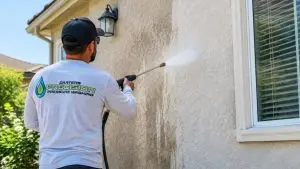
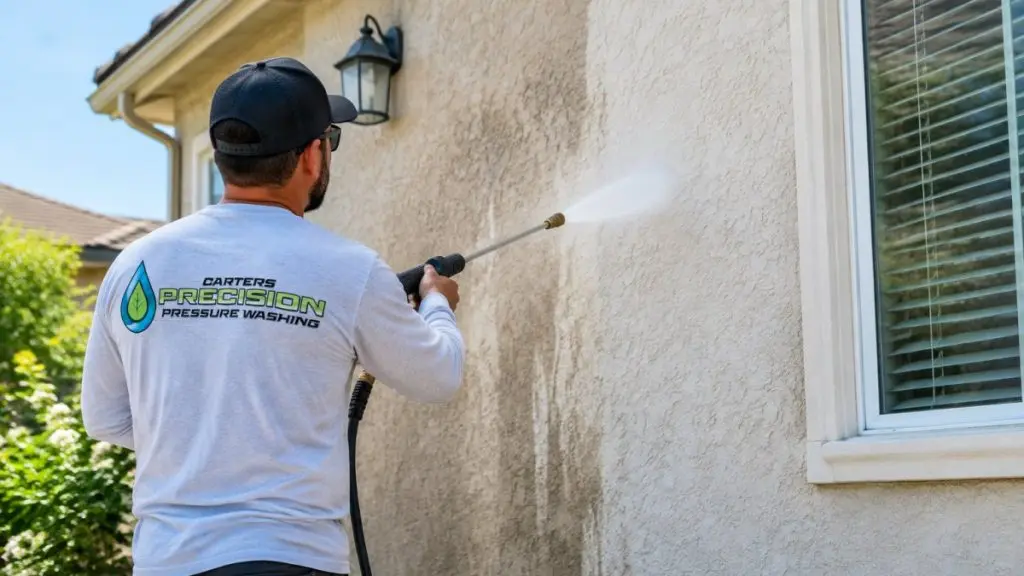
The right method for cleaning stucco siding is soft washing, not high-pressure washing. Soft washing uses low pressure and a cleaning solution to lift dirt, mildew, and algae without forcing water into the surface.
Stucco is a cement-based exterior finish applied over a substrate, and its surface is more delicate than it looks. The difference between the two methods comes down to pressure and dwell time:
- Soft washing: low pressure, cleaning solution does the work, safe for stucco, EIFS, and painted surfaces
- Pressure washing: high pressure, mechanical force does the work, suited to concrete driveways, patios, and hard surfaces
For a closer look at doing this safely, see our guide on safe pressure washing for stucco homes. If you are weighing whether to clean it yourself, understand that the risk is not the dirt, it is the water you push into the wall.
Signs of Stucco Water Damage You Should Never Ignore
The clearest signs of stucco water damage are cracking, bubbling or blistering paint, dark stains, and a soft or hollow feel when you press on the wall. Any one of these means water is likely already behind the finish.
Watch for these warning signs:
- Hairline or spiderweb cracks that keep returning after patching
- Mildew, mold, or green algae streaks on the surface
- Chalky residue or paint peeling away from the stucco
- Stains on interior walls or ceilings near exterior corners
- Efflorescence, a white powdery deposit that signals moisture moving through the wall
- Soft spots, crumbling edges, or stucco pulling away from trim and windows
Hidden damage is the expensive kind. Water that enters at a window frame or roofline can travel sideways inside the wall before it ever shows on the surface. If you spot two or more of these signs, have the wall inspected before the next rainy season rather than after.
What a Professional Stucco Maintenance Visit Includes
A professional stucco maintenance visit is a full exterior assessment and cleaning, not just a wash.
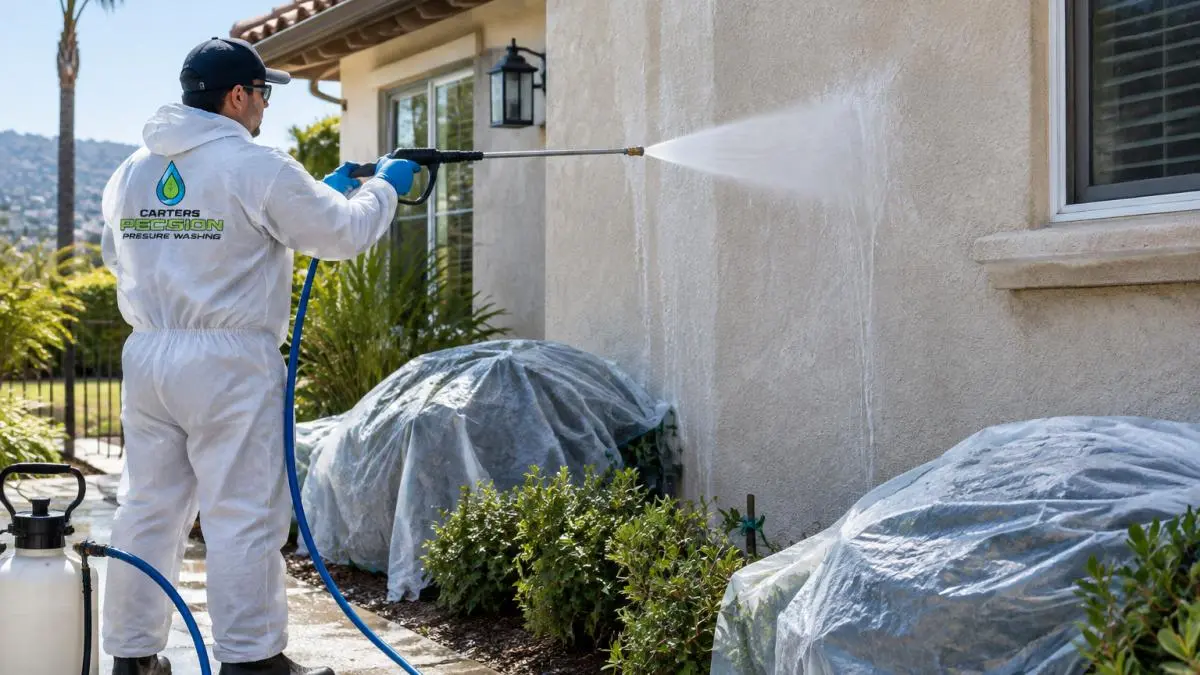
Here is what a proper visit covers, and what to ask about when you hire:
- Inspection checklist: walk the full exterior, note cracks, stains, and areas where stucco meets trim, windows, and the roofline
- Landscaping clearance: trim plants and shrubs back from the wall so they are not trapping moisture
- Soft washing: clean the surface with low pressure and a solution matched to the finish
- Spot repairs: seal minor cracks and address small areas of surface damage before they spread
- Moisture check: verify the wall is dry and that repairs have sealed properly
- Written notes: document what was found and what was done, so you can track long-term performance
Our guide on how to safely clean stucco siding covers the cleaning side, and our article on best cleaners for stucco walls discusses cleaning solutions.
The Cost of Stucco Cleaning in Los Angeles and What Drives It
The cost of stucco cleaning in Los Angeles depends on factors such as square footage, how much buildup there is, how accessible the walls are, and whether repairs are needed. Pricing varies by property, so contact Carters Precision Pressure Washing for current pricing or a quote.
The main cost factors:
- Size of the home: more wall area means more time and solution
- Condition: heavy mildew, algae, or staining takes longer to treat
- Access: two-story walls, tight side yards, and steep lots add labor
- Repairs: crack sealing and patching are separate from cleaning
- Frequency: routine maintenance is cheaper than a one-time deep restoration
For a broader view of exterior cleaning, see our professional exterior cleaning cost guide. For stucco specifically, ask for a written estimate that separates cleaning from repairs, so you can compare quotes fairly.
Repair or Restucco: Making the Call Before Damage Spreads
Minor cracks and small patches are often repaired, while widespread damage may call for restucco over a larger area. The harder question is not which option to pick but how to confirm what is actually causing the damage before you commit to either.
Diagnosing Moisture Before You Repair
Water that shows up at a window frame can originate at the roofline and travel sideways inside the wall, so the visible damage is often not the source.
Repair or Restucco Decision Framework
| Situation | Recommended Action | Why |
|---|---|---|
| A few hairline cracks | Seal and monitor | Cheap, fast, stops water entry |
| Localized staining or mildew | Clean and treat | Surface issue, not structural |
| Cracks returning after patching | Diagnose for hidden moisture before re-repairing | Patching over a wet wall fails again |
| Soft, crumbling stucco over a large area | Restucco that section | Finish has lost integrity |
| Water stains inside the home | Diagnose the source before repairing | Source may be a window or roof leak |
Permits, Codes, and Contractor Due Diligence
Larger stucco work, such as restucco over a whole elevation, may require permits. Confirm requirements with your local building department. Licensed stucco contractors in California work to state building codes, and you can verify a contractor’s license through the California Contractors State License Board.
Before work begins, you can ask any contractor for proof of insurance and a written scope that separates diagnosis, cleaning, patching, and restucco. Ask how the contractor will confirm the moisture source was addressed rather than just covered.
Build a Stucco Maintenance Schedule That Fits Your Property
A practical stucco maintenance schedule for a Los Angeles home can be built around the region’s dry and rainy seasons. The schedule below is organized around that rhythm rather than a generic four-season template, because the failure mode here is dry-season cracking followed by wet-season intrusion.
The Annual Routine
- Early spring (March-April): walk the exterior after the last significant rain. Look for new cracks, efflorescence, paint blistering, and stains at window and roof intersections. Photograph anything you find with a date reference so you can tell whether it is growing.
- Late spring (May): trim shrubs, vines, and tree limbs back at least 12 inches from the wall so plants are not trapping moisture against the finish. Clear debris from the base of the wall where soil meets stucco.
- Early summer (June): schedule professional soft washing once the dry season is established.
- Mid-summer (July-August): seal new hairline cracks and address any spot repairs. Sealing in dry weather gives the material time to cure before rain returns.
- Early fall (September-October): clear gutters and downspouts, confirm drainage slopes water away from the foundation, and check rooflines, window frames, and penetrations where water commonly enters.
- After any major storm: do a quick visual pass on the walls facing the weather, and note any new staining or soft spots.
What to Document and When to Call a Professional
A homeowner walk-around is not a substitute for a professional inspection, but it is how you catch problems early. Keep a simple log with photos and dates.
Call a professional when you see two or more of those signs at once, when a crack keeps returning after patching, or when you find interior staining near an exterior corner.
Watch out: do not seal a crack that is wet or actively weeping. Trapping moisture behind a fresh patch is how a surface repair turns into a wall-cavity problem.
Commercial and Multi-Unit Properties
Commercial buildings and multi-unit residential properties benefit from the same rhythm but usually need a written annual inspection on file for property management and insurance purposes. A professional visit that produces dated documentation is more useful than an informal walk-around when you need to show a history of maintenance.
Book a Free Stucco Cleaning Estimate Before You List
If you are selling in the next few months, get a stucco cleaning estimate before you list.
At Carters Precision Pressure Washing, we handle soft washing for stucco, roofs, and houses, plus pressure washing for driveways, patios, and hard surfaces across Los Angeles.
Ready to see what your property should look like? Get a free pressure washing estimate online, or call Carters Precision Pressure Washing for a free estimate before your listing goes live.
Frequently Asked Questions
How often should stucco be professionally cleaned and inspected in Los Angeles?
Most Los Angeles properties benefit from professional stucco maintenance once a year, ideally before the dry season puts stress on the exterior finish. Homes near the coast or under heavy tree cover may need cleaning every six to nine months because salt air and shade encourage mold and mildew. A routine inspection during each visit catches hairline cracks and moisture intrusion before they reach the sheathing. Pair the annual cleaning with a walk-around after any major rainstorm to spot new damage early.
Can pressure washing damage stucco if done incorrectly?
Yes. Stucco is a cement-based exterior finish, and a high-pressure stream aimed at cracks or around windows can force water behind the cladding, which leads to hidden damage and expensive repairs. That is why soft washing, which uses low pressure and a cleaning solution, is the safer choice for stucco siding. A professional contractor adjusts pressure and nozzle distance to the surface. If you see paint stripping, crumbling texture, or water stains after a cleaning, the method was too aggressive.
Is stucco maintenance covered by homeowners insurance in California?
Coverage depends on the cause. Homeowners policies generally cover sudden damage from a covered peril, such as a burst pipe or storm-driven rain, but they often exclude gradual deterioration, poor maintenance, and long-term moisture intrusion. That means catching the signs of stucco water damage early and keeping maintenance records matters for any claim. Review your policy with your agent and document inspections and repairs. Preventive stucco maintenance is usually an out-of-pocket cost, not an insured loss.
What is the difference between stucco cleaning and stucco repair?
Cleaning removes dirt, mold, mildew, and grime from the surface to restore curb appeal and let you inspect the finish. Repair addresses physical defects: cracks, delamination, chipped corners, and moisture damage that has reached the substrate. Cleaning is routine upkeep; repair is corrective work that may involve patching, sealing, or a partial restucco. A professional maintenance visit usually combines both, flagging repair items during the wash. Skipping cleaning makes small defects harder to see until they become costly repairs.
Your stucco is only as protected as the last inspection you did. If you cannot remember the last time the walls were checked, that is your sign to start. Carters Precision Pressure Washing offers soft washing, surface cleaning, and careful exterior care for homes and businesses throughout Los Angeles. Call for a free estimate and get a clear plan for your property.