

Quick Summary
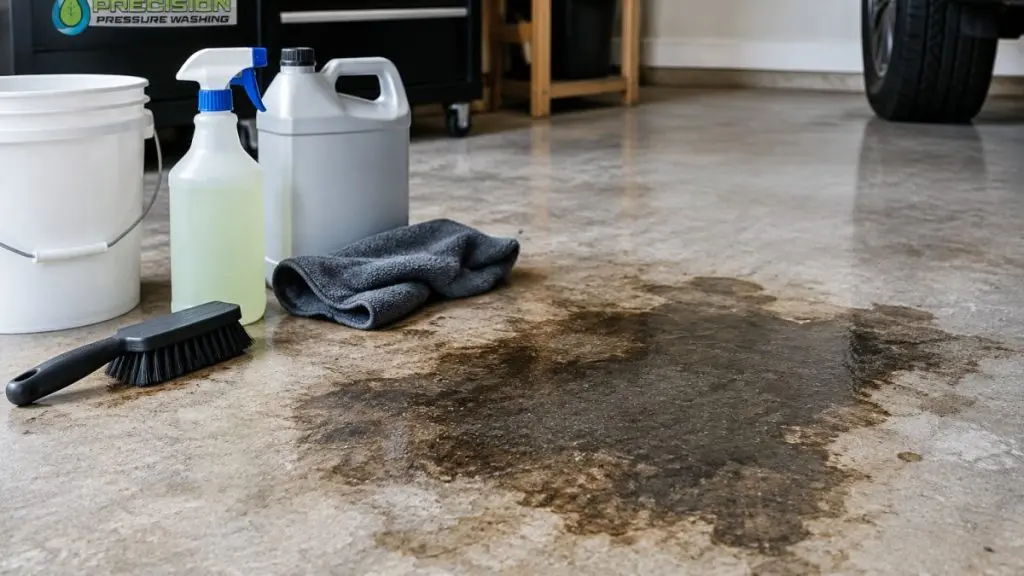
Cover the old garage floor oil stain with baking soda or kitty litter, let it sit 12 to 24 hours, then sweep it up and scrub the spot with warm water and a stiff brush. Repeat if the stain is still dark, and switch to a degreaser matched to the fluid if it persists.
- Most old stains lift with absorbent powder and warm water scrubbing.
- Let baking soda or kitty litter sit for at least 12 to 24 hours.
- Wear nitrile gloves and safety glasses, and ventilate the garage.
- Match the degreaser to the fluid, since transmission fluid and gear oil need different products.
- Test any product on a hidden spot first, then let concrete dry 24 to 48 hours before sealing.
Table of Contents
- Why Old Oil Stains Set Into Concrete and When They Become Permanent
- Gather the Right Tools and Protect Yourself Before You Start
- How to Remove Old Oil Stains from Garage Floor with Baking Soda and Absorbents
- Choosing the Best Garage Floor Oil Stain Remover for Stubborn Stains
- Scrubbing, Rinsing, and Handling Chemical Waste Safely in Los Angeles
- Diagnosing Stains and Avoiding Surface Damage on Different Concrete Types
- When to Call a Professional Concrete Pressure Washing Service in Los Angeles
- Booking a Free Estimate and Sealing Your Garage Floor After Cleaning
- Frequently Asked Questions
Why Old Oil Stains Set Into Concrete and When They Become Permanent
Last Updated: November 5, 2026
If you have an old oil stain on your garage floor, you are not alone, since most garage floors pick up a garage floor oil stain over the years.
Concrete is porous, with tiny openings that soak up liquids. Oil moves into those openings and stays there, and heat from the car and daily foot traffic push it deeper.
Here is what happens over time:
- Days to weeks: Oil sits on top and can be wiped or soaked up.
- Months: Oil soaks into the top layer of concrete.
- Years: The stain goes deep and darkens, and may leave a faint outline even after cleaning.
A stain becomes effectively permanent only when oil has penetrated deep into the slab and the surface is damaged.
Gather the Right Tools and Protect Yourself Before You Start
Before you touch the stain, gather supplies and safety gear. Degreasers and solvents can irritate skin and eyes, and some give off strong fumes.
Tools and materials:
- Stiff-bristled scrub brush (nylon or wire, depending on the concrete)
- Bucket of warm water
- Baking soda or an absorbent such as kitty litter or oil dry
Safety gear:
- Nitrile or chemical-resistant gloves
- Safety glasses or goggles
- A dust mask if you are scrubbing dry powder
Open the garage door or run a fan to keep fumes from building up, and keep children and pets out of the area while you work. Read the label on any cleaner; some products say not to mix them with other chemicals, and mixing can create dangerous gases.
How to Remove Old Oil Stains from Garage Floor with Baking Soda and Absorbents
Start with the gentlest method. Many old stains respond well to baking soda or an absorbent before you move to stronger products.
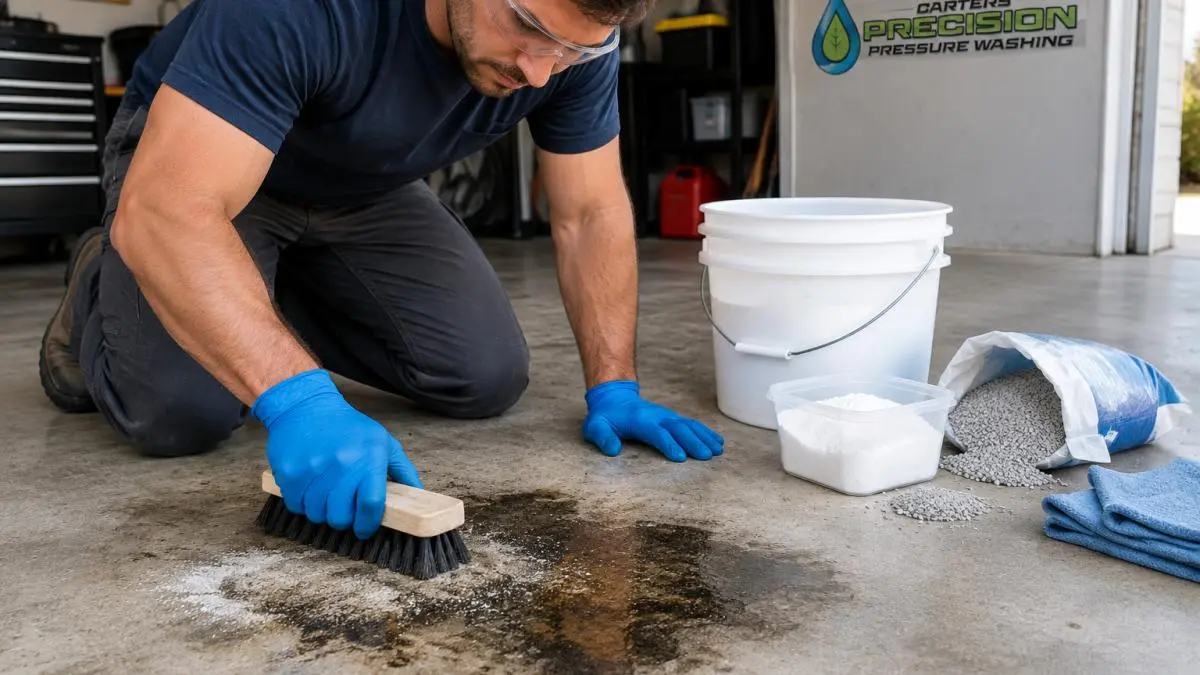
- Sweep the floor. Remove loose dirt and debris so it does not turn into paste.
- Cover the stain. Spread baking soda or kitty litter thickly over the stain. Make sure the stain is fully covered.
- Let it sit. Leave it for at least 12 to 24 hours. Longer dwell time helps the powder pull oil out of the concrete.
- Sweep up the powder. Scoop the used absorbent into a sealed bag.
- Scrub the spot. Add warm water and scrub with a stiff brush. Work in small circles.
- Rinse and check. Rinse with clean water and let the spot dry. Check for remaining oil.
Repeat the process if the stain is still dark. Two or three rounds often lift a lot of oil.
Watch out: Do not sweep oily absorbent into a storm drain or trash can without checking local rules. Used oil-soaked material must be disposed of properly.
Choosing the Best Garage Floor Oil Stain Remover for Stubborn Stains
When baking soda and absorbent have pulled what they can, the next step is a chemical remover matched to the stain. The mistake most homeowners make is buying the strongest degreaser on the shelf before identifying what actually leaked. Different fluids respond to different chemistries, and the wrong product can set a stain or etch the concrete.
Diagnose the stain before you shop
Look at color, location, and smell before you buy anything:
- Motor oil: Brown to black, often under the engine or along the centerline of the parking spot. It darkens over time and has a faint petroleum smell. Most alkaline degreasers and absorbents work well.
- Transmission fluid: Red or reddish-brown when fresh, dark brown when old. It spreads in a wider, thinner pattern than motor oil. It responds to the same alkaline degreasers but often needs a longer dwell time because it is thinner and penetrates faster.
- Coolant/antifreeze: Green, orange, or pink, usually near the front of the vehicle. It is water-soluble, so it often lifts with warm water and a mild detergent before you reach for a solvent.
A stain that looks like oil is often transmission fluid or gear oil, and the homeowner buys the wrong product. Match the product to the fluid, not to the color of the stain alone.
Product categories and what they do
- Alkaline degreasers (water-based): The workhorse for motor oil and transmission fluid on concrete. They saponify grease so it rinses away. They are gentler on skin and fumes than solvents, but can leave a white residue if not rinsed thoroughly and can dull a sealer if left too long.
- Solvent-based degreasers: Faster on heavy gear oil and old, thick deposits. They give off stronger fumes and are flammable, so they require full ventilation and no pilot lights or water heaters nearby. They can also soften some sealers.
- Citrus-based solvents (d-limonene): A middle ground. They cut petroleum residue with fewer fumes than petroleum solvents, but are still flammable and can be slow on deep stains.
How to test before you commit
Test any product on a small, hidden area first, such as a corner behind a shelf or near the garage door track. Apply it, let it dwell for the label time, rinse, and wait 24 hours.
Watch out: Never mix a solvent-based degreaser with an acid-based cleaner or with bleach. Some combinations release toxic gases, and the reaction can happen fast in a closed garage (the CDC).
Dwell time and application
Follow the label, but most alkaline degreasers need 10 to 15 minutes of wet dwell time.
For deep-set stains, a poultice made from absorbent powder and a small amount of degreaser can be spread over the stain and covered with plastic for several hours.
The article distinguishes which stain types match which product categories, so this table lays those pairings out side by side.
| Product category | Best for | Key difference |
|---|---|---|
| Alkaline degreasers (water-based) | Motor oil and transmission fluid | Gentler on skin and fumes; can leave white residue |
| Solvent-based degreasers | Heavy gear oil and old, thick deposits | Faster, but stronger fumes and flammable |
| Citrus-based solvents (d-limonene) | Petroleum residue | Fewer fumes than petroleum solvents; slow on deep stains |
| Powdered poultices and absorbents | Pulling oil out of pores on unsealed concrete | Safest first step; not a remover on its own |
Scrubbing, Rinsing, and Handling Chemical Waste Safely in Los Angeles
Once you apply a degreaser, let it dwell according to the label, usually 10 to 15 minutes. Do not let it dry on the surface. Scrub with a stiff brush, then rinse with plenty of water.
Los Angeles has rules about wastewater and chemical disposal. Runoff from driveways and garages can flow to storm drains, which lead to local waterways. Safe habits:
- Use the least amount of chemical that does the job.
- Sweep up absorbent and dispose of it in sealed bags.
- Take leftover oil, solvents, and used rags to a local household hazardous waste collection site (the EPA).
Check the City of Los Angeles Public Works and Sanitation website for current collection schedules and drop-off locations. Rules can change, so confirm before you dispose of anything.
Diagnosing Stains and Avoiding Surface Damage on Different Concrete Types
Concrete is not one material. The same degreaser that lifts a stain on a bare garage slab can etch a sealed floor or dull a stamped patio. Before you scrub, identify both the stain and the surface.
Identify the surface first
- Sealed concrete: Look for a sheen, water beading on the surface, or a uniform color with no chalky dust. A sealer keeps oil near the top, so stains often lift with a mild degreaser and a rinse. Harsh solvents and stiff wire brushes can wear through the sealer and leave a dull patch that is harder to fix than the stain.
- Bare, unsealed concrete: Water soaks in within seconds and the surface looks dry and slightly dusty. This is the most porous type, and oil penetrates fast. Expect multiple rounds of absorbent and degreaser, and avoid over-wetting because water can carry oil deeper.
- Stamped or decorative concrete: The pattern creates grooves that trap dirt and oil. Use a soft nylon brush and avoid wire brushes, which can round off the pattern and remove color hardener or stain.
Read the stain before you treat it
A stain that is dark in the center and lighter at the edges is usually old and deep. A sharp, even edge is often newer and closer to the surface. A stain that feels slick or tacky after absorbent treatment still has fresh residue and needs more absorbent before chemical treatment. A white or chalky ring may be residue from a previous product, which can block a new degreaser from reaching the oil.
Signs of surface damage and what causes them
- Chalky white patches: Usually dried degreaser residue or a reaction with the concrete. Rinse with clean water and a mild acid wash only if the manufacturer allows it.
- Rough, sandy texture: Caused by acid-based cleaners, prolonged solvent dwell, or high-pressure washing that erodes the cement paste.
- Uneven color or washed-out spots: Often from over-scrubbing a sealed floor or from a product that softened the sealer.
Watch out: High-pressure washing above a moderate setting can drive oil deeper into unsealed concrete and erode the surface, so keep the nozzle moving and at a distance rather than holding it on one spot.
Match the method to the surface
On sealed concrete, start with a mild alkaline degreaser and a nylon brush, and rinse quickly. On bare concrete, start with absorbent, then move to an alkaline degreaser, and reserve solvents for heavy gear oil.
After cleaning, let the concrete dry for at least 24 to 48 hours before sealing. A sealer applied over damp concrete can trap moisture and cloud the finish, and a sealer applied over residual oil will not bond.
When to Call a Professional Concrete Pressure Washing Service in Los Angeles
Some stains are too deep or too large for home methods. Consider calling a professional if:
- The stain covers a large part of the garage or driveway.
- The oil has been there for many years and is very dark.
- You have tried several rounds of absorbent and degreaser with little change.
A professional service can handle larger or deeper stains and reduce the time and effort involved.
Carters Precision Pressure Washing provides concrete cleaning for driveways, garage floors, and walkways in Los Angeles. Call 424-350-4389 to talk about your stain and get a clear picture of what the job involves. Pricing depends on the size of the area, the depth of the stain, and the work needed.
Booking a Free Estimate and Sealing Your Garage Floor After Cleaning
Once the stain is gone, consider sealing the concrete.
Sealing does not have to be done by a professional, but a professional can help you choose the right product.
If you want an expert to look at the stain before you decide, request a free estimate online.
For more detail on keeping concrete clean between jobs, read our guides on degreasers for concrete and how often to seal a driveway.
Frequently Asked Questions
How do you get old oil stains out of a concrete garage floor?
Start by absorbing as much oil as possible with kitty litter or an oil-absorbing powder, then leave it overnight. Next, cover the stain with baking soda or a concrete-safe degreaser, scrub with a stiff-bristled brush, and let it dwell for 10 to 15 minutes. Rinse with hot water and repeat for deep-set stains. Old stains often need two or three rounds, and a commercial degreaser combined with a pressure washer gives the best results on stubborn marks.
Will an oil stain become permanent on concrete?
Not always, but the longer oil sits, the deeper it penetrates the pores of the concrete. Fresh spills usually lift with absorbents and a degreaser. Stains that have been sitting for months or years can leave a faint shadow even after cleaning, though most can be lightened significantly. Acting quickly gives you the best chance of complete removal.
Will CLR or household cleaners remove oil from concrete?
CLR is designed for calcium and lime deposits, not petroleum-based oil, so it is generally not effective on garage oil stains. Household cleaners may cut through light, fresh grease but usually fail on old, penetrated oil. A dedicated concrete degreaser or a baking soda paste works better for most homeowners. Always test any product on a small hidden area first to avoid etching the surface.
Can old oil stains be completely removed from a garage floor?
Most old oil stains can be removed to the point where they are barely visible, but complete removal depends on how long the oil soaked in and the concrete’s porosity. Several cleaning rounds with a degreaser and a pressure washer usually produce the best outcome. If a faint discoloration remains, a concrete sealer can help protect the floor and reduce future staining.