

Last Updated: November 4, 2026
Quick Summary
To remove mold from exterior walls safely, wear an N95 respirator, sealed goggles, and gloves, then dry-brush loose growth, pre-rinse, apply a matched cleaner, scrub gently, and rinse top to bottom. For exterior mold removal, soft washing with low pressure and a cleaning solution is almost always safer than pressure washing. Let the wall dry fully and fix the moisture source so growth does not return.
- Skip paper dust masks; use a fitted N95 respirator that seals against spores.
- Never mix vinegar with bleach, because the combination releases chlorine gas.
- Work in shade or on a cloudy morning so cleaner does not dry and stain.
- High pressure can pit stucco and force water behind siding, causing water intrusion.
- Point sprinklers away from walls and rinse walls once or twice a year.
Table of Contents
- Why Exterior Mold Removal in Los Angeles Is Different
- Safety Gear for Mold Removal: What to Wear Before You Start
- Identify the Growth: Mold, Mildew, or Just Dirt
- Tools and Cleaning Solutions That Actually Work
- Step-by-Step: How to Remove Mold From Exterior Walls Safely
- Soft Washing vs Pressure Washing for Mold
- Professional Exterior Mold Removal Cost in Los Angeles
- Stop It Coming Back: Prevention and Preventative Maintenance
- Frequently Asked Questions
Why Exterior Mold Removal in Los Angeles Is Different
Marine layer moisture settles overnight and burns off by mid-morning. That daily wet-then-dry cycle feeds mold without ever soaking the wall.
Then there is the material itself. Much of the housing stock here is stucco, and stucco is porous.
This guide covers how to remove mold from exterior walls safely, step by step, without wrecking the surface or your landscaping.
Safety Gear for Mold Removal: What to Wear Before You Start
Put on your protective equipment before you touch a single patch. Mold spores go airborne the moment you disturb them, and some people react badly to that.
Here is the minimum for personal protective equipment:
- Respirator mask rated N95 or better, fitted snugly
- Safety goggles that seal against the skin, not just glasses
- Glove protection with rubber or nitrile gloves
Skip the paper dust mask. It does not seal, and it does not stop spores.
Protecting Plants, Pets, and Runoff
Cover shrubs and grass with plastic sheeting before you start. Move pets and their water bowls indoors. Close windows on that side of the house.
Wash water carrying cleaner and mold has to go somewhere. In Los Angeles, that runoff can reach storm drains, which flow to the ocean. Never dump buckets into a gutter or drain. Collect rinse water where you can, and let it soak into soil away from drains.
Identify the Growth: Mold, Mildew, or Just Dirt
Look closely before you buy anything.
Mildew is a thin, powdery surface growth. It usually looks white or light gray and wipes off with modest effort.
Mold is thicker and darker, often black, green, or brown.
Dirt is just dirt. It rinses away and does not regrow in the same pattern.
One test helps: dab a small spot with a bleach solution on a hidden area. Mildew and mold lighten.
Tools and Cleaning Solutions That Actually Work
You do not need a truck full of equipment. You need the right few items, matched to the surface and to the type of growth you found in the previous section.
Start with the tools:
- Scrub brush with soft to medium bristles. Use a separate soft brush for stucco so you do not cross-contaminate a painted surface with grit.
- Garden hose with a spray nozzle for pre-rinse and final rinse.
- Pump sprayer so cleaner goes on evenly instead of in puddles.
Surface porosity decides your method. Stucco and unpainted masonry soak up liquid and need gentle scrubbing with a soft brush.
If your walls are stucco, read our guide on how to safely clean stucco siding before you pick a brush or a cleaner.
Homemade Mixes vs Commercial Products
Homemade mixes work for light growth. Commercial products work faster on heavy growth.
A simple DIY option is one part white vinegar to one part water.
For tougher growth, a diluted sodium hypochlorite solution (household bleach) works, but only on surfaces that can handle it.
Commercial cleaners add detergent and a fungicide or biocide that keeps working after the rinse. If you want a shortlist of safe options, see our picks for the best cleaners for stucco walls.
Always test any cleaner on a hidden patch first. Wait a full day to see how the surface reacts.
Matching the Cleaner to the Surface
The wrong cleaner does more damage than the mold did. Here is how the common LA exterior materials sort out:
- Stucco: use a soft brush and a diluted cleaner. Stucco is porous, so it holds liquid longer than vinyl or wood. Rinse thoroughly, because leftover cleaner can leave streaks that look like new mold.
- Painted wood siding: use a mild detergent or a vinegar mix. Avoid bleach on bare or checked paint, because it can lift the paint edge and let water in.
- Unpainted wood: use the gentlest option, a vinegar mix or a detergent made for wood. Scrub along the grain only.
- Brick and masonry: these can take a slightly stronger mix, but mortar joints are softer than the brick and erode under harsh scrubbing. Keep the brush moving and do not dwell on one joint.
Whatever you choose, work in shade or on a cloudy morning so the cleaner does not dry before it has time to work. A cleaner that dries on the wall is a cleaner that stains the wall.
Step-by-Step: How to Remove Mold From Exterior Walls Safely
Here is the full process, in order. Work in shade or on a cloudy morning so the cleaner does not dry before it works.
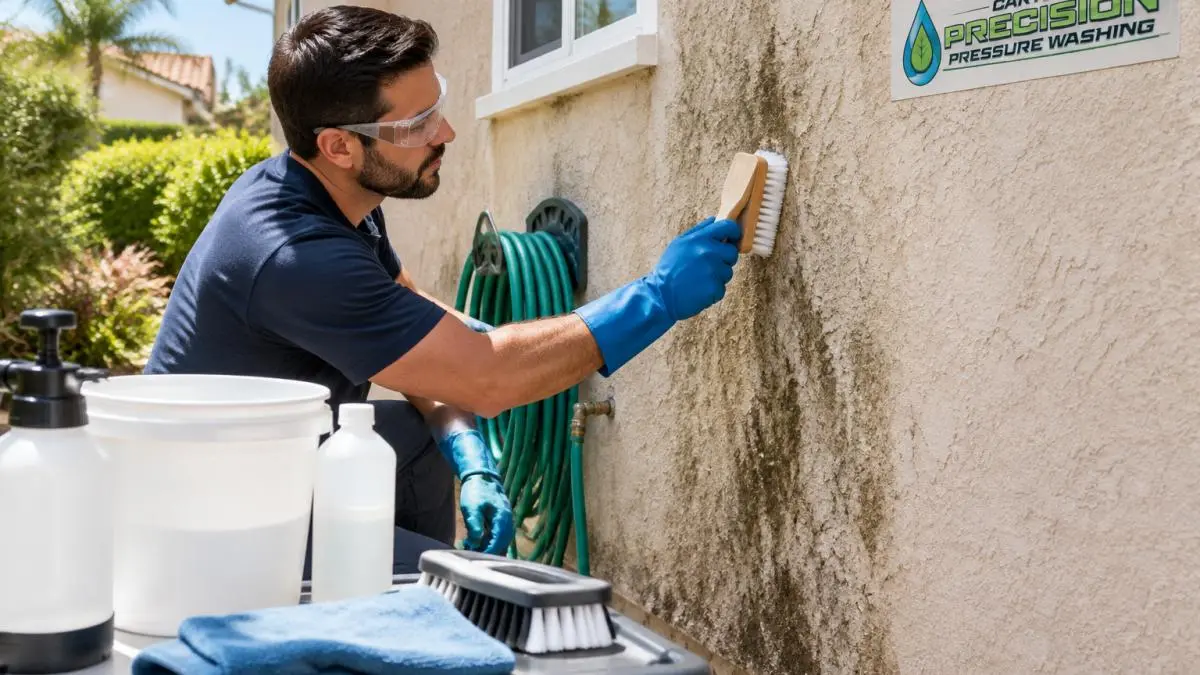
The woman is American.
- Set up the area. Cover plants, move furniture, and lay drop cloths at the wall base.
- Dry-brush the loose growth. Lightly brush off the top layer before it gets wet. This reduces spore containment problems later.
- Wet the wall first. A pre-rinse stops cleaner from soaking in too deep and keeps dust down.
- Apply your cleaner. Use a pump sprayer, bottom to top, so drips do not streak clean sections.
- Let it dwell. Give it the time on the label. Do not let it dry out.
- Scrub gently. Work in small circles. On stucco, let the cleaner do the work.
- Rinse top to bottom. Wash every trace of cleaner off, or it can stain.
- Let it dry fully. Check the wall after a day. Any regrowth means you missed a moisture source.
Here is the full process in order, worked in shade or on a cloudy morning so the cleaner does not dry before it works.
| Step | What to do |
|---|---|
| 1 | Set up the area: cover plants, move furniture, lay drop cloths |
| 2 | Dry-brush the loose growth to reduce spore containment problems |
| 3 | Wet the wall first with a pre-rinse |
| 4 | Apply cleaner with a pump sprayer, bottom to top |
| 5 | Let it dwell for the time on the label; do not let it dry |
| 6 | Scrub gently in small circles; on stucco let cleaner work |
| 7 | Rinse top to bottom to wash off every trace of cleaner |
| 8 | Let it dry fully and check after a day for regrowth |
Soft Washing vs Pressure Washing for Mold
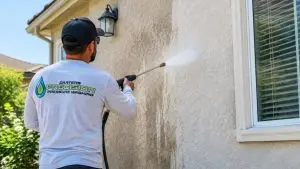
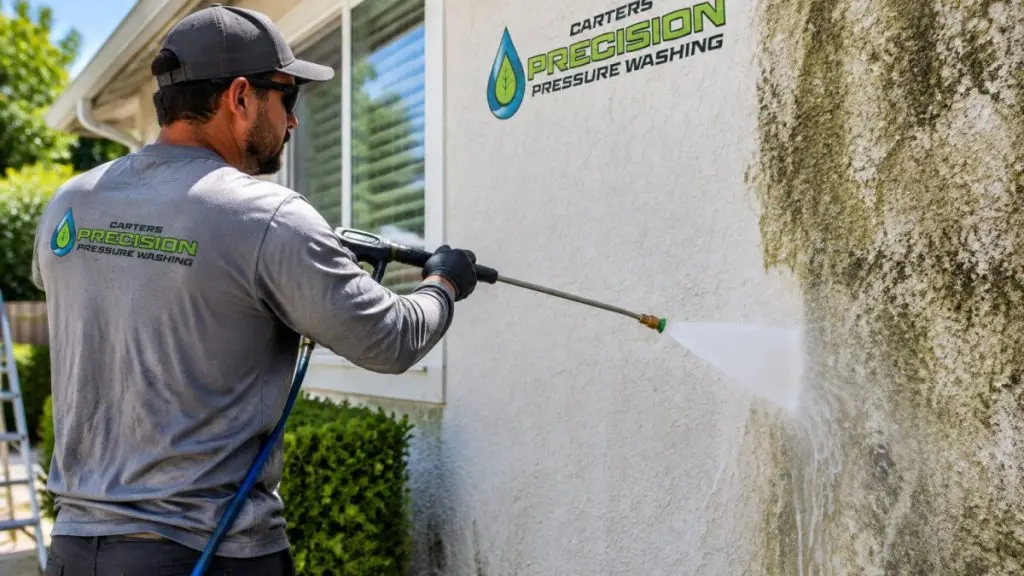
Soft washing uses low pressure and a cleaning solution to kill mold. Pressure washing uses high force to blast it off.
High pressure forces water into cracks and behind siding. On stucco, it can pit the finish and open the door to water intrusion.
If you plan to rent a machine, read our list of common pressure washing mistakes first.
Professional Exterior Mold Removal Cost in Los Angeles
Hiring a professional costs more than a bucket of vinegar, but it can save time and effort. Pricing depends on quantity, dates, and delivery, so contact Carters Precision Pressure Washing for current prices or a free estimate.
For a ballpark before you call, our professional exterior cleaning cost guide breaks down what drives the price. Most homeowners weighing DIY against a pro find the gap is smaller than expected once they price gear, cleaner, and their own weekend.
Stop It Coming Back: Prevention and Preventative Maintenance
Mold returns when moisture returns. Fix the water, and the mold stays gone. In Los Angeles, that means paying attention to two things most generic guides ignore: the marine layer and the storm drain system.
The LA Moisture Cycle
Marine layer moisture settles overnight along the coast and burns off by mid-morning. That daily wet-then-dry cycle feeds mold without ever soaking the wall.
So the prevention plan has to match the zone:
- Coastal and marine-layer neighborhoods: focus on air movement and morning dry-off. Trim shrubs and tree limbs back from walls so the marine layer can evaporate instead of sitting against the surface.
- Inland and valley neighborhoods: focus on irrigation. Point sprinklers away from siding and stucco, and check the heads after every adjustment, because a single misaimed head can keep one wall wet all summer.
- Everywhere: fix leaky gutters, downspouts, and irrigation heads. Rinse walls once or twice a year, before growth takes hold. Check shaded north walls after the rainy season. Seal cracks and repaint bare spots promptly.
Ventilation and dry time matter as much as cleaning. A wall that stays damp will always grow mold again. Our roof mold prevention steps apply to walls too, and they are worth a read if you have had repeat problems.
Runoff Rules That Affect How You Wash
Los Angeles has storm drain rules that apply to wash water. Wash water carrying cleaner, mold, and dirt can reach storm drains, and those drains flow to the ocean. Never dump buckets into a gutter, a driveway drain, or a street drain.
A practical approach:
- Collect rinse water where you can, and let it soak into soil away from drains.
- Wash on a permeable surface, such as a lawn or planted bed, rather than on concrete that slopes to a drain.
- Use the least cleaner you can get away with, and avoid bleach near storm drains.
- Bag and dispose of any moldy debris in the regular trash, not in a green waste bin or a storm drain.
Plan the wash so the runoff goes where you want it before you start.
A Simple Maintenance Calendar
- Spring: inspect north walls and shaded strips after the rainy season, and rinse before growth takes hold.
- Summer: check irrigation heads monthly, and trim vegetation back from walls.
- Fall: clean gutters and downspouts before the first rain, and seal any cracks you find.
- Winter: after storms, check for new growth on walls that stayed wet, and touch up paint on bare spots.
A wall that dries fully between wettings will not grow mold. That is the whole game.
Frequently Asked Questions
What should you never clean mold with on exterior walls?
Skip straight bleach on its own, ammonia, and any mix of bleach and ammonia, which creates toxic gas. Bleach also kills surface mold but leaves the residue that feeds regrowth, and it can dull paint and stain stucco. Never dry-brush or dry-scrape mold either, because that sends spores into the air and onto nearby surfaces. Use a purpose-made fungicide or a detergent-based cleaner, rinse thoroughly, and let the wall dry completely before you judge the result.
Is bleach or vinegar better for killing mold on exterior walls?
Vinegar (acetic acid) penetrates porous surfaces like stucco and wood better than bleach and is safer around plants and pets, which matters in a Los Angeles yard. Bleach works faster on non-porous siding and flat paint but loses strength in sunlight and leaves salts behind. For most exterior walls, a detergent plus a mold-specific biocide gives more lasting results than either household product. Whatever you choose, test a small patch first and rinse surrounding landscaping well.
When should I hire a professional pressure washing service in Los Angeles?
Call a pro when mold covers more than roughly a quarter of a wall, when it keeps returning within weeks, or when the surface is stucco, older wood siding, or a roof you cannot safely reach. Soft washing at low pressure is the right method for those materials, and getting pressure settings wrong causes surface damage that costs more to fix than the cleaning.
How do I prevent mold from returning to my exterior walls?
Control moisture first: fix sprinklers that hit the wall, clear debris from gutters, and trim plants back so air moves along the siding. Wash the walls at least once a year, ideally before the cooler, damper months, and apply a residual mold inhibitor after cleaning. Check shaded north-facing walls more often, since they dry slowest. Preventative maintenance on a schedule beats repeated scrubbing, and it keeps curb appeal steady if you plan to list your home.