
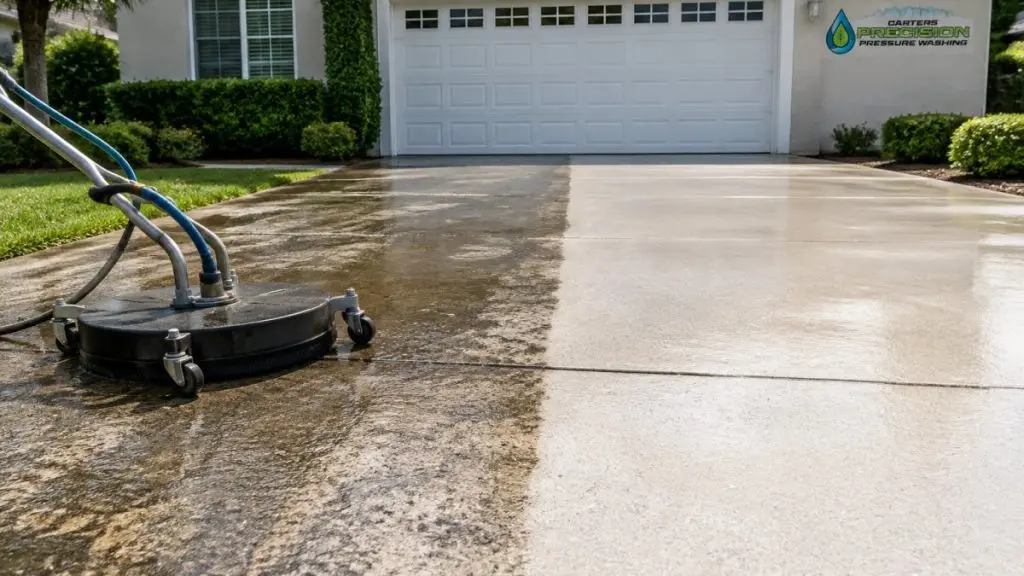
Last Updated: November 5, 2026
Quick Summary
Choose driveway restoration when the concrete slab is structurally sound and the problems are on the surface, such as stains, minor cracks, or fading. Choose replacement when the slab itself has failed, showing full-depth cracks, sinking, heaving, or widespread crumbling.
- Restoration generally costs less upfront than a full replacement.
- Full-depth cracks, sinking, or heaving usually mean the slab needs replacing.
- Restoration typically disrupts the driveway for a day or two.
- Replacement needs several days, including curing time before heavy use.
- Test any cleaner on a small area first to avoid etching the surface.
Table of Contents
- Restoration vs Replacement at a Glance
- When Concrete Driveway Repair vs Replacement Makes Sense
- Concrete Driveway Replacement Cost in Los Angeles
- How Long Concrete Driveway Resurfacing Lasts
- Pros and Cons of Restoring Your Driveway
- Pros and Cons of Full Replacement
- Removing Oil Stains Before You Decide
- Booking a Driveway Assessment and Free Estimate
- Frequently Asked Questions
Restoration vs Replacement at a Glance
If your concrete driveway is cracked, stained, or faded, you have two main choices for driveway restoration: restore the surface you have, or tear it out and pour a new one. Restoration is often the lower-cost option, while replacement gives you a fresh slab. The right pick depends on how deep the damage goes and what you want from the property.
| Factor | Restoration | Replacement |
|---|---|---|
| Best for | Surface stains, minor cracks, fading | Structural cracks, sinking, major damage |
| Typical disruption | Usually a day or two | Several days, with curing time |
| Upfront cost | Lower | Higher |
| Expected lifespan | Extends the existing slab | A new slab with a long service life |
When Concrete Driveway Repair vs Replacement Makes Sense
Driveway restoration makes sense when the slab is structurally sound and the problems are on the surface. Oil stains, mildew, and light surface grime are often addressed by cleaning, and small cracks may be filled.
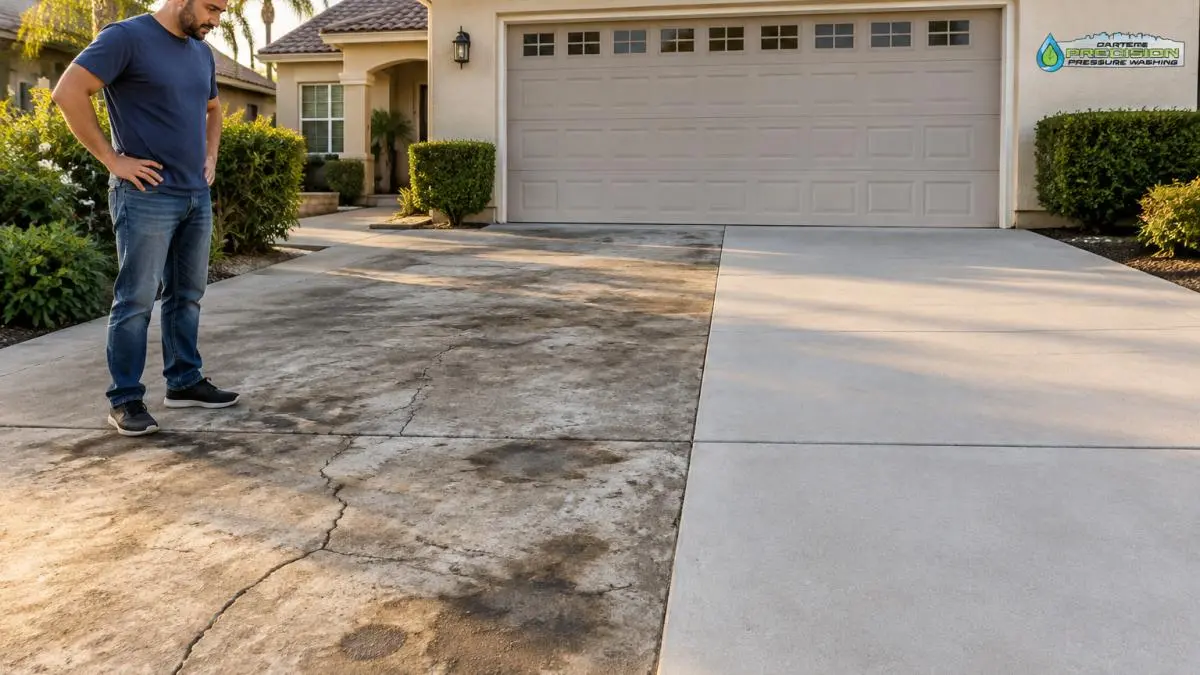
Replacement is the better call when the slab itself has failed. Watch for large cracks that run through the full thickness, sections that have sunk or heaved, and widespread crumbling. A driveway that drains poorly or pulls away from the garage apron usually needs new concrete.
Concrete Driveway Replacement Cost in Los Angeles
Replacement costs depend on details such as the size of the driveway, site access, and removal of the old slab. For a current number, contact Carters Precision Pressure Washing for a quote based on your actual driveway.
Keep in mind that restoration and replacement are not directly comparable on price alone. A slab with structural failure may keep costing you money in repairs if you only patch it.
How Long Concrete Driveway Resurfacing Lasts
Resurfacing and restoration results depend heavily on the condition of the base slab and how well the driveway is maintained. The exact time a finish lasts varies with the surface and its use. Heavy traffic, freeze-thaw cycles where they apply, oil leaks, and harsh sun all shorten the life of the finish.
Regular cleaning and maintenance help keep a driveway looking its best. For guidance on timing, see our guide to how often to seal a concrete driveway.
Pros and Cons of Restoring Your Driveway
Pros:
- Generally a lower upfront cost than a new pour
- Targets stains, surface wear, and minor cracks
Cons:
- Cannot fix structural failure or a sunken slab
- Results depend on the health of the base concrete
- Requires ongoing maintenance to hold up
Pros and Cons of Full Replacement
Pros:
- Addresses structural problems by replacing the slab
- Gives you a new surface
Cons:
- Higher upfront cost and more disruption
- The new slab needs proper curing before heavy use
- Old concrete removal adds to the total job
Removing Oil Stains Before You Decide
Oil stains are often the first thing homeowners try to fix, and they do not always mean you need a new driveway. Cleaning can lift some fresh and moderate stains, while older, deeply absorbed stains may be harder to remove.
A common mistake is scrubbing with the wrong products or too much pressure, which can etch the surface. Test any cleaner on a small area first. If the stain is spread across a large area or keeps returning, that is a useful sign to get a professional assessment before deciding between restoration and replacement.
Booking a Driveway Assessment and Free Estimate
If you are unsure which option fits your driveway, the fastest way to decide is an on-site look. Contact us to discuss your driveway’s condition and options. You can also review our concrete cleaning services in Los Angeles to see what the work involves.
Call Carters Precision Pressure Washing to request a free estimate. Bring up any cracks, stains, or drainage problems you have noticed so we can give you a clear recommendation.
Frequently Asked Questions
Can pressure washing restore a stained concrete driveway?
Pressure washing can remove surface dirt, mildew, and some light stains, and it can make a driveway look noticeably cleaner. It cannot repair cracks, spalling or deep discoloration that has soaked into the concrete. If the surface is sound but dull or grimy, a professional wash is usually the first step before deciding whether restoration or replacement is needed. Contact Carters Precision Pressure Washing for a free estimate.
How long does concrete driveway restoration last?
Restoration results depend on the condition of the slab underneath, the products used and how the driveway is maintained afterward. Dirt, oil and mildew can return, particularly in shaded or high-traffic areas, so ongoing maintenance helps. Ask about your options when requesting an estimate.
When should a concrete driveway be replaced instead of repaired?
Replacement is generally the better choice when the slab has widespread cracking, large sections that have heaved or sunk, or structural damage that a surface treatment cannot correct. If restoration would only cover the damage temporarily, replacement gives a more durable result.
How do you remove oil stains from a concrete driveway?
Fresh oil stains respond best to an absorbent material such as cat litter or sawdust spread over the spot, left to sit, then swept up. Follow with a degreaser formulated for concrete and scrub with a stiff brush. Stains that have soaked deep into the concrete may not fully disappear.