

Last Updated: November 6, 2026
Quick Summary
The fastest way to learn how to remove oil stains from asphalt parking lots is to act on fresh spills immediately by covering them with absorbent granules before any water touches them. For older stains, degrease with a product at the label dilution, scrub with a stiff nylon brush, and blot the slurry rather than flooding it. Always contain wash water so it never reaches a storm drain.
- Cover fresh spills with absorbent like kitty litter and never spray water on them first.
- Match the treatment to whether the stain is fresh, old, or large and heavy.
- Let the degreaser dwell for the full label time and re-wet it if it dries out.
- Use a stiff nylon brush, not wire, to avoid scratching asphalt and opening pores.
- Seal oil-soaked absorbent and dispose of it as hazardous waste, never in a dumpster.
Table of Contents
- Decide How to Treat the Stain Based on Age, Size and Severity
- Absorb Fresh Oil Before You Clean
- Best Oil Stain Remover for Asphalt and Whether Dawn Works
- How to Remove Old Oil Stains From Asphalt
- Pressure Washing Oil Stains From Asphalt Without Damaging the Surface
- Stormwater Rules, Safety and Disposing of Contaminated Absorbent in Los Angeles
- Book a Commercial Parking Lot Cleaning With Carters Precision Pressure Washing
- Frequently Asked Questions
Oil stains on an asphalt parking lot look small until they spread, soften in summer heat and turn into a dark patch that customers notice, so knowing how to remove oil stains from asphalt parking lots early saves a lot of work. If you manage a lot in Los Angeles, the fastest way to remove oil stains from asphalt parking lots is to act on fresh spills right away, match the treatment to the stain’s age and size, and rinse the runoff responsibly.
Asphalt is porous, so oil soaks in and bonds with the surface. The longer it sits, the harder it is to lift. For a closely related surface, see how to remove oil stains from commercial concrete for deeper guidance on aged spots. This guide walks you through the decision, the cleaning steps, and the rules that apply to runoff in Los Angeles.
Decide How to Treat the Stain Based on Age, Size and Severity
Start by sorting the stain into one of three groups. A fresh spill is wet, dark and still spreading. An older stain is dry, has a crust or a dull halo, and may have spread into the surface. A heavy stain has pooled, is thick, or covers a large area where cars park repeatedly.
- Fresh and small: Absorb it with granules, then scrub with a degreaser.
- Old and small: Degrease, scrub hard, and allow the cleaner to dwell before rinsing.
- Large or heavy: Plan for a pressure washing service with pretreatment and proper runoff control.
Knowing the category keeps you from wasting time on the wrong method when you learn how to remove oil stains from asphalt parking lots. A dry spot does not need absorbent, and a fresh puddle should never be hosed directly.
Absorb Fresh Oil Before You Clean
Act quickly on any fresh spill. Cover the oil with an absorbent such as kitty litter or a commercial oil-dry product, then let it sit so the material can draw the oil up. Once the granules look saturated, sweep them up and place them in a sealed container.
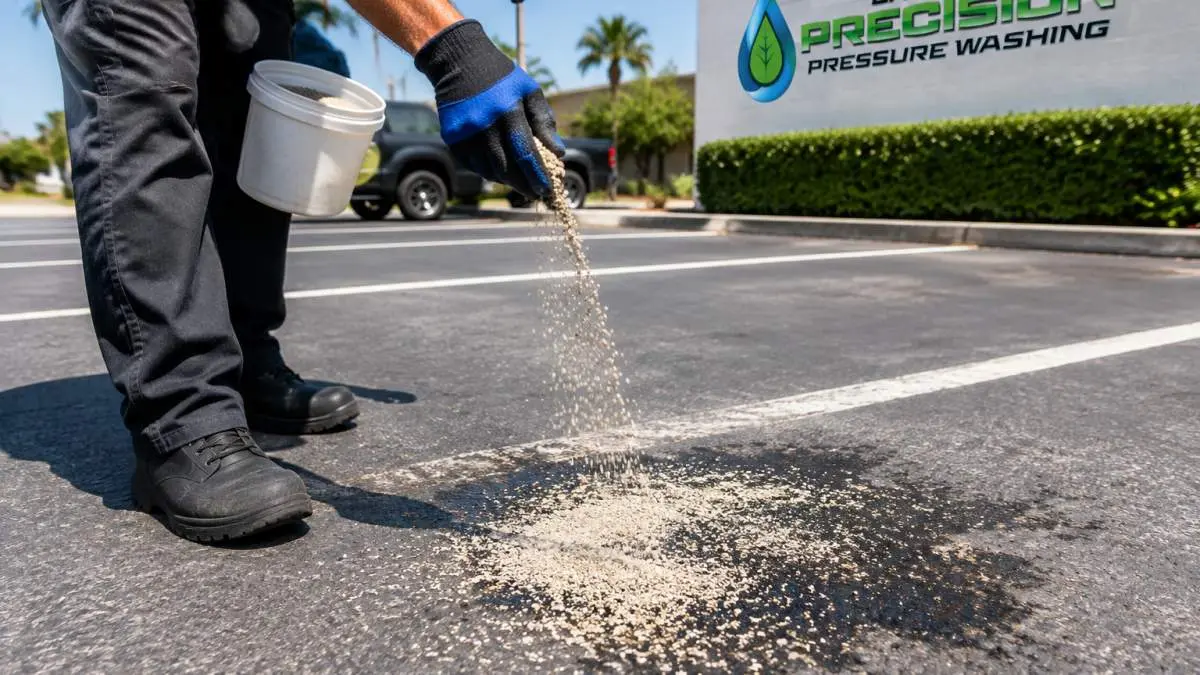
A common mistake is spraying water on a fresh spill. Water pushes the oil outward and deeper into the pores of the asphalt, which makes the stain larger and harder to remove.
Best Oil Stain Remover for Asphalt and Whether Dawn Works
Dish soap can help on light, fresh residue because it is designed to cut grease. It is less effective on heavy or aged oil, where a dedicated degreaser usually works better. Look for a product labeled as an oil stain remover or asphalt degreaser, and check that it is safe for asphalt before you use it on a large area. Our page on degreasers for concrete and pavement cleaning compares commercial options suited to these surfaces.
Test any cleaner on a small hidden patch first. Some strong solvents can soften the surface or leave a lighter spot that looks worse than the original stain.
How to Remove Old Oil Stains From Asphalt
Old stains are a different job from fresh spills. The oil has already soaked into the asphalt’s pores and oxidized into a dark, dry crust, so you are no longer lifting a puddle, you are pulling bound oil back out of the surface. That is why the same soap-and-scrub routine that works on a fresh drip often does nothing on a stain that has been there for months.
Work through the stain in stages, and stop as soon as the color stops lightening:
- Sweep and scrape. Remove loose grit, then scrape any raised crust with a putty knife or stiff floor scraper. Do not gouge the asphalt, just lift what sits on top.
- Pre-soften with heat, not water. On a warm day the surface is already receptive. If the stain is cold and hard, a heat gun on a low setting or a black plastic sheet left in the sun for an hour softens the residue so the cleaner can penetrate. Watch out: never use an open flame or a torch on asphalt, it can ignite trapped oil vapors and damage the binder.
- Apply a degreaser at the label dilution. Follow the dilution on the product label, since mixing stronger than the label says wastes product and can leave a residue that interferes with sealcoat. Apply with a pump sprayer or pour and spread with a broom so the whole stain is wet, not just the center.
- Let it dwell. This is the step most people rush. Give the product the full dwell time on the label and re-wet if it starts to dry. A degreaser that dries out stops working and can leave a chalky film.
- Agitate with the right brush. Use a stiff nylon or union-fiber brush on a handle, not a wire brush. Wire bristles scratch the asphalt and open pores that collect more oil later. Work in small circles over the stain, then switch to back-and-forth strokes across the grain of the surface.
- Blot, don’t flood. Push the loosened slurry into a absorbent pad or shop towel and bag it. Flooding the area with a hose just drives the emulsified oil back into the pores and spreads the stain.
- Rinse and evaluate. Rinse with clean water at low pressure, let the surface dry completely, and look at it in daylight. A stain that is still dark after drying needs another pass; a stain that has faded to a gray shadow is as clean as the surface will get without resurfacing.
Expect two to three passes on a stain that has been sitting for a year or more. For the related step-by-step approach, see our guide to removing old oil stains from a garage floor. The limiting factor is usually how deep the oil has penetrated, not how hard you scrub. If three passes with a quality degreaser leave a dark, soft patch, the asphalt binder itself may be saturated, at that point cleaning will not fix it, and patching or a sealcoat over the area is the realistic option.
For a large lot, batch the work: treat every old stain in one section, let them all dwell while you move to the next, then come back and scrub. That keeps dwell times consistent and cuts total labor compared with treating one spot at a time.
The steps for an old stain follow a clear sequence, from scraping to a final check in daylight.
| Step | What to do | Time or frequency |
|---|---|---|
| Sweep and scrape | Remove grit and lift raised crust with a putty knife | Before any cleaning |
| Pre-soften | Use a heat gun on low or a black plastic sheet in the sun | About one hour in sun |
| Apply degreaser | Use the label dilution and wet the whole stain | Per product label |
| Let it dwell | Give full dwell time and re-wet if it dries | Full label dwell time |
| Agitate | Scrub with a stiff nylon brush, not wire | Small circles, then across the grain |
| Blot | Bag the slurry with absorbent pads, don’t flood | Before rinsing |
| Rinse and check | Rinse at low pressure, dry fully, inspect in daylight | After surface dries |
Pressure Washing Oil Stains From Asphalt Without Damaging the Surface
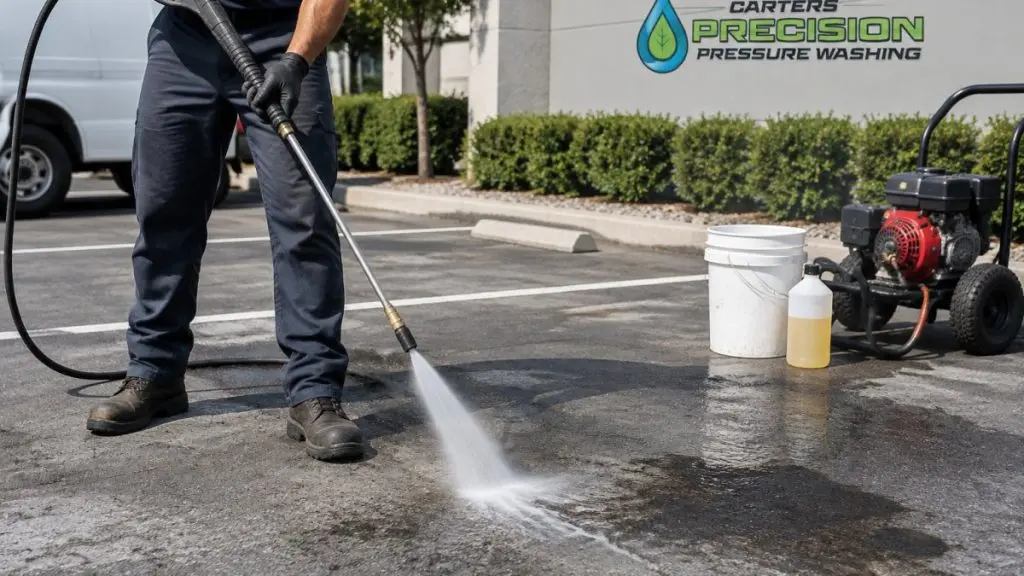
Pressure washing can lift oil that scrubbing leaves behind, but the pressure has to be right. High settings can etch asphalt, expose aggregate, and shorten the life of the surface. For most lots, use a moderate setting with a wide spray tip, keep the nozzle moving, and hold it at a consistent distance.
Pretreat the stain first so the water has something to work with. Rinse in the direction of the slope so the water and loosened oil move toward a drain rather than across the lot.
Stormwater Rules, Safety and Disposing of Contaminated Absorbent in Los Angeles
This is the section most DIY guides skip, and it is the one that matters most for a commercial lot in Los Angeles. Storm drains in the city do not go to a treatment plant, they discharge to local waterways such as the Los Angeles River and, eventually, the ocean.
Contain the wash water before you start. The practical method is to berm the work area with absorbent socks, sandbags, or a temporary containment ring, then work in small sections so runoff never gets ahead of you.
Decide where the water goes. Captured wash water that contains oil or cleaning chemicals should not be dumped into a storm drain or onto landscaping. Confirm the current disposal requirements with the appropriate local authorities before you discharge anything, because the rules and approved methods can change.
Handle contaminated absorbent as waste, not trash. Kitty litter, oil-dry, pads, and rags that have soaked up oil are usually classified as hazardous or special waste. Seal them in a labeled, leak-proof container, not a open bucket, and dispose of them through an approved household hazardous waste facility or a permitted hauler.
Protect the crew. Wear nitrile gloves, eye protection, and non-slip boots, and keep the work area cordoned off from pedestrians and vehicles while it is wet. Oily asphalt is genuinely slippery, and degreasers can irritate skin and eyes. Work with ventilation if you are using solvent-based products, and read the label for first-aid and storage instructions before you open the container.
Plan for the surface, not just the stain. Petroleum softens asphalt binder over time, and harsh solvents or high pressure can make a bad spot worse. If a stain sits over a area that is already raveling or alligatored, cleaning may accelerate the breakdown.
Book a Commercial Parking Lot Cleaning With Carters Precision Pressure Washing
Large lots, heavy staining and stormwater compliance are jobs best handled by a crew with the right equipment and disposal process. If you want a professional to clean your parking lot, contact Carters Precision Pressure Washing for a quote. Quotes are based on your property, so we give a price after we look at it.
For residential driveways and patios, we also offer pressure washing for hard surfaces. Read our driveway pressure washing best practices for more on how cleaning is done.
Frequently Asked Questions
Can old oil stains be removed from asphalt?
Yes, but older stains take more effort. Oil that has soaked deep into asphalt for months often needs repeated applications of a degreaser, a stiff brush and time to sit before rinsing. Very old or heavy buildup may not disappear completely, and a surface that is severely saturated may need professional treatment. Results depend on how far the oil has penetrated and how long it has been there.
Does Dawn dish soap remove oil stains from asphalt?
Dish soap can lift light, fresh oil stains from asphalt because it is a strong degreasing detergent. Apply it with water, scrub with a stiff brush, let it sit, then rinse. It works less well on stains that have dried or soaked in, where a commercial oil stain remover or degreaser usually performs better. Test on a small hidden area first to make sure the surface is not affected.
Can pressure washing damage asphalt when removing oil stains?
Pressure washing can damage asphalt if the pressure is too high or the nozzle is held too close. Asphalt is softer than concrete, so use a wide spray pattern, keep moderate pressure, and keep the wand moving. Degrease the stain first so the water does not simply push oil deeper into the surface. Sealcoated lots should be checked for worn or soft spots before washing.
How should you dispose of oil-contaminated absorbent material?
Do not sweep oil-soaked absorbent into a storm drain or throw it in regular trash without checking local rules. Collect the used material in a sealed container, label it, and take it to a household hazardous waste facility or a licensed waste hauler. Wash-water containing oil should not flow into storm drains, which can carry runoff to local waterways.