
Table of Contents
- Why Eco-Friendly Concrete Cleaning Matters for Your Business
- Cleaning High-Traffic Commercial Entryways Without Harsh Chemicals
- Concrete Oil Stain Removal: Eco-Friendly Methods That Work
- Pressure Washing Wastewater Management for Responsible Businesses
- Soft Washing vs. Pressure Washing: Which Is Better for Concrete?
- Concrete Cleaning Maintenance Schedule to Extend Results
- Frequently Asked Questions
Last Updated: October 17, 2026
Why Eco-Friendly Concrete Cleaning Matters for Your Business
Eco-friendly concrete cleaning solutions for businesses have moved from a nice-to-have to a business necessity. Property managers and business owners across Los Angeles face a real problem: keep your concrete surfaces pristine without damaging the environment, harming your landscaping, or exposing your team to toxic chemicals.
The stakes are higher than they used to be. Customers notice when a storefront entrance looks neglected. A grimy parking lot sends the wrong message about your operation. But the old approach, blasting everything with harsh chemicals and high-pressure water, comes with real costs. Chemical runoff affects local water systems. Aggressive pressure can crack concrete or damage siding. And your staff and customers are exposed to fumes that nobody wants to breathe.
Businesses in Los Angeles that switch to eco-friendly methods can achieve better results, longer-lasting cleanliness, and peace of mind knowing they’re not harming their surroundings. The concrete still shines. The parking lot still looks professional. But the approach is smarter.
The key difference: eco-friendly cleaning doesn’t mean less effective. It means using the right technique for the job instead of defaulting to maximum pressure and maximum chemicals. Soft washing, targeted pressure, and biodegradable solutions often outperform the old heavy-handed approach.
Cleaning High-Traffic Commercial Entryways Without Harsh Chemicals
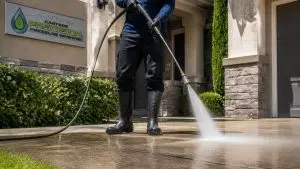
Your building entrance is the first thing customers see. High-traffic areas accumulate grime, algae, and weathering faster than low-traffic zones. The challenge is removing that buildup without damaging the concrete beneath or creating environmental problems.
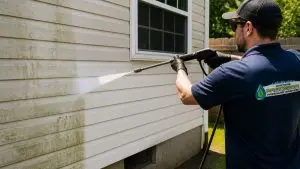
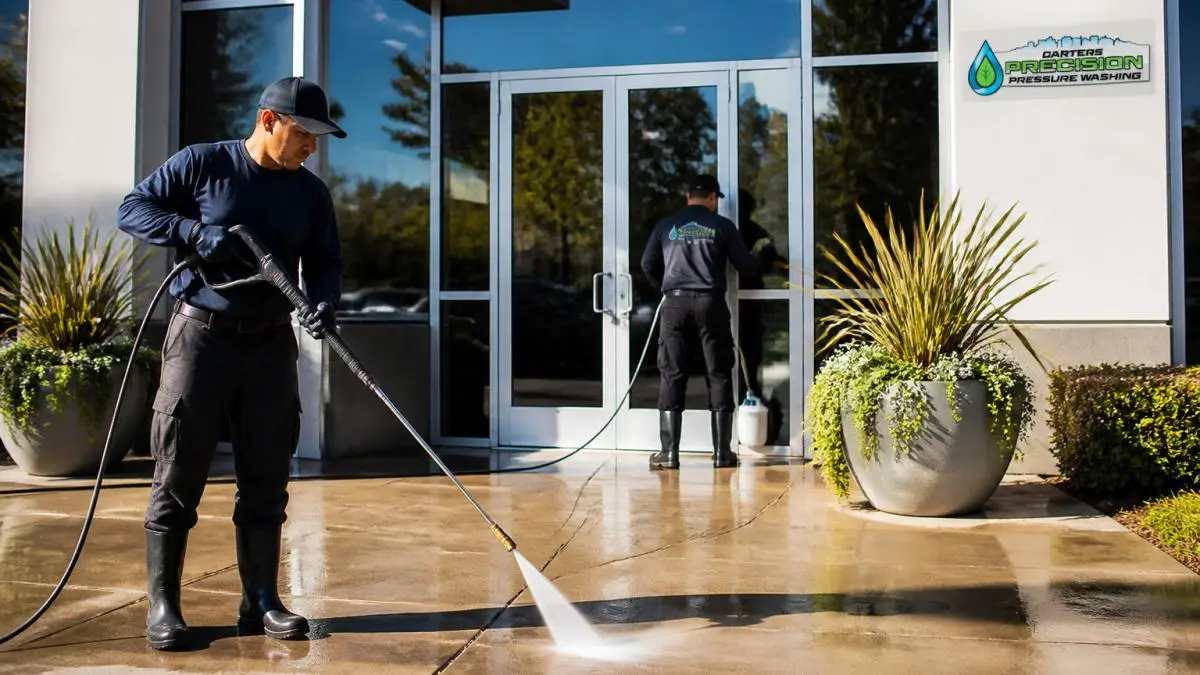
Eco-friendly entryway cleaning starts with the right method, not the strongest chemicals. Soft washing uses low-pressure water combined with biodegradable cleaning agents that break down dirt and organic growth without the force that causes surface damage. This approach works especially well for commercial storefronts where the concrete may be older or where you have landscaping and outdoor seating nearby.
The process is straightforward. A technician applies eco-friendly cleaning solution to the concrete surface and lets it work for a set time. The solution penetrates dirt and algae buildup. Then, low-pressure rinsing removes the loosened debris and the cleaning agent itself. For tougher stains, slightly higher pressure may be used, but it stays well below the threshold that causes pitting or spalling.
What makes this work for Los Angeles businesses is durability. Eco-friendly solutions can help inhibit algae and mold regrowth. That means your entryway can stay cleaner longer between service visits. Customers walking in see a well-maintained space.
A common mistake is assuming low-pressure cleaning takes longer or delivers weaker results. In reality, the right eco-friendly approach often cleans faster and leaves surfaces cleaner because the solution is doing the work instead of brute force. High pressure can actually push dirt deeper into concrete pores.
Concrete Oil Stain Removal: Eco-Friendly Methods That Work
Oil stains on parking lots and loading areas are stubborn. They don’t just look bad, they signal poor maintenance to customers and can create liability issues if someone slips. Traditional oil stain removal relied on harsh solvents and caustic chemicals. Eco-friendly concrete oil stain removal requires a different strategy, but it works.
The most effective eco-friendly approach uses specialized biodegradable degreasers combined with appropriate pressure and technique. These degreasers break down the molecular bonds in oil without the toxicity of petroleum-based solvents. They’re safe to use around landscaping and won’t harm the concrete substrate.
The process involves applying the degreaser to the stained area, allowing it to penetrate the oil, and then using moderate pressure to rinse away both the degreaser and the lifted oil. For fresh spills, this often works on the first pass. Older, set-in stains may require a second application or a longer dwell time for the degreaser to work.
What you won’t see with eco-friendly methods is the chemical smell that can hang around parking lots for hours. The concrete can dry faster. There’s no residue left behind that attracts new dirt. And the stain removal doesn’t compromise the concrete’s integrity, no bleaching, no weakening of the surface.
Pressure Washing Wastewater Management for Responsible Businesses
Here’s where many businesses stumble: they focus on cleaning the concrete but ignore where all that water goes. Pressure washing wastewater management isn’t optional if you care about your environmental footprint. Los Angeles has specific regulations around stormwater runoff, and responsible businesses need to handle it properly.
Wastewater from pressure washing contains dirt, debris, oils, and cleaning agents. If that water runs directly into storm drains, it ends up in local waterways. If it soaks into the ground near your building, it can affect soil and groundwater. The eco-friendly approach means capturing and managing that runoff responsibly.
Professional cleaning services use containment methods to prevent runoff from leaving your property. This might involve temporary barriers, collection systems, or directing water to areas where it can be safely filtered or allowed to evaporate. Some facilities use sediment filters or treatment systems to clean the water before it leaves the site.
For businesses in Los Angeles, this isn’t just environmental responsibility, it’s good risk management. Improper wastewater disposal can result in fines and damage to your reputation. Working with a service that understands pressure washing wastewater management protects your business and your community.
Pressure washing wastewater management is the difference between a quick clean and a responsible clean. It adds minimal cost but eliminates liability and environmental harm.
Soft Washing vs. Pressure Washing: Which Is Better for Concrete?
This question comes up constantly, and the answer depends on your specific situation. Both methods have their place. The key is understanding when to use each one.
Pressure washing uses higher water pressure to remove stubborn stains, heavy buildup, and embedded debris. It works fast and handles tough jobs. However, this force can damage older concrete, cause spalling, crack seals, or force water into areas where it causes problems later. Pressure washing is best for newer concrete, sealed surfaces, and situations where you need aggressive cleaning power.
Soft washing uses lower pressure combined with biodegradable cleaning solutions. It can take slightly longer but can deliver effective results for many commercial applications. Soft washing can help prevent damage, works safely around landscaping, and the cleaning agents can continue working even after the water has dried. For eco-friendly concrete cleaning, soft washing can be a good choice in many scenarios.
The practical difference: a parking lot with fresh oil spills might need pressure washing to remove the bulk of the stain quickly. An entryway with algae and weathering can look better and last longer after soft washing. Carters Precision Pressure Washing evaluates each surface and recommends the method that can deliver the best outcome for your specific concrete type and condition.
| Method | Pressure Level | Best For | Environmental Impact | Risk to Concrete |
|---|---|---|---|---|
| Soft Washing | Under 500 PSI | Algae, weathering, general maintenance | Low; biodegradable solutions | Minimal |
| Pressure Washing | 3,000-4,000 PSI | Heavy stains, stubborn debris | Higher; chemical runoff possible | Moderate to high |
Concrete Cleaning Maintenance Schedule to Extend Results
One cleaning looks great. But how long does it last? That depends on your maintenance schedule and the specific conditions your concrete faces. A concrete cleaning maintenance schedule protects your investment and keeps your Los Angeles property looking professional year-round.
High-traffic commercial entryways should be cleaned quarterly at minimum. These areas accumulate grime fastest and have the biggest impact on customer perception. Parking lots benefit from semi-annual cleaning to prevent oil stains from setting in and algae from establishing. Loading areas and service entrances might need more frequent attention depending on activity level.
The schedule also depends on weather and environmental factors. Los Angeles’s climate means consistent UV exposure that can accelerate algae growth on shaded concrete. Rainy seasons create conditions where mold and mildew develop faster. A maintenance schedule accounts for these local conditions.
Regular maintenance between professional cleanings helps extend results. Sweep high-traffic areas regularly to remove loose debris. Address oil spills immediately, the longer they sit, the harder they are to remove. Remove standing water that encourages algae growth. These simple steps combined with a professional cleaning schedule keep your concrete looking sharp and prevent expensive deep cleaning later.
What most businesses miss is that a maintenance schedule can save money. Preventing stains can cost less than removing set-in stains. Keeping concrete in good condition can extend its lifespan. A building that looks well-maintained can attract better tenants and customers. The investment in regular eco-friendly concrete cleaning maintenance schedule can pay for itself through improved property value and customer perception.
Eco-friendly concrete cleaning solutions for businesses aren’t a compromise, they’re the smarter choice. Your concrete surfaces stay clean and professional. Your landscaping and surroundings stay protected. Your team works in a safer environment. And your property maintains its value and curb appeal.
Carters Precision Pressure Washing specializes in soft washing and pressure washing for commercial properties across Los Angeles. We handle high-traffic entryways, parking lots, and service areas with the precision and environmental responsibility your business deserves. Call for a free estimate and discover how the right cleaning approach can transform your property’s appearance while protecting what matters most.
Frequently Asked Questions
What is the most eco-friendly way to clean commercial concrete?
The most eco-friendly approach combines soft washing with biodegradable cleaning solutions, hot water, and proper wastewater containment. Soft washing uses lower pressure than traditional pressure washing, reducing water waste and preventing damage to concrete surfaces. Biodegradable soaps break down naturally without harming soil or groundwater. Professional services that capture and properly dispose of runoff prevent contaminants from entering storm drains, protecting local water systems.
Can pressure washing clean concrete without harsh chemicals?
Yes. Hot-water pressure washing alone can remove many stains, grime, and buildup from concrete surfaces through mechanical force and heat. For stubborn oil stains or heavy contamination, eco-friendly enzymatic cleaners or biodegradable degreasers work effectively without toxic chemicals. These plant-based solutions break down organic matter naturally. The key is using the right water temperature and pressure for your concrete type, a professional can determine whether chemicals are truly necessary for your specific situation.
How often should a business clean its concrete entryways?
High-traffic commercial entryways should be cleaned every 4-8 weeks to maintain appearance and prevent buildup that becomes harder to remove. Parking lots and service areas may need cleaning every 8-12 weeks depending on traffic volume and weather. More frequent light cleaning between professional services, such as sweeping and spot-treating stains, extends the time between deep cleanings. A concrete cleaning maintenance schedule tailored to your location’s climate and foot traffic ensures consistent curb appeal and extends concrete lifespan.
How can businesses manage wastewater from concrete cleaning?
Professional pressure washing wastewater management involves capturing runoff with containment systems, filtering sediment and debris, and disposing of water according to local regulations. Many municipalities require businesses to prevent dirty water from entering storm drains. Eco-friendly practices include using biodegradable soaps that break down naturally, applying sealers after cleaning to reduce future contamination, and scheduling cleaning during dry periods to minimize water use. Ask your cleaning provider about their wastewater disposal methods before hiring.