

Table of Contents
- Step 1: Identify the Source of the Rust Stain
- Step 2: DIY Methods to Remove Rust Stains from Concrete Driveway
- Step 3: Apply, Scrub, and Rinse: The Removal Process
- Step 4: Safety Precautions and Environmental Impact
- Preventing Rust Stains on Concrete: Long-Term Protection
- Troubleshooting Failed Attempts and When to Call Professional Concrete Pressure Washing Services
- Frequently Asked Questions
Last Updated: September 30, 2026
Step 1: Identify the Source of the Rust Stain
Knowing how to remove rust stains from concrete driveway surfaces starts with one fact: the stains almost always come from something metal sitting or dripping on the surface. Iron oxide forms when water meets iron or steel, and the orange-brown color soaks into the concrete’s porous surface fast.
Find the source before you treat the stain. Otherwise it comes right back.
Common culprits include:
- Fertilizer runoff from lawn treatments
- A sprinkler system with iron-heavy water
- Metal furniture, tools, or bike racks left outside
- Rusting rebar or patio hardware
- Car parts or trailer hitches dripping after rain
Once you know the source, you can fix it. Move the metal object, repair the sprinkler head, or switch fertilizer brands. Then treat the stain.
Test your water source first. Fill a white bucket with sprinkler water and let it sit overnight. A rusty ring at the bottom means your irrigation system is feeding the stain every time you water.
Step 2: DIY Methods to Remove Rust Stains from Concrete Driveway
You have two main paths: natural remedies or commercial cleaners. Both work, but they suit different stain sizes and depths. The single biggest reason DIY rust removal fails is picking the wrong acid for the stain, so match the chemistry to the job before you start.
Natural Remedies: White Vinegar, Lemon Juice, and Baking Soda
White vinegar (acetic acid) and lemon juice (citric acid) are mild acids that dissolve iron oxide into a water-soluble compound you can rinse away. Baking soda adds gentle abrasion without scratching the concrete, and it also neutralizes leftover acid on the surface.
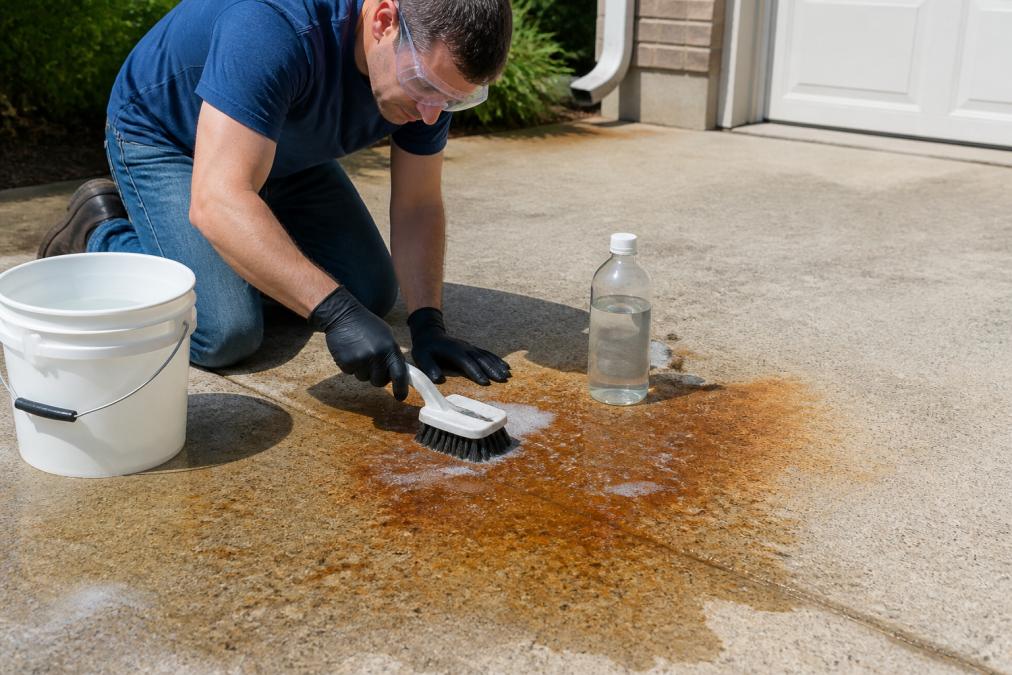
For light, fresh stains, try this:
- Pour white vinegar directly on the stain
- Let it sit for 10-15 minutes
- Sprinkle baking soda over the wet area
- Scrub with a stiff brush
- Rinse thoroughly with water
Lemon juice works the same way. Squeeze it fresh, let it dwell, then scrub. For tougher spots, mix lemon juice with baking soda into a paste and apply it thick.
A few honest limits on the natural route:
- Acetic and citric acid are weak. They handle surface bloom and fresh sprinkler stains, not years-old iron oxide.
- Dwell time matters more than scrubbing. Ten minutes of contact beats ten minutes of elbow grease.
- Vinegar can dull some sealers and etch limestone-based pavers, so test first.
- These methods are safe for grass and pets when diluted, which is why they’re the right first attempt.
Commercial Cleaners and the Best Rust Remover for Concrete
Oxalic acid is the workhorse ingredient in most commercial rust removers. It reacts with iron oxide and lifts the stain without damaging concrete, and it’s the standard choice for fertilizer and irrigation staining. Look for products labeled as rust removers or concrete cleaners containing oxalic acid. Some degreasers also handle light rust.
If oxalic acid doesn’t finish the job, the next tier is a poultice, an oxalic-acid powder mixed with just enough water to form a paste, applied thick over the stain and covered with plastic so it stays wet for hours instead of minutes. The poultice pulls iron out of the pores rather than just off the surface, which is why it works on stains that have been there for years.
Muriatic acid (diluted hydrochloric acid) is stronger but riskier. It can etch concrete, burn skin, and damage nearby metal, and it does not neutralize itself. Most homeowners should exhaust oxalic acid and poultices before reaching for it. If you do use it, dilute per the label, apply to a small area, and neutralize with baking soda and water afterward.
A few rules for commercial cleaners:
- Always test on a small hidden area first
- Follow the label’s dwell time exactly
- Never mix products
- Keep pets and kids away until the surface is dry
Never mix muriatic acid with bleach or ammonia. The chemical reaction releases toxic gas. If you’re unsure what’s in a product, don’t combine it with anything.
A cheap way to tell how deep the stain goes: wet the concrete. If the rust disappears when wet and reappears as it dries, it’s sitting near the surface and a mild acid will lift it. If it stays visible when wet, the iron has soaked in and you’ll need a poultice or a professional.
Step 3: Apply, Scrub, and Rinse: The Removal Process
The process of how to remove rust stains from concrete driveway surfaces is simple, but the details matter. Dwell time and surface agitation do most of the work.
Here’s the step-by-step:
- Wet the concrete around the stain to protect clean areas
- Apply your cleaner directly to the stain
- Let it dwell for the time on the label, usually 5-15 minutes
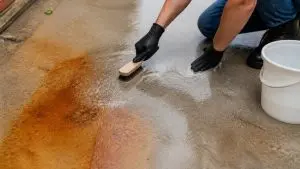
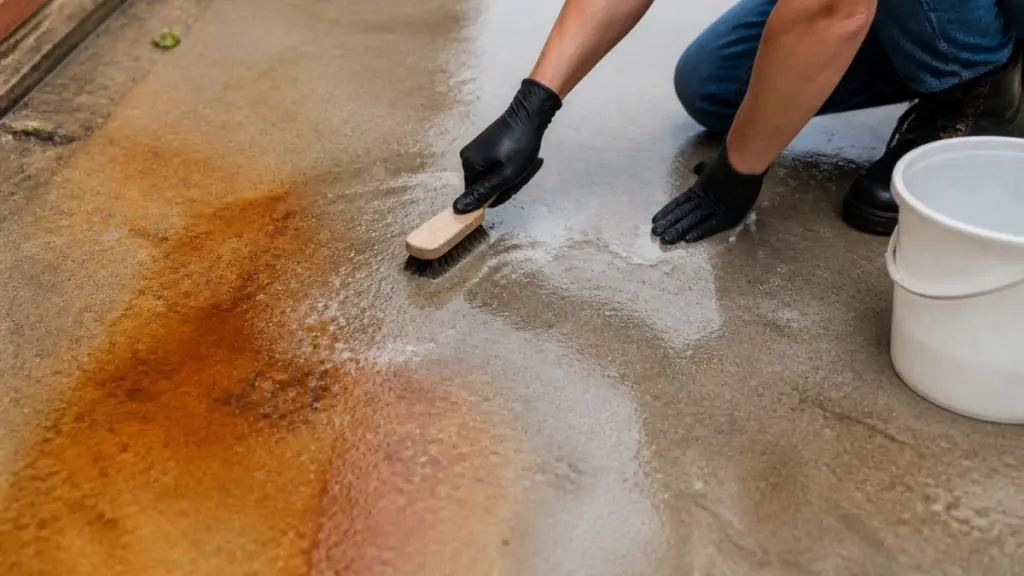
- Scrub with a stiff-bristle brush using circular motions
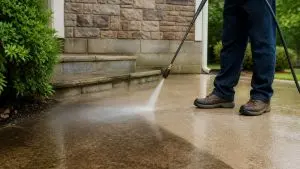
- Rinse thoroughly with a hose or pressure washer
- Check the result and repeat if needed
Dwell time lets the chemical reaction happen. Skip it, and you’re just scrubbing dirty water around.
For stubborn stains, cover the treated area with plastic wrap while it dwells. This keeps the cleaner wet and active longer.
A pressure washer helps with rinsing, but keep the nozzle moving. Holding it in one spot can etch the concrete surface.
Step 4: Safety Precautions and Environmental Impact
Protective gear is not optional with rust removers. Oxalic acid and muriatic acid both cause skin burns and eye damage.
Wear these every time:
- Chemical-resistant gloves
- Safety goggles or a face shield
- Long sleeves and pants
- Closed-toe shoes
- A respirator if you’re using strong acids
Rinse thoroughly when you’re done. Wash your hands, tools, and any skin that touched the cleaner.
Environmental impact matters too. Runoff from acid cleaners can harm plants, pets, and storm drains. Many cities regulate what can enter stormwater systems. Check with your local public works department before you rinse.
Non-toxic alternatives like vinegar and lemon juice are safer for the yard. They take longer but won’t kill grass or harm pets.
The EPA’s guidance on household hazardous waste explains how to dispose of leftover chemicals safely. Never pour them down a storm drain.
Safety gear and proper rinsing protect you and your landscaping. A few extra minutes of prep prevents burns, dead grass, and costly cleanup.
Preventing Rust Stains on Concrete: Long-Term Protection
Preventing rust stains on concrete is easier than removing them. Stop the source and seal the surface.
Start with these steps:
- Move metal furniture and tools off the driveway
- Fix leaking sprinkler heads and rusty pipes
- Switch to fertilizers without iron additives
- Wipe up drips from cars and trailers right away
- Apply a concrete sealer every few years
Sealing is the biggest long-term win. A good sealer fills the pores so stains can’t soak in. Most sealers last 2-5 years depending on traffic and weather.
For driveways that see heavy use, reapply more often. A quick water test tells you if the sealer is still working. If water soaks in instead of beading up, it’s time to reseal.
Troubleshooting Failed Attempts and When to Call Professional Concrete Pressure Washing Services
Some stains won’t budge. Before you assume you need a pro, work through the common reasons a DIY attempt fails, most of them have a fix.
The stain came back within days. That’s almost always a source problem, not a cleaner problem. Rust reappearing in the same spot usually means rebar is bleeding through the slab, a sprinkler head is still hitting the concrete, or a metal object is still sitting there. Treating the stain without fixing the source is a loop.
The stain lightened but didn’t disappear. Iron oxide has soaked deeper than the acid can reach in one pass. This is where a poultice (oxalic acid paste under plastic, left for several hours) outperforms a spray-and-scrub. Multiple short applications are less effective than one long dwell.
The concrete around the stain got lighter or chalky. You’ve etched the surface. Acid left on too long, or muriatic acid used undiluted, eats the cement paste and leaves a dull, rough patch that no cleaner will fix. Etching is permanent, the only remedy is a topical sealer or overlay.
The stain spread or got darker after treatment. Rinsing with a pressure washer at too high a PSI can drive dissolved iron deeper into the pores, and rinsing with hard, iron-heavy water re-deposits rust as it dries. Rinse with soft water or a hose, not a turbo nozzle.
The stain is a ring around a crack or joint. That pattern points to rebar corrosion inside the slab. Surface cleaning will keep removing the symptom, but the rust will keep wicking up through the crack.
When to bring in a professional:
- The stain is a rebar bleed-through that keeps returning after treatment
- The slab is stamped, exposed-aggregate, or colored, where acid damage is expensive to reverse
- The stain covers a large area or multiple driveways on the property
- You’ve etched the surface and need it corrected, not just cleaned
- The runoff needs containment because of nearby landscaping, storm drains, or a sloped lot
Frequently Asked Questions
Will WD-40 remove rust from concrete?
WD-40 can help with light surface rust, but it is not a dedicated rust remover for concrete. For deep-set stains, oxalic acid or commercial rust removers are more effective. Always test on a small area first and follow safety precautions.
What dissolves rust without scrubbing?
Oxalic acid and muriatic acid can dissolve rust without heavy scrubbing, but they require careful handling and proper dwell time. Apply the product, let it sit for 10-15 minutes, then rinse thoroughly. Always wear protective gloves and goggles, and avoid using muriatic acid on driveways if you have plants nearby.
Does vinegar damage concrete?
White vinegar is mildly acidic and generally safe for concrete when used briefly and rinsed thoroughly. Prolonged exposure can etch the surface, so limit dwell time to 10-15 minutes and neutralize with baking soda if needed. For regular cleaning, vinegar is a non-toxic alternative to harsh chemicals.
How do I prevent rust stains from returning to my concrete?
Preventing rust stains on concrete involves sealing the surface after removal, addressing the source (e.g., fertilizer runoff, metal furniture), and regular cleaning. Apply a concrete sealer every 2-3 years to block stains.