
Last Updated: November 12, 2026
Quick Summary
Pressure washing in El Segundo must account for salt air and a persistent marine layer that leave a film on siding, roofs, and pavement, and that film can bond tighter and return faster than inland grime. Soft washing is generally the safer method for siding and roofs, while concrete driveways and brick patios tolerate higher pressure. Most jobs are priced by combining a base rate for the surface type with add-ons for soil level, access, and method.
- Salt air and marine layer moisture let mold and mildew colonize damp, shaded siding and roof shingles.
- High pressure on roof shingles strips granules and voids warranties, so soft washing is the safer method.
- A surface cleaner attachment cleans flat concrete in even passes instead of leaving wand marks.
- Stop DIY work on stucco, painted wood, roofing, or anything above head height and call a professional.
- Runoff from washing carries dirt, detergent, and salt film toward storm drains that lead to the ocean.
Table of Contents
- Why El Segundo Properties Need Regular Pressure Washing
- Soft Washing House El Segundo: Protecting Siding and Roofs
- Driveway Pressure Washing El Segundo: Hard Surfaces Done Right
- What Pressure Washing El Segundo Cost Really Depends On
- Reading Pressure Washing El Segundo Reviews Before You Book
- DIY Pressure Washing: Equipment, Steps, and When to Stop
- Booking Your Free Estimate with Carters Precision Pressure Washing
- Frequently Asked Questions
Why El Segundo Properties Need Regular Pressure Washing
Pressure washing in El Segundo is not the same job as it is ten miles inland, and homeowners who treat it that way end up disappointed. Properties here sit close to the coast, which means salt air, a marine layer that hangs around most mornings, and a steady diet of moisture that never quite dries out. That combination leaves a distinct film on siding, roofs, and pavement.
Salt air deposits a fine residue on every exterior surface it touches. The marine layer keeps those surfaces damp long enough for mold and mildew to take hold, especially on north-facing walls and shaded eaves. Add everyday dust and pollen, and you get a gray-green buildup that dulls paint and makes a well-kept home look tired.
Coastal buildup can bond tighter and return faster than inland grime, which is why a once-a-year rinse may not be enough for a home near the water.
Salt Air, Marine Layer, and the Grime They Leave Behind
The marine layer is the real culprit. Overnight and early-morning moisture settles on surfaces, and salt residue from the air dissolves into it. As the sun burns the fog off, that salty water dries in place and leaves a film behind. Repeat that cycle for months and the film becomes a layer.
Mold and mildew love this pattern. They colonize damp, shaded siding and roof shingles, then spread as the moisture returns. Left alone, mildew can work into paint and caulk lines, which turns a cleaning job into a repainting job. Regular exterior cleaning interrupts that cycle before it gets expensive.
Soft Washing House El Segundo: Protecting Siding and Roofs
The biggest mistake we see is homeowners reaching for the highest pressure setting on siding and roofs. That is how paint gets stripped, stucco gets cracked, and shingles lose their granules. Soft washing is generally the safer method for these surfaces.
Soft washing is a low-pressure cleaning method that relies on specialized cleaning solutions to break down dirt, mold, and mildew, then rinses everything away with gentle water pressure. It cleans by chemistry rather than force, which protects the surface underneath.
Here is how the two methods differ in practice:
| Surface | Method | Why |
|---|---|---|
| Roof shingles | Soft wash | High pressure strips granules and voids warranties |
| Stucco and siding | Soft wash | Pressure cracks stucco and forces water behind siding |
| Painted wood | Soft wash | Pressure strips paint and opens the grain |
| Concrete driveway | Pressure wash | Hard surface tolerates higher PSI |
| Brick patio | Pressure wash | Dense surface handles pressure well |
If you want to understand the full difference before trusting either method on your home, our guide on pressure washing vs soft washing for home exteriors breaks down when each one belongs.
The plants and pets question comes up every time. A responsible soft wash applies cleaning solution carefully, pre-wets landscaping, and rinses everything down afterward. Ask any provider how they protect your yard before they start.
Driveway Pressure Washing El Segundo: Hard Surfaces Done Right
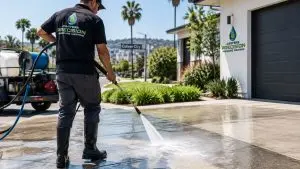
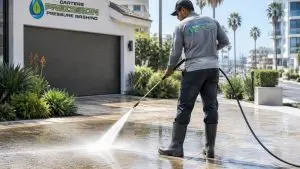
Concrete driveways, brick patios, and walkways are where pressure washing earns its name. These hard surfaces can handle higher pressure, but “higher” is not “maximum.” A common mistake is holding the wand too close or using a narrow tip, which etches permanent lines into concrete that no amount of cleaning will fix.
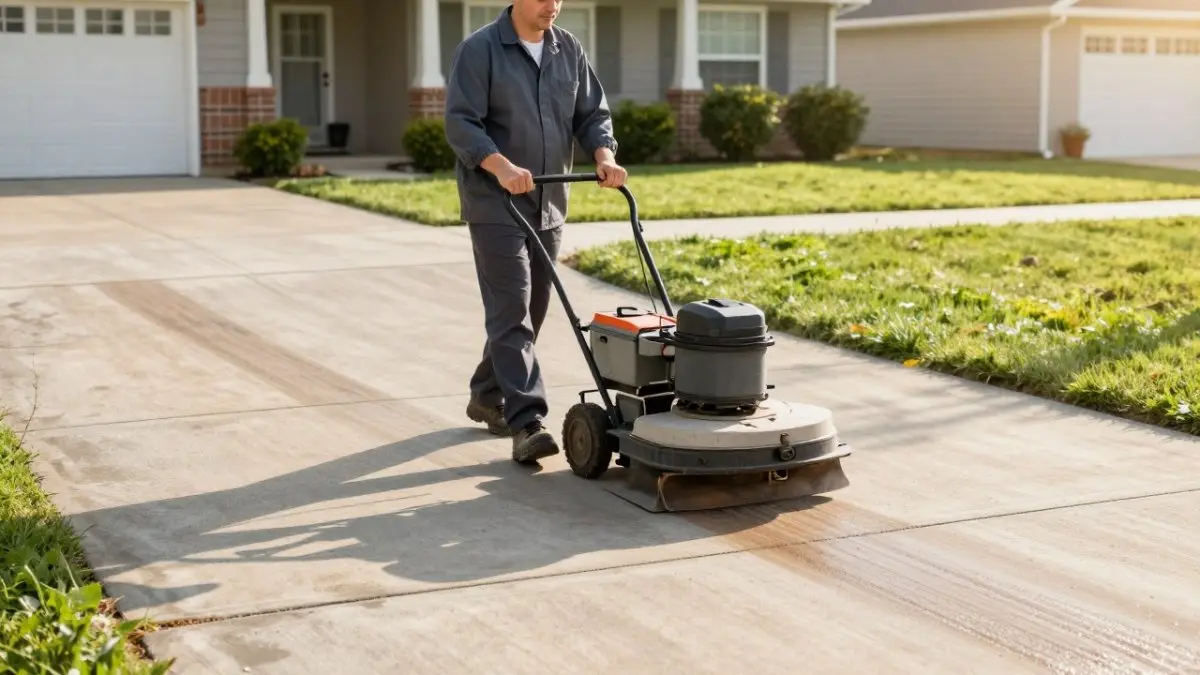
A surface cleaner attachment spins a bar of high-pressure water under a hood, cleaning in even passes instead of leaving wand marks. Oil stains are typically pretreated before washing, because water alone will not lift them.
For the full process, including PSI settings, pretreatment, and stain removal, our guide on driveway pressure washing best practices walks through each step.
What Pressure Washing El Segundo Cost Really Depends On
Pressure washing pricing depends on several variables that change from property to property. Square footage is the starting point, but it is rarely the whole story. Most El Segundo jobs are priced by combining a base rate for the surface type with add-ons for soil level, access, and method, then adjusting for how often the property is cleaned.
Here is what generally affects the cost:
- Property size and surface count. A single driveway is one job; a driveway plus patios plus walkways is another.
- Surface type and method. Concrete driveways and brick patios tolerate higher pressure, while roofs, stucco, and painted siding require soft washing, which takes longer and uses more cleaning solution.
- Soil level and condition. Light dust and pollen rinse off quickly. Heavy mildew on north-facing walls, salt film on ocean-facing siding, oil stains on a driveway, or years of neglect take more time, more pretreatment, and more product.
- Access and height. Two-story siding, steep rooflines, and tight side yards require ladders, lifts, or extra hose runs. A property with no street parking for a trailer or water tank adds setup time that shows up in the quote.
- Frequency. A property on a regular maintenance schedule may stay cleaner than one cleaned only occasionally.
Pricing depends on your actual property, so an estimate based on the specific surfaces and conditions is the most reliable figure.
For a sense of what affects local pricing, our average cost of house pressure washing guide lays out the factors behind it. A free estimate on your actual property is the most reliable way to get a figure.
Reading Pressure Washing El Segundo Reviews Before You Book
Reviews tell you more than a star rating does, if you read them properly. A five-star average means little on its own. What matters is what the reviews describe: on-time arrival, protection for landscaping, and results that held up months later.
When you compare pressure washing providers, look for these signals:
- Specific details. Reviews that mention a particular surface, like a stucco wall or a commercial storefront, tell you the reviewer had work like yours.
- Before-and-after photos. Providers who show real project photos give you something to verify.
- Responses to criticism. How a business handles a negative review says more than a wall of praise.
- Consistency over time. A steady stream of recent reviews beats a burst of old ones.
Watch out: a low quote paired with no photos and no references usually means cutting corners on pressure, product, or surface protection. Ask for references on jobs like yours, especially if you manage a commercial property.
DIY Pressure Washing: Equipment, Steps, and When to Stop
Renting a pressure washer for a weekend is a reasonable plan for a single concrete slab. It is a bad plan for a roof, stucco, or anything with older paint. Knowing where the line sits saves you from a repair bill that dwarfs the rental cost.
Equipment checklist for a hard-surface DIY job:
- A pressure washer rated for household use, typically in the 2,000 to 3,000 PSI range for concrete, with an adjustable or interchangeable nozzle set.
- A surface cleaner attachment for flat concrete. It spins a bar of water under a hood and cleans in even passes instead of leaving wand marks.
- Wide-angle nozzles (often color-coded white or green) for general rinsing and narrower tips only for stubborn stains on hard surfaces.
- A pretreatment pump sprayer for oil and rust stains, plus a cleaner suited to the surface.
- Safety glasses, gloves, and closed-toe shoes. Pressure washing kicks up debris and overspray.
- Plastic sheeting or tarps for electrical fixtures, outdoor outlets, and anything you do not want sprayed.
Choosing pressure and technique by surface. The nozzle and distance matter as much as the machine setting. On concrete, start with a wide tip and keep the wand moving in overlapping passes; holding a narrow tip in one spot etches permanent lines.
Step-by-step for a hard surface:
- Clear the area and sweep off loose debris.
- Pretreat oil and rust stains with a suitable cleaner and let it dwell.
- Pre-wet nearby plants and cover electrical fixtures and anything you do not want sprayed.
- Start with a wider tip and lower pressure, then test a small hidden area first.
- Use even, overlapping passes and keep the wand moving.
- Rinse the surface and the surrounding area when finished.
Water use, runoff, and coastal considerations. El Segundo sits close to the coast, and runoff from washing carries dirt, detergent, and salt film toward storm drains that lead to the ocean. Responsible DIY washing means using detergents sparingly, avoiding harsh chemicals near drains, and containing or redirecting runoff where practical.
When to stop and call a professional. Stop if the surface is stucco, painted wood, roofing, or anything above head height. Those are the jobs where DIY damage happens most, and they are also the jobs that require soft washing rather than pressure. Our list of common pressure washing mistakes covers the errors that cause the most expensive damage.
Booking Your Free Estimate with Carters Precision Pressure Washing
The simplest way to know what your property needs is to have someone look at it. Carters Precision Pressure Washing serves residential and commercial properties in Los Angeles with soft washing for roofs and houses and pressure washing for driveways, patios, and other hard surfaces.
You can request a free estimate for your property. Homeowners preparing to list a property and managers of storefronts or commercial entryways may find this kind of cleaning useful.
You can get a free pressure washing estimate online and see what a precision clean would involve for your property. Call for a free estimate.
If your siding looks dull, your driveway has gone gray, or your roof is showing dark streaks, the problem will not fix itself. Carters Precision Pressure Washing offers soft washing that protects siding and roofs, pressure washing for driveways and patios, and a free estimate so you know the scope before you commit. Get started with Carters Precision Pressure Washing and see your property’s curb appeal come back.
Frequently Asked Questions
What is a reasonable price for pressure washing in El Segundo?
Pricing depends on the surface, square footage, and how much buildup has to come off. Coastal homes with heavy salt and mildew buildup can take longer than inland properties. Ask for a free estimate based on your property.
Is it illegal to pressure wash your driveway in California?
Pressure washing itself is generally legal, but how runoff is handled can be regulated. Wash water carrying soap, oil, or debris should not be allowed to enter storm drains, which flow to the ocean. Ask any provider how they manage runoff on your property before work starts.
Which surfaces should be soft washed instead of pressure washed?
Roofs, painted siding, stucco, wood decks, and anything older or fragile are generally better suited to soft washing. Soft washing uses low pressure and a cleaning solution to kill mold, mildew, and algae at the root instead of blasting them off. High pressure on shingles can strip granules, and on stucco or older siding it can force water behind the surface and cause damage. Hard, unpainted concrete like driveways and walkways is the right candidate for full pressure washing.
How often should a driveway be pressure washed?
Many driveways benefit from a cleaning once a year, and homes closer to the coast may need it more often. Salt air, marine layer moisture, and shade all speed up mildew growth, and oil drips from cars set into concrete over time. If you notice dark streaks, green tinting, or stains that do not lift with a garden hose, it is time. Regular cleaning also keeps concrete from absorbing stains permanently.