
Last Updated: November 13, 2026
Quick Summary
Pressure washing Manhattan Beach homes requires matching each surface to the right method: pressure washing for concrete driveways, patios, and walkways, and soft washing for stucco, siding, roofs, wood, and solar panels. Salt air, marine layer moisture, and sandy wind leave coastal buildup that often needs more dwell time and sometimes a second application.
- Soft washing uses low pressure plus cleaning solution to kill algae, mold, and mildew at the root.
- Never pressure wash roof shingles or tile roofs, since pressure voids shingles and cracks tile.
- Clean top to bottom and finish with flatwork so dirty water stays off clean surfaces.
- Keep wash water on your property and never let it carry oil, soap, or sediment into the gutter.
- Ask providers what method they use per surface, how they manage runoff, and whether they carry insurance.
Table of Contents
- Why Manhattan Beach Properties Need a Surface-by-Surface Plan
- Pressure Washing vs. Soft Washing: Picking the Right Method
- Soft Washing a House in Manhattan Beach Without Damaging Siding
- Driveways, Patios, and Walkways: Hard-Surface Cleaning Done Right
- Roofs, Gutters, Windows, and Solar Panels: The Full Exterior Checklist
- Runoff, Plants, and Pets: Environmental Rules That Shape the Job
- What Drives Cost and How to Vet a Provider
- Book a Free Estimate with Carters Precision Pressure Washing
- Frequently Asked Questions
Why Manhattan Beach Properties Need a Surface-by-Surface Plan
Pressure washing Manhattan Beach homes is not the same job as pressure washing a house inland. Salt air, marine layer moisture, and sandy wind leave a different kind of buildup on every exterior surface, and the method that cleans one surface can damage the next. That is the core problem this guide solves.
Every property is a set of separate surfaces, each with its own cleaning method, pressure level, and detergent. Stucco needs a gentle touch. Concrete driveways can take more force. Roofs need almost none. Get that mapping wrong and you trade curb appeal for repairs.
Below, we walk through how to pick the right method for each surface, what coastal conditions do to a Los Angeles County home, how runoff rules affect the job, and what actually drives the price of a professional clean.
Pressure Washing vs. Soft Washing: Picking the Right Method
Pressure washing uses a high-pressure water stream to blast dirt, grime, and stains off hard surfaces. Soft washing uses low pressure combined with a cleaning solution to kill and lift organic growth like algae, mold, and mildew. The two methods are not interchangeable, and choosing wrong is the most common and most expensive mistake homeowners make.
Here is how the right method is typically chosen for each surface:
| Surface | Method | Why |
|---|---|---|
| Concrete driveway, patio, walkway | Pressure washing | Hard, porous, tolerates high pressure |
| Stucco and painted siding | Soft washing | High pressure cracks stucco and strips paint |
| Roof shingles and tile roofs | Soft washing | Pressure voids shingles and cracks tile |
| Wood decking and fencing | Low-pressure washing | High pressure gouges and splinters wood |
| Solar panels | Low-pressure washing | High pressure damages panel seals |
If you want the full comparison before deciding, our guide on pressure washing vs soft washing for home exteriors breaks down each method surface by surface.
Soft Washing a House in Manhattan Beach Without Damaging Siding
Soft washing a house means applying a cleaning solution at low pressure, letting it dwell long enough to kill algae and mildew at the root, then rinsing gently. The dwell time is what does the work. Pressure is not the tool here.
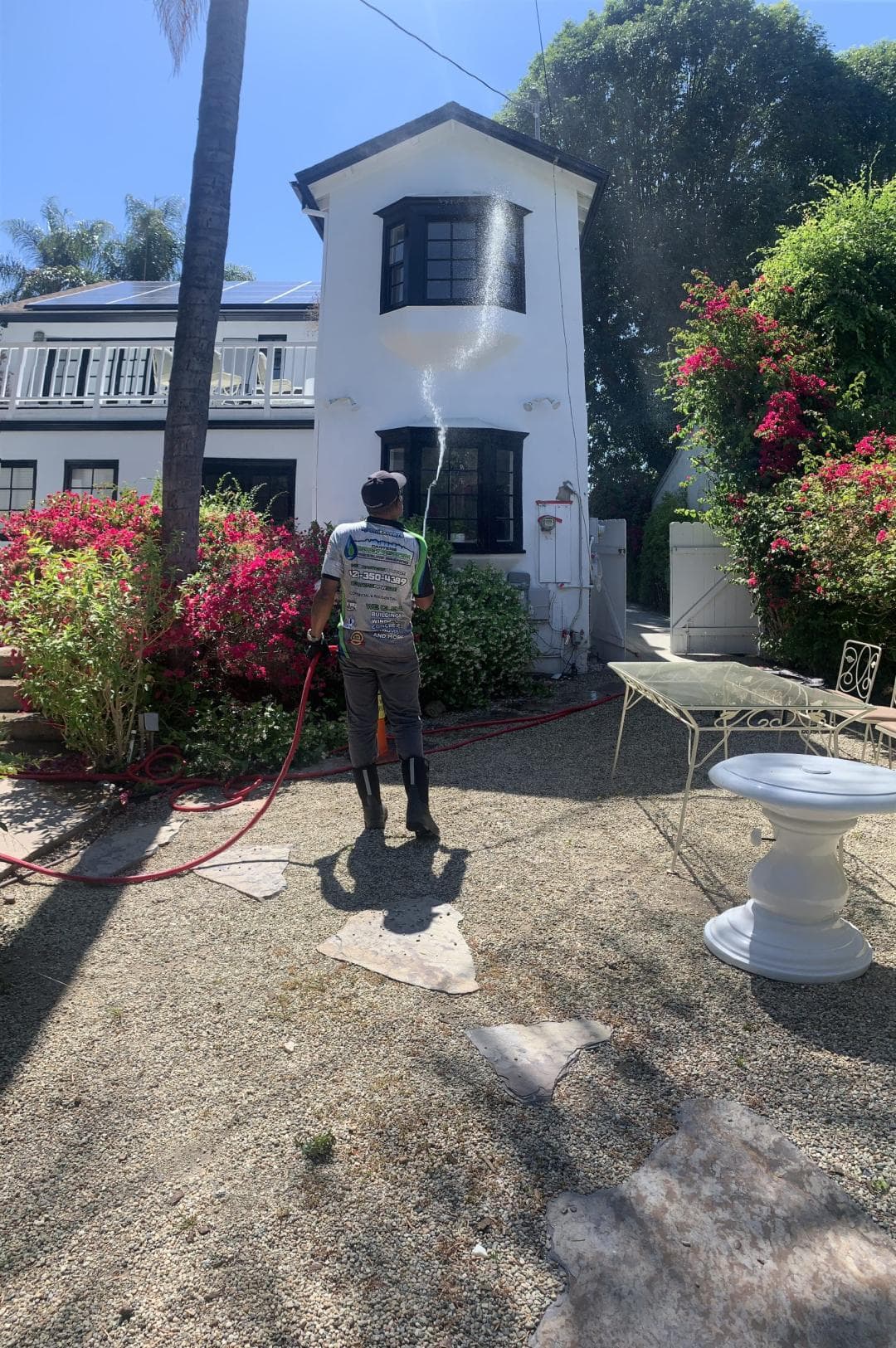
Older stucco and wood siding are surfaces that call for care. A common mistake is pointing a high-pressure wand at stucco to blast off mildew. That drives water behind the wall assembly and can crack the finish. Soft washing avoids both problems because the solution kills the growth instead of forcing it off.
Our soft wash roof cleaning guide explains the same low-pressure approach we use on shingles and tile, so you can see how the process protects the surface underneath.
Driveways, Patios, and Walkways: Hard-Surface Cleaning Done Right
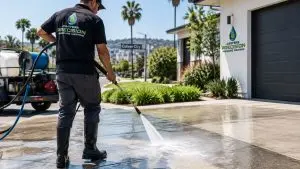
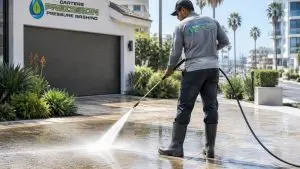
Hard surfaces are where pressure washing earns its name, but even concrete has limits. A surface cleaner attachment, the walk-behind disc used on many professional jobs, cleans flat concrete evenly and avoids the striping a wand can leave behind.
Oil stains generally need a degreaser and dwell time before any water hits them. Rust and irrigation stains often need a specialized treatment. Gum on a commercial storefront walkway usually needs heat or a solvent, not just pressure. On brick and pavers, keep the nozzle moving and stay off the joint sand, or you will wash out the bedding.
Roofs, Gutters, Windows, and Solar Panels: The Full Exterior Checklist
A complete exterior cleaning covers more than the siding. Here is a typical exterior checklist:
- Roof shingles and tile roofs: soft wash only, never pressure
- Gutters: clear debris first, then wash the exterior faces
- Windows: rinse frames and glass after the walls are done
- Solar panels: low-pressure wash to protect the panel seals
- Walkways and entry steps: pressure wash after the house wash
Order matters. Cleaning top to bottom and finishing with the flatwork keeps dirty water from the roof and walls off surfaces that are already clean.
Runoff, Plants, and Pets: Environmental Rules That Shape the Job
Runoff is the part most homeowners never think about until a plant dies or a neighbor complains. Wash water carries dirt, detergent, and sometimes oil into storm drains, and in the United States those drains typically discharge untreated to local creeks, the ocean, or groundwater recharge areas. That means what runs off a driveway does not vanish, it enters the surrounding watershed.
The regulatory picture is layered. At the federal level, the Clean Water Act’s National Pollutant Discharge Elimination System (NPDES) governs point-source discharges, and many states and counties extend that framework to municipal separate storm sewer systems (MS4s). Local agencies can impose additional conditions on what enters storm drains. For a residential wash, the practical takeaway is simple: keep wash water on your property where you can, and never let it carry oil, soap, or heavy sediment into the street gutter.
A common pattern among professional washers is to contain and recover dirty water on jobs involving oil, heavy detergent, or large volumes. On a typical property, that can look like:
- Blocking the driveway apron with a berm or containment mat so water does not sheet into the gutter.
- Using a wet/dry vacuum or sump pump to collect standing water and dispose of it to a sanitary sewer cleanout, where local rules allow, rather than the storm drain.
- Pre-wetting and covering landscaping before the first drop falls, then rinsing plants afterward.
- Keeping pets and people clear until surfaces are dry, since wet concrete and detergent residue are slip hazards.
Watch out: washing a car or degreasing an engine in the driveway and letting the runoff reach the gutter is exactly the kind of discharge that stormwater rules target, even at a single-family home.
Protecting plants, pets, and people during a clean is an important part of the job. For a deeper look at protecting your yard during a clean, read how to clean a driveway without harming plants.
What Drives Cost and How to Vet a Provider
Pricing for pressure washing is not a single number, it is a stack of variables. Most providers quote after seeing the property, but you can compare quotes more intelligently if you know what moves the price:
- Square footage and surface type. A single-story stucco house with light algae is a different job than a two-story home with heavy salt buildup and oil-stained concrete. Concrete driveways, brick pavers, and wood decks each carry different labor and chemical costs.
- Buildup severity. Marine-layer algae, salt film, and sandy wind mean coastal properties often need more dwell time and sometimes a second application. A home cleaned regularly is cheaper per visit than one that has gone years without service.
- Access and height. Two-story walls, steep roof pitches, tight side yards, and gated properties add setup time and sometimes require different equipment.
- Prep and protection. Covering plants, containing runoff, and protecting electrical fixtures and windows all take time, and that time is part of a professional quote.
- Method. Soft washing uses more detergent and dwell time; pressure washing uses more water volume and equipment. The method a surface needs affects both chemical and labor cost.
Providers often price by a combination of base service and square footage, with add-ons for roofs, gutters, windows, and solar panels. Ask each provider to break the quote down by surface so you can see what you are paying for.
When you vet a provider, ask three things: what method they will use on each surface, how they protect plants and manage runoff, and whether they carry insurance. A provider who cannot answer the first question clearly is a risk to your siding and roof. Also confirm whether the quote includes prep, containment, and post-clean rinse-down, or whether those are add-ons.
For a general overview of cost factors, see our average cost of house pressure washing guide.
Book a Free Estimate with Carters Precision Pressure Washing
The simplest next step is to request a free estimate. Carters Precision Pressure Washing serves residential and commercial properties in Los Angeles, offering soft washing for roofs and houses and pressure washing for driveways, patios, and other hard surfaces.
You can get a free pressure washing estimate online and see transparent pricing factors before anyone shows up. Ask for a free estimate to get a clear quote for your property. Call Carters Precision Pressure Washing for a free estimate.
Your exterior takes a beating from salt air and marine layer moisture every season. Carters Precision Pressure Washing restores curb appeal with soft washing for roofs and siding and pressure washing for driveways and patios. We protect your landscaping, manage runoff, and quote the job after we see it. Get started with Carters Precision Pressure Washing and see your property shine again.
Frequently Asked Questions
Is pressure washing legal in California?
Yes, but the rules focus on what leaves your property. Under the federal Clean Water Act, wash water that carries soap, oil, or visible grime generally cannot flow into storm drains, which empty to the ocean. A responsible provider will explain how they handle wash water before starting.
When should a house be soft washed instead of pressure washed?
Soft washing is the default for siding, stucco, painted wood, and roofs. It uses low pressure plus a cleaning solution that kills mold, mildew, and algae at the root. High pressure on those surfaces can strip paint, crack stucco, and force water behind siding. Pressure washing stays for concrete, pavers, and other hard surfaces that can take the force. Ask any provider which method they plan for each part of your home.
How do I choose a pressure washing company in Manhattan Beach?
Ask three things. First, whether they soft wash roofs and siding rather than blasting them. Second, how they manage runoff and protect plants and pets. Third, whether they carry insurance and can show examples of work like yours. Get a written free estimate that names each surface and method. A provider who explains the method per surface is usually the one who won’t damage your property.
How long does a professional cleaning actually last?
Longer than a DIY rinse, because soft washing kills the mold and algae rather than just knocking off the surface layer. Coastal salt air and marine layer moisture speed regrowth, so refresh timing depends on local conditions and how the surface is used. Regular maintenance keeps stains from setting into porous concrete and stucco.