
Table of Contents
- What Homeowners Pay for House Pressure Washing
- Factors That Influence House Pressure Washing Prices
- Pressure Washing Price Per Square Foot Explained
- Soft Washing vs Pressure Washing Cost
- How to Get a Pressure Washing Estimate
- DIY vs Professional Pressure Washing
- Protecting Your Property During Cleaning
- Conclusion
- Frequently Asked Questions
Last Updated: September 24, 2026
What Homeowners Pay for House Pressure Washing
The average cost of house pressure washing varies significantly based on property size, surface type, and complexity. Most homeowners can expect to invest anywhere from a few hundred to several thousand dollars for professional service, depending on these key factors.
The biggest mistake homeowners make is comparing quotes without understanding what’s included. One contractor might be quoting soft washing your delicate siding while another quotes aggressive pressure washing on concrete. These are completely different services with completely different pricing structures.
Factors That Influence House Pressure Washing Prices
Several variables drive the final cost, reflecting real differences in labor, equipment, and risk.
Square Footage and Property Size
Property size is the primary pricing factor. Larger homes require more time, water, detergent, and labor. However, the relationship isn’t perfectly linear, setup time, travel, and equipment mobilization are fixed costs distributed across total square footage. Contractors price either by square footage or flat rates based on property size categories.
Surface Material and Type
Surface material dramatically changes cleaning requirements and pricing. Vinyl siding requires gentler pressure than concrete. Brick, stucco, wood, and asphalt shingles each have specific requirements to prevent damage.
Property Height and Accessibility
Single-story homes are straightforward to clean. Two-story and three-story homes require extension poles, lifts, and specialized safety equipment, increasing labor and complexity. Accessibility also matters, easy ground access costs less than homes with narrow yards, fences, or uneven terrain.
Site Conditions and Contamination Level
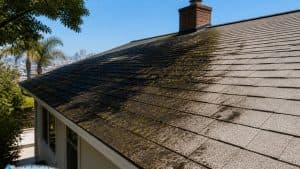
Contamination level affects pricing. Light surface dust cleans faster than years of mold, mildew, and algae. Heavy contamination requires longer dwell times, multiple passes, or specialized treatments for oil stains and rust marks.
The most expensive pressure washing jobs aren’t always the biggest homes, they’re the ones with the most stubborn contamination and complex surface types combined.
Pressure Washing Price Per Square Foot Explained
Price per square foot varies by surface type. Driveway cleaning costs less per square foot than siding cleaning, which costs less than roof cleaning due to safety and equipment requirements. A $0.15 per square foot driveway quote differs from $0.30 per square foot siding cleaning, the surfaces, pressure levels, detergents, and safety considerations are completely different.
Unusually low price-per-square-foot quotes often indicate the contractor is cutting corners on surface preparation, detergent quality, or safety protocols. Pressure washing done carelessly can damage siding, strip paint, or cause water intrusion into your home.
Soft Washing vs Pressure Washing Cost
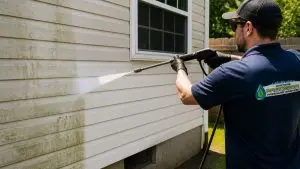
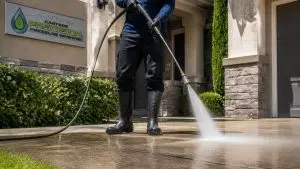
Pressure washing uses high-pressure water jets on durable surfaces like concrete and driveways. Soft washing uses lower pressure with specialized detergents on delicate surfaces like vinyl siding, wood, and roof shingles. Soft washing costs more per square foot because it requires more time, specialized chemicals, and careful application, the detergent does much of the work over hours or days.
How to Get a Pressure Washing Estimate
Request detailed estimates breaking down costs by surface type and cleaning method, including pre-treatment and detergent costs. Ask about their approach to each major surface, roof, siding, driveway, patio, and request before-and-after photos of similar properties. A contractor with thoughtful answers for each surface is more likely to deliver appropriate results.
Contractor Vetting Checklist
Before hiring any pressure washing contractor, verify these critical factors.
- Verify they carry general liability insurance and can provide proof of coverage
- Ask for references from homes similar to yours (roof cleaning, siding type, property size)
- Confirm they have experience with your specific surface materials
- Request written estimate specifying cleaning methods for each surface
- Ask about their approach to protecting landscaping, windows, and outdoor furniture
- Verify they have proper equipment for your property height and complexity
- Confirm they understand surface-specific PSI requirements and won’t use excessive pressure
- Ask about their detergent products and whether they’re environmentally safe
- Clarify warranty or guarantee on their work if applicable
- Get everything in writing before work begins
Insurance and Liability Verification
This is non-negotiable. A contractor without liability insurance puts your property at risk.
DIY vs Professional Pressure Washing
Renting equipment and doing the work yourself is cheaper upfront. Professional service costs more but brings expertise, proper equipment, and liability protection.
Protecting Your Property During Cleaning
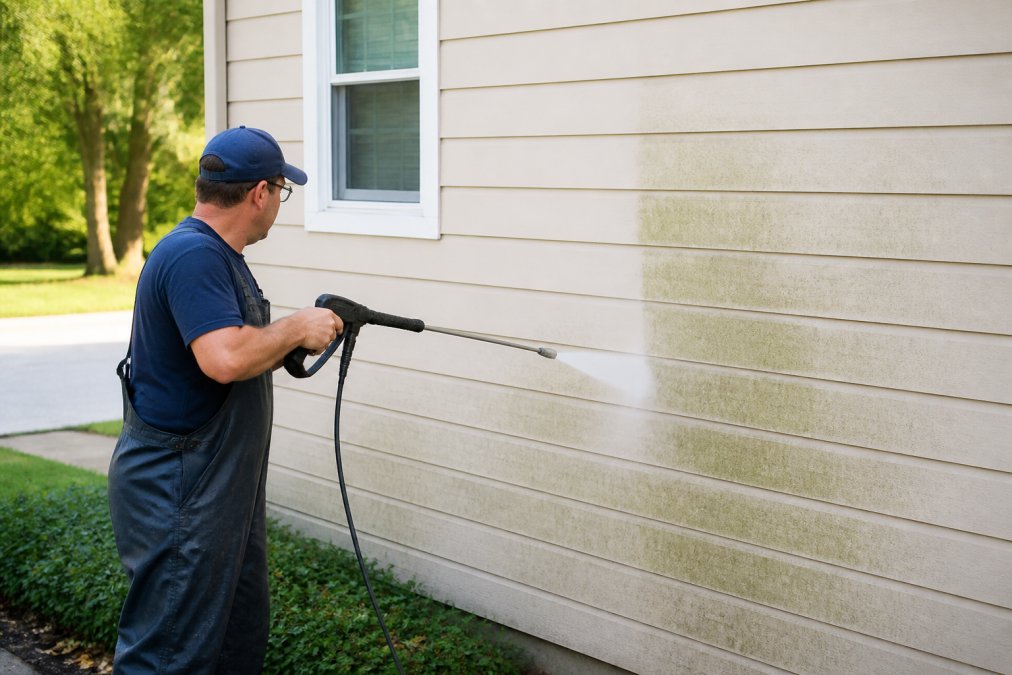
Pressure washing can damage your home if the wrong pressure level is used on delicate surfaces. Understanding surface-specific PSI (pounds per square inch) requirements is the key to preventing costly damage while still achieving effective cleaning.
Surface-Specific PSI Guide
Different exterior materials tolerate different pressure levels. Using excessive pressure on delicate surfaces can strip paint, crack siding, damage shingles, or force water into gaps where it causes rot and mold.
Safe PSI ranges by surface type:
| Surface Material | Safe PSI Range | Recommended Method | Why It Matters |
|---|---|---|---|
| Vinyl siding | 1,200-1,500 PSI | Soft washing preferred | High pressure cracks panels and strips paint; detergent does most of the work |
| Wood siding | 800-1,200 PSI | Soft washing | Pressure above 1,200 PSI splinters and damages wood fiber; can cause water intrusion |
| Brick | 2,500-3,000 PSI | Pressure washing | Brick is durable; higher pressure is safe but detergent is still important for mortar protection |
| Stucco | 1,500-2,000 PSI | Soft washing or low-pressure | Stucco is porous and fragile; excessive pressure erodes the surface and creates pitting |
| Asphalt shingles | 1,200 PSI maximum | Soft washing only | Pressure above 1,200 PSI strips granules and shortens roof life; soft washing with detergent is standard |
| Concrete driveway | 3,000-4,000 PSI | Pressure washing | Concrete is durable; higher pressure removes stubborn stains; still requires proper technique to avoid surface damage |
| Composite decking | 1,500 PSI maximum | Soft washing | Composite materials are easily damaged; pressure above 1,500 PSI causes splintering and gouging |
| Metal gutters and trim | 1,500-2,000 PSI | Pressure washing | Metal can dent at high pressure; lower PSI prevents damage while removing debris |
What to ask your contractor:
Contractors who use a “one-size-fits-all” pressure setting are the leading cause of homeowner complaints about pressure washing damage. Excessive pressure on vinyl siding can cost $2,000-$5,000 in panel replacement. On roofs, it can void your warranty and cause leaks within months.
Damage Prevention Strategies
Before cleaning starts:
- Move outdoor furniture, grills, potted plants, and decorative items away from work areas
- Close all windows and doors; tape or cover any that might be exposed to spray
- Cover HVAC units, electrical boxes, light fixtures, and outdoor outlets with plastic sheeting
- Trim back landscaping at least 3 feet from the house to prevent spray damage
- Ask the contractor to identify any cracks, gaps, or areas where water could enter the home
- Confirm the contractor will use extension wands and maintain proper distance from surfaces (typically 12-24 inches depending on PSI)
Water and detergent runoff management:
Professional contractors should have a plan for managing water and detergent runoff to protect your landscaping and prevent environmental contamination.
- Ask where water will drain and whether they’ll use barriers to direct runoff away from foundation plantings
- Confirm they’ll rinse landscaping after cleaning to remove detergent residue
- Ask whether their detergents are biodegradable and safe for plants and soil
- Verify they won’t allow runoff to flow into storm drains untreated (many municipalities have regulations on this)
- Request they protect pet areas and ask about safety once detergent dries
Height and accessibility safety:
- Confirm the contractor has proper fall protection equipment (harnesses, safety lines) for work at height
- Ask whether they use ladders, extension poles, or lift equipment, each has different safety implications
- Verify they have insurance coverage for work at height (this is included in their general liability if they’re properly insured)
- Ask about their experience with your specific home height and complexity
Post-cleaning inspection:
- Check that all surfaces are clean and the results meet expectations
- Look for any damage: stripped paint, cracked siding, dented trim, or water intrusion
- Verify landscaping is intact and not damaged by spray or detergent
- Check that windows, doors, and HVAC units are clean and undamaged
- Ask the contractor to address any concerns before they leave
The best pressure washing contractors view damage prevention as part of their professional responsibility, not an afterthought. They’ll explain their PSI choices, protect your property proactively, and stand behind their work with a warranty.
Conclusion
The average cost of house pressure washing depends on your property size, surface materials, and contamination level. Getting multiple detailed estimates helps you understand pricing variations and make informed decisions.
Frequently Asked Questions
How much does it cost to pressure wash a 2,000 square foot house?
The cost depends on several factors including surface type, contamination level, property height, and your location. Pricing varies significantly based on whether you need standard pressure washing or soft washing for delicate surfaces. Contact Carters Precision Pressure Washing for a free estimate tailored to your specific property, as quotes account for your home’s unique conditions and cleaning requirements.
What factors increase the cost of professional pressure washing?
Multi-story homes, difficult-to-reach areas, heavy mold or mildew contamination, delicate siding materials requiring soft washing, and service call fees all increase costs. Properties with stucco, vinyl siding, or brick may require specialized techniques. Site conditions like steep roofs, complex landscaping, or extensive algae treatment also impact pricing. A professional assessment determines the exact scope and cost.
Is soft washing vs pressure washing cost worth the difference?
Soft washing costs more upfront but prevents surface damage to delicate materials like stucco, vinyl siding, and cedar shakes. Pressure washing is faster and less expensive for hardy surfaces like concrete driveways. Choosing the wrong method can result in costly repairs, making the initial cost difference minimal compared to damage prevention. Professional contractors recommend soft washing for roofs and older siding to protect your investment.
How often should you pressure wash your home exterior?
Most homes benefit from annual or biennial pressure washing to maintain curb appeal and prevent mold, mildew, and algae buildup. Properties in humid climates or near trees may need more frequent cleaning. High-traffic areas like driveways and entryways may require annual attention. Regular maintenance prevents deep staining and extends the life of exterior surfaces, making preventative cleaning more cost-effective than allowing heavy contamination to develop.