
Table of Contents
- What Residential Concrete Cleaning Services Include
- Average Cost of Driveway Pressure Washing
- How to Remove Oil Stains From Concrete Driveway
- Benefits of Sealing Residential Concrete
- Professional vs. DIY Concrete Cleaning: Cost-Benefit Analysis
- Concrete Maintenance Schedule for Long-Term Protection
- Why Professional Concrete Cleaning Delivers Results That Last
- Frequently Asked Questions
Last Updated: September 29, 2026
What Residential Concrete Cleaning Services Include
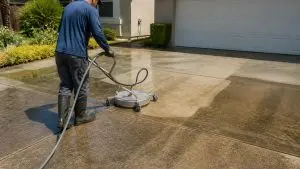
Residential concrete cleaning services remove dirt, grime, mold, and stains from driveways, patios, sidewalks, and other exterior concrete surfaces. These services restore the appearance of your property and extend the life of your concrete by eliminating damaging substances.
At Carters Precision Pressure Washing, we provide comprehensive concrete cleaning services tailored to residential properties. Our team uses specialized equipment and techniques to handle everything from routine maintenance to heavy-duty stain removal.
Common services include pressure washing to eliminate surface grime, oil stain removal for driveways, tire mark removal, and gum extraction from concrete.
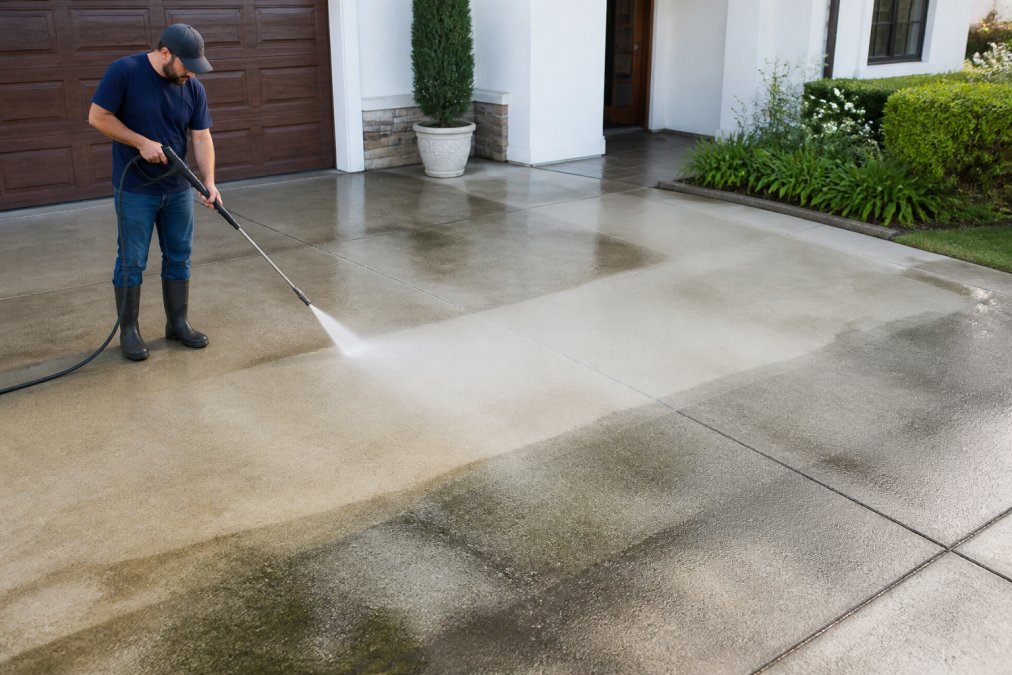
The scope of residential concrete cleaning services varies based on your property’s condition and your goals. Some homeowners need basic surface cleaning before selling their homes, while others require targeted stain removal for specific problem areas. Professional cleaners assess your concrete and recommend the right approach for your situation.
Most homeowners underestimate how much dirt accumulates on concrete over time. Annual cleaning prevents buildup and keeps your property looking newer longer.
Average Cost of Driveway Pressure Washing
The cost of driveway pressure washing depends on several factors: the size of your driveway, the severity of staining, the cleaning method required, and your location. Pricing varies significantly across providers, so getting multiple quotes helps you understand the market.
Factors affecting cost include square footage (larger driveways cost more), the type of stains present (oil and rust require specialized treatment), and whether sealing is included after cleaning. Some providers charge by the hour, while others quote per square foot or by the job.
DIY Equipment Rental vs. Professional Service: A Transparent Cost Breakdown
Understanding the true cost of DIY versus professional cleaning requires comparing not just equipment rental but also supplies, time, and results quality.
DIY Pressure Washer Rental Costs:
- Equipment rental: $40-$90 per day for consumer-grade pressure washers (2,500-3,000 PSI)
- Commercial-grade rental: $75-$150 per day (3,500-4,000 PSI)
- Cleaning solution: $15-$40 per gallon (often need 2-3 gallons for heavy staining)
- Fuel or water costs: $10-$30
- Transportation (if not included in rental): $20-$50
- Total for one-day DIY project: $155-$360
For a 500-square-foot driveway with moderate staining, this DIY approach might seem economical. However, if results are unsatisfactory and you need a second rental day, costs double. If oil stains require specialized degreasers or hot water extraction equipment, DIY becomes significantly more expensive.
Professional Service Costs:
- Basic pressure washing: $150-$400 for a 500-square-foot driveway
- Oil stain removal or heavy staining: $300-$600
- Sealing included: Add $100-$250
- Total for professional service: $150-$850 depending on condition
The cost difference narrows when you factor in rental equipment, supplies, and a second rental day if the first attempt doesn’t meet expectations. For driveways with oil stains or heavy buildup, professional service often costs less than DIY once all expenses are tallied.
When DIY Makes Financial Sense:
- Light surface dirt on a small driveway (under 300 square feet)
- No oil stains or stubborn discoloration
- You have access to a pressure washer already
- You’re willing to accept results that may not match professional quality
When Professional Service Delivers Better Value:
- Oil stains or rust marks requiring specialized treatment
- Driveways larger than 500 square feet
- Concrete that hasn’t been cleaned in 3+ years (heavy buildup)
- You need sealing after cleaning
- You’re selling your home or preparing for an event (time-sensitive)
- You want a warranty on results
When comparing quotes from professional providers, look beyond the lowest price. A significantly cheaper quote may indicate the provider uses lower-pressure equipment or fewer experienced technicians. Professional concrete cleaning services typically invest in commercial-grade equipment, trained staff, and proper safety protocols, all factors that affect pricing.
Request quotes from multiple providers to establish a realistic range for your property. Ask what’s included in each quote: does it cover the cleaning only, or does it include sealing? Are there additional charges for heavy staining or large areas? Ask whether the quote includes a post-cleaning inspection and recommendations for maintenance or sealing.
Extremely low quotes sometimes indicate the provider will use methods that damage concrete or won’t address the root cause of staining. Verify that any quote includes proper assessment of your concrete’s condition and that the provider carries liability insurance.
How to Remove Oil Stains From Concrete Driveway
Oil stains require different treatment than general grime because oil penetrates concrete rather than sitting on the surface. Standard pressure washing alone often fails to remove oil stains completely, which is why specialized techniques are necessary.
The first step is identifying whether the stain is fresh or set. Fresh oil stains respond better to absorbent materials and degreasers applied before pressure washing. Set stains require hot water extraction or chemical treatments that break down the oil’s bond with the concrete.
Professional concrete cleaning services use pH-balanced solutions designed specifically for oil removal. These products break down the oil without damaging the concrete or harming surrounding plants.
After removing the oil stain, a protective barrier can prevent future staining. This is especially important for driveways where vehicles park regularly. Without such protection, new oil stains will penetrate just as quickly as the original stain did.
DIY attempts often fail because homeowners lack access to commercial-strength degreasers and specialized equipment. The wrong products can actually push oil deeper into the concrete or leave residue that attracts more dirt.
Benefits of Sealing Residential Concrete
Concrete sealing protects your driveway, patio, and sidewalks from water damage, UV exposure, and staining. A quality sealant creates a barrier that prevents moisture from penetrating the concrete’s surface, which extends the concrete’s lifespan by years.
Sealed concrete resists oil stains, mold growth, and weathering damage far better than unsealed concrete. This means fewer cleaning sessions required and lower long-term maintenance costs. Sealing also enhances the concrete’s appearance by deepening its color and creating a subtle sheen.
Sealing Longevity in Local Climate Conditions
The longevity of concrete sealing depends heavily on the sealant type, application quality, and your specific climate exposure. In regions with intense UV radiation and significant temperature swings, sealant degradation accelerates. Most acrylic sealants last 1-2 years before requiring reapplication, while polyurethane and epoxy sealants typically last 2-3 years. Premium penetrating sealers can extend protection to 3-5 years but cost more upfront.
Local climate factors directly impact resealing frequency. High-traffic driveways exposed to direct sunlight degrade sealant faster than shaded patios. Freeze-thaw cycles, where water enters concrete, freezes, and expands, stress the sealant layer and can reduce its effective lifespan by 6-12 months. Areas with high humidity or frequent rain also see faster sealant breakdown because moisture continuously challenges the protective barrier.
A simple water-beading test helps determine when a protective barrier is needed: sprinkle water on the concrete. If water beads up and rolls off, the barrier is still effective. If water soaks in or spreads across the surface, the barrier has failed and reapplication is overdue. Most homeowners should perform this test annually, especially after the first year of application.
Without a protective barrier, concrete deteriorates faster due to freeze-thaw cycles, moisture infiltration, and UV damage. Unprotected concrete also stains more easily because liquids penetrate the surface directly. Over time, this leads to visible discoloration and structural weakening.
Professional concrete cleaning services typically recommend applying a protective barrier after cleaning. The timing matters: application works best on freshly cleaned concrete because the surface is free of contaminants and ready to accept the barrier. Professionals can also recommend the barrier type best suited to your concrete’s exposure and your maintenance preferences.
Track your application date and perform the water-bead test each spring. This simple habit prevents the surprise of discovering a failed barrier mid-summer when staining risk is highest.
Professional vs. DIY Concrete Cleaning: Cost-Benefit Analysis
DIY concrete cleaning appears cheaper initially because you avoid labor costs. However, the equipment rental, cleaning supplies, and your time investment often exceed the cost of professional service, especially when results fall short.
Renting pressure washing equipment costs money and requires transportation and setup time. Consumer-grade rental equipment lacks the power and precision of commercial equipment. This means you’ll spend more hours achieving inferior results compared to what professionals accomplish in one visit.
Professional concrete cleaning services deliver results that last longer because technicians understand concrete composition and choose appropriate cleaning methods for different stain types. They have access to commercial-grade equipment, specialized cleaning solutions, and expertise that prevents concrete damage.
The real cost-benefit question is whether your time is better spent cleaning or doing something else.
Professional concrete cleaning services typically cost more upfront but deliver superior results that last longer and protect your concrete investment better than DIY attempts.
Concrete Maintenance Schedule for Long-Term Protection
Establishing a regular maintenance schedule keeps your concrete looking better and prevents expensive repairs. A basic maintenance routine includes quarterly inspections and annual deep cleaning.
Why Professional Concrete Cleaning Delivers Results That Last
Professional concrete cleaning produces superior results because technicians combine proper equipment, effective cleaning solutions, and expertise in concrete care. They understand how different stains form, which cleaning methods work best, and how to avoid damage during the process.
Frequently Asked Questions
How much does professional concrete cleaning cost?
Pricing for residential concrete cleaning services depends on the size of the area, surface condition, type of stains, and whether sealing is included. Driveway pressure washing typically costs more for larger properties or heavily stained surfaces. Contact Carters Precision Pressure Washing for a free estimate tailored to your specific needs.
How often should I have my driveway professionally cleaned?
Most homeowners benefit from professional driveway cleaning every 1-2 years to prevent mold, mildew, and organic growth buildup. High-traffic areas or properties in humid climates may need cleaning annually. Applying a protective barrier after cleaning can extend the time between professional cleanings and protects against new stains.
Is pressure washing safe for all types of residential concrete?
Professional pressure washing is safe for most concrete surfaces when performed by trained technicians who adjust water pressure and temperature based on the concrete’s age and condition. Older or damaged concrete may require a gentler cleaning method instead of high-pressure cleaning. Always hire licensed and insured professionals to avoid paint stripping or surface cracking.
What is the difference between pressure washing and soft washing for concrete?
Pressure washing uses high-pressure water streams to remove stubborn stains, oil, and grime from concrete surfaces. A gentler cleaning method applies lower pressure with specialized solutions to clean delicate surfaces without damage. The right method depends on your concrete’s condition and the type of staining present.