

Last Updated: October 25, 2026
Quick Summary
Yes, does roof shade cause mold growth is a real concern because shade keeps shingles cool and damp long after the sun comes up, and mold needs that moisture to take hold. Shade does not create mold by itself, but it creates the wet, slow-drying surface mold needs, which is why the shaded side of a roof streaks first.
- Tree cover blocks sun and drops debris that traps water on shingles.
- North-facing slopes get the least direct sun all year, so check them first.
- Most dark roof streaks are algae, not mold, and algae follows water flow.
- Trim back branches to let more sun and air reach the shingles.
- High pressure strips protective granules off asphalt shingles and shortens roof life.
Table of Contents
- Does Roof Shade Cause Mold Growth?
- Mold vs. Algae on Roof: How to Tell the Difference
- Roof Mold Prevention for Shaded Properties
- How to Clean Mold Off Roof Shingles Safely
- What a Soft Washing Roof Service Actually Does
- When to Call a Professional About Roof Mold
- Get a Free Roof Cleaning Estimate
- Frequently Asked Questions
Does Roof Shade Cause Mold Growth?
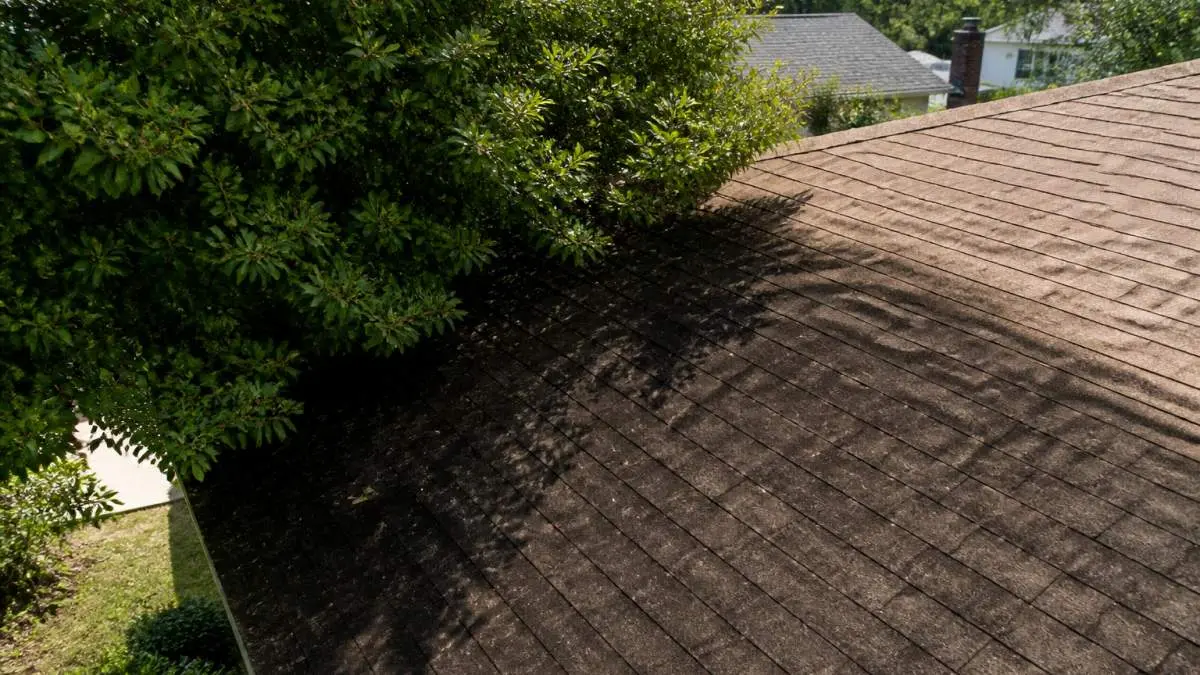
Yes, roof shade is one of the biggest reasons mold grows on Los Angeles roofs. Shade keeps shingles cool and damp long after the sun comes up. Mold needs moisture to take hold, and shade is how that moisture sticks around.
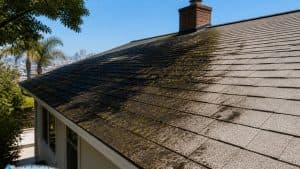
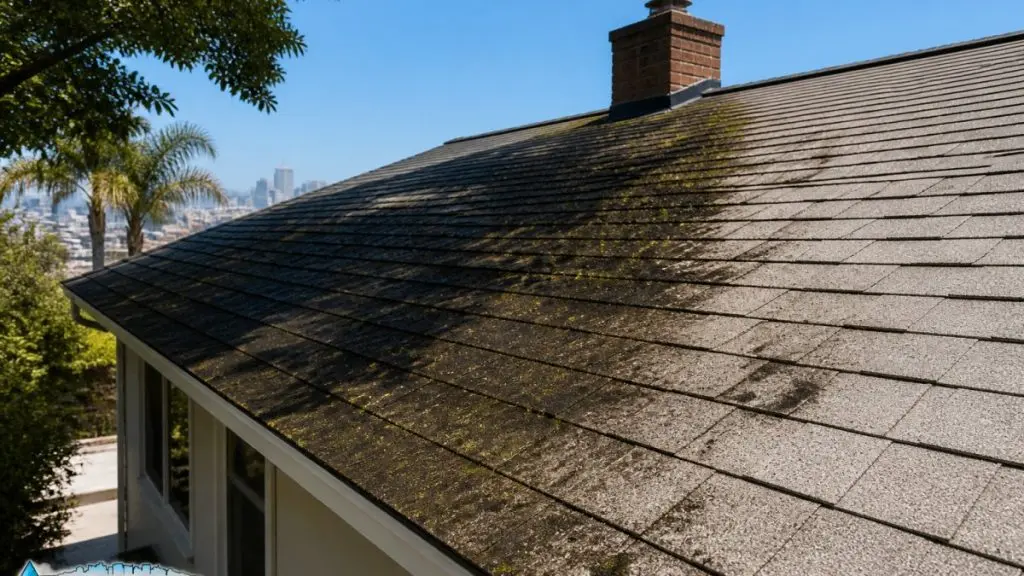
The shaded side of a roof streaks first. The sunny side often stays clean for years.
Here is the simple version: shade does not create mold by itself. It creates the wet, slow-drying surface mold needs. That distinction matters, because it tells you what to fix.
Why Shaded Roofs Stay Damp Longer
A shaded roof dries slowly. Morning dew, fog, and light rain sit on the shingles for hours instead of evaporating. On a sunny roof, that moisture burns off fast. Under a tree canopy, it lingers.
Los Angeles adds its own twist. Coastal fog rolls in overnight, and shaded areas hold that damp air well into the day. Add leaf litter and tree sap, and you have a surface that stays wet and feeds growth.
Three things make shaded roofs worse:
- Tree cover blocks sun and drops debris that traps water
- Poor airflow near the roof edge slows drying
- North-facing slopes get the least direct sun all year
The Other Conditions Mold Needs
Shade is only one piece. Mold also needs food and a rough surface to grip. Asphalt shingles collect dust, pollen, and organic debris. That film is the food source.
Moisture is the trigger. A roof that stays damp for long stretches is a roof at risk. Warm weather speeds growth once moisture is present.
So the fix is not just “get more sun.” It is about cutting the moisture and the food supply. Clean shingles dry faster and give mold less to eat.
Mold vs. Algae on Roof: How to Tell the Difference
Most dark streaks on roofs are algae, not mold. The two look similar but behave differently. Knowing which one you have changes how you treat it.
Roof algae shows up as dark streaks, often black or brownish, that run down the slope. It is a living organism that feeds on shingle fillers. Roof mold tends to look fuzzier or patchier and grows where moisture collects.
Quick way to tell them apart:
- Algae: streaky, follows water flow, common on the shaded north side
- Mold: patchy, fuzzy, often near gutters, valleys, and low spots
- Moss: green and raised, holds water against the shingles
Both signal too much moisture. Both should be cleaned. If you are unsure which one is on your roof, our guide on how to identify roof mold vs algae walks through the signs in detail.
Here is how the three common roof growths differ in appearance and where they tend to show up.
| Growth | Appearance | Where it shows up |
|---|---|---|
| Algae | Dark streaks, black or brownish, follows water flow | Common on the shaded north side |
| Mold | Patchy, fuzzy | Near gutters, valleys, and low spots |
| Moss | Green and raised, holds water against shingles | Holds water against the shingles |
Roof Mold Prevention for Shaded Properties
Prevention comes down to drying the roof faster and cutting its food supply. You cannot move the trees, but you can manage what falls on the roof.
Start with these habits:
- Trim back branches to let more sun and air reach the shingles
- Clear debris from valleys and gutters after storms
- Wash the roof regularly to remove the organic film mold feeds on
- Fix leaks fast so moisture never sits under the surface
- Check shaded slopes first when you inspect the roof
For a shaded lot, routine cleaning matters more than anything else. For concrete steps to keep mold from returning, see preventing recurring mold on roof. A roof that stays free of debris dries faster and resists growth longer.
How to Clean Mold Off Roof Shingles Safely
The safest approach uses low pressure and a cleaning solution, not force. You want to kill the growth and rinse it away without tearing up the shingles.
A simple, safe process:
- Wet the roof and surrounding plants with plain water first
- Apply a cleaning solution at low pressure, working top to bottom
- Let it dwell so it kills the growth at the root
- Rinse gently and keep plants watered down
- Repeat on stubborn shaded areas if needed
The goal is to remove the growth without damaging the shingle granules. Those granules protect the roof. Scrub them off and you shorten the roof’s life.
Why Pressure Washing Shingles Is a Bad Idea
High pressure strips the protective granules off asphalt shingles. Once they are gone, the shingle breaks down faster and the roof ages early. Pressure can also force water under shingles and into the deck.
That is the mistake we see most. A homeowner rents a pressure washer, blasts the streaks, and ends up with a damaged roof. The streaks come back, and now the shingles are worn.
If you are weighing the risks, read the facts on whether pressure washing damages shingles before you start.
What a Soft Washing Roof Service Actually Does
Soft washing cleans roofs with low pressure and specialized cleaning solutions. It kills mold, algae, and moss at the source instead of blasting them off. The growth rinses away, and the roof stays clean longer.
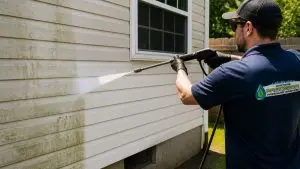
The process is gentle on shingles, siding, and landscaping. Our team wets plants first, applies the solution at low pressure, lets it work, then rinses. No high-pressure wand ever touches your shingles.
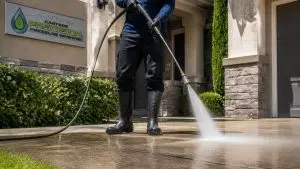
That is the core of what we do at Carters Precision Pressure Washing. We use soft washing for roofs and houses, and standard pressure washing for driveways, patios, and other hard surfaces.
Best for: shaded roofs, older shingles, and homes with delicate landscaping.
Skip if: your roof has structural damage, which needs repair before any cleaning.
When to Call a Professional About Roof Mold
Call a professional when the growth covers a large area, keeps coming back, or sits on a steep or fragile roof. Some jobs are not safe or effective to handle yourself.
Reach out if you notice:
- Growth spreading across several slopes
- Streaks that return within weeks of cleaning
- A roof that is steep, tall, or hard to access
- Loose or damaged shingles under the growth
- Mold near valleys, skylights, or flashing
A pro can also spot the moisture source you might miss. In Los Angeles, that is often a shaded slope that never dries out. Fixing the cause beats cleaning the same spot every year.
Get a Free Roof Cleaning Estimate
You do not have to guess whether shade is feeding mold on your roof. A quick inspection tells you what is growing and what it needs.
At Carters Precision Pressure Washing, we help homeowners and property managers across Los Angeles restore curb appeal with soft washing for roofs and houses, plus pressure washing for driveways, patios, and hard surfaces. We keep the process gentle on your shingles and your yard. If you are getting ready to list your home, a clean roof makes a real difference in how the property shows.
Call for a free estimate and see how good your roof can look. You can also get a free pressure washing estimate online.
Frequently Asked Questions
Does mold grow faster on a roof that gets little sunlight?
Shade alone does not create mold, but it slows evaporation, so shingles stay wet longer after rain or morning dew. Mold needs moisture, organic material like shingle granules and trapped debris, and moderate temperatures. A shaded roof holds all three longer than a sun-exposed one, which is why growth often appears first under tree cover and on north-facing slopes. Trimming branches and clearing debris helps more than anything else.
How can I tell mold from algae or mildew on my roof?
Algae usually shows as dark green or black streaks running down the slope, and it is the most common roof growth in humid climates. Mold tends to look fuzzier and patchier, often clustered where debris collects or near roof valleys. Mildew is a lighter, powdery film. From the ground the difference is hard to judge, so a professional inspection is the reliable way to confirm what is growing before you treat it.
Is it safe to pressure wash a roof with mold?
No. Pressure washing asphalt shingles at high PSI strips granules, forces water under the edges, and can void shingle warranties. The safer method is soft washing, which applies a low-pressure mix that kills mold and algae at the root, then rinses gently. If your roof already has loose granules or cracked shingles, have it inspected before any cleaning so the treatment does not make existing damage worse.
How do you prevent mold on a shaded roof?
Start with airflow and debris control: trim overhanging branches, keep gutters clear, and remove leaf litter from valleys and behind chimneys. Schedule a soft wash every one to two years on heavily shaded roofs, since regular cleaning removes the organic food source growth feeds on. Also check attic ventilation, because a roof that vents poorly stays warmer and damper underneath, which encourages growth on the surface above.