
Last Updated: November 7, 2026
Quick Summary
Pressure washing cleans with high-PSI water force on durable surfaces like concrete and pavers, while soft washing uses low pressure and specialized cleaning solutions to kill organic growth on roofs, siding, and painted surfaces. Soft washing is the safer choice for delicate materials because it removes the organism at the root instead of blasting the visible layer off.
- Pressure washing works best on durable, non-porous materials such as driveways, sidewalks, patios, and parking lots.
- High pressure on vinyl siding, stucco, painted wood, and shingles can force water behind panels, strip paint, and loosen granules.
- You can soft wash with a pressure washer using a low-pressure nozzle and a downstream injector to apply solution.
- The biggest pricing driver is treatable area, not house size, with height, roof pitch, soil level, and access also affecting quotes.
- In Los Angeles, soft washing is the default for roofs, stucco, and siding, while pressure washing handles driveways and patios.
Table of Contents
- Pressure Washing vs Soft Washing: How the Two Methods Differ
- PSI, Water Flow, and Equipment: What Each Method Actually Uses
- Soft Wash vs Pressure Wash Vinyl Siding and Other Delicate Surfaces
- Soft Washing Chemicals: What Goes on Your Home and Yard
- Can You Soft Wash With a Pressure Washer?
- Pressure Washing vs Soft Washing for Home Exteriors Cost and Value
- Choosing the Right Clean for Your Los Angeles Property
- Call Carters Precision Pressure Washing for a Free Estimate
- Frequently Asked Questions
Pressure Washing vs Soft Washing: How the Two Methods Differ
Pressure washing and soft washing for home exteriors differ mainly in water pressure and cleaning chemistry: pressure washing blasts away grime with high PSI, while soft washing relies on low pressure and specialized cleaning solutions to kill organic growth. Both methods have a place, because each one protects different surfaces. This guide breaks down the differences so you can choose the right clean for your property.
The core distinction comes down to two things: how much force hits the surface and what does the actual cleaning. Pressure washing uses water force as the primary tool. Soft washing uses chemistry as the primary tool, with water mainly there to rinse. Get that distinction right and every other decision, from surface safety to cost, becomes much easier.
What Pressure Washing Does
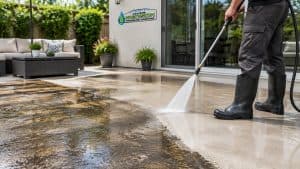
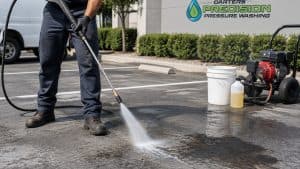
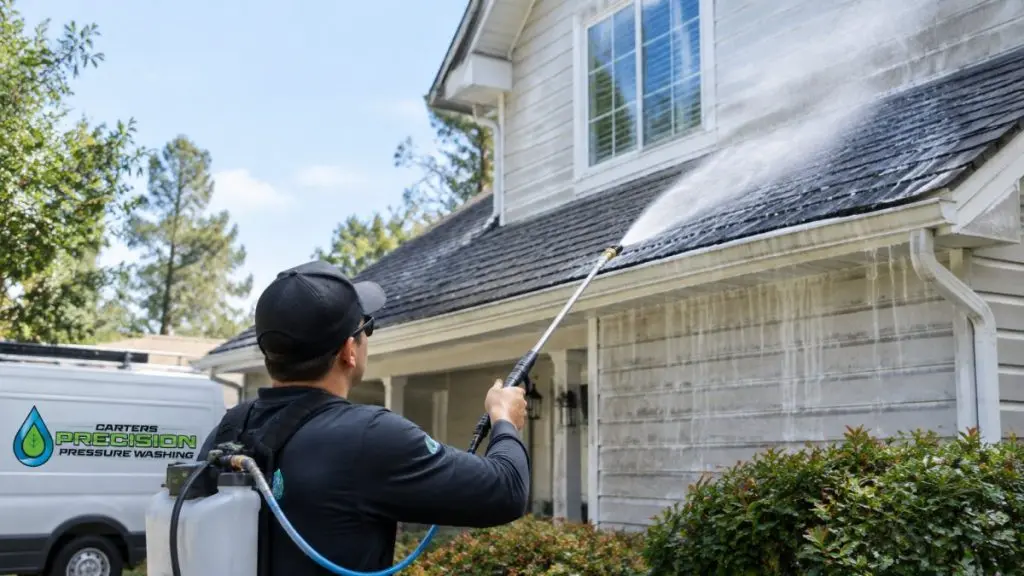
Pressure washing cleans by force. A machine pushes water at high PSI through a narrow nozzle, and that concentrated stream lifts dirt, mud, gum, and stains off hard surfaces. It works best on durable, non-porous materials where a strong blast cannot cause damage.
Driveways, sidewalks, patios, and parking lots are the classic candidates. On those surfaces, high pressure strips away embedded grime that a garden hose cannot touch.
What Soft Washing Does
Soft washing cleans by chemistry. Low-pressure water carries a cleaning solution onto the surface, which dwells before a gentle rinse carries it away.
For home exteriors, soft washing is the method of choice on roofs, siding, and painted surfaces. It also lasts longer, because it removes the organism at the root instead of just blasting the visible layer off.
PSI, Water Flow, and Equipment: What Each Method Actually Uses
The equipment gap between the two methods is bigger than most homeowners expect, and it explains why the same surface can be safe with one approach and ruined by the other.
| Feature | Pressure Washing | Soft Washing |
|---|---|---|
| Typical PSI | High pressure | Low pressure |
| Primary cleaning agent | Water force | Cleaning solution |
| Water flow | Standard flow | Higher flow, lower force |
| Equipment | Pressure washer, surface cleaner | Soft wash system, nozzles, pumps |
| Best surfaces | Concrete, brick, pavers | Vinyl, stucco, roofs, paint |
| Main risk | Surface damage, water intrusion | Chemical runoff, plant contact |
A pressure washer concentrates force into a small stream. A soft wash system spreads a diluted solution across a wide area at low pressure, then rinses with volume rather than force. The EPA guidance on managing wash water runoff is worth reading if you are doing any exterior cleaning near storm drains, because rinse water carries whatever you put on the surface.
Soft Wash vs Pressure Wash Vinyl Siding and Other Delicate Surfaces
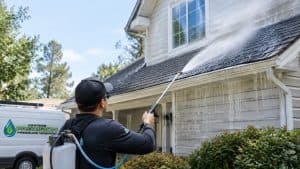
For vinyl siding, stucco, painted wood, fiber-cement siding, and roof shingles, soft washing is the safer method in almost every case. High pressure on these materials can force water behind the siding, strip loose paint, crack stucco, and loosen shingle granules. None of those problems show up immediately, which is what makes them expensive.
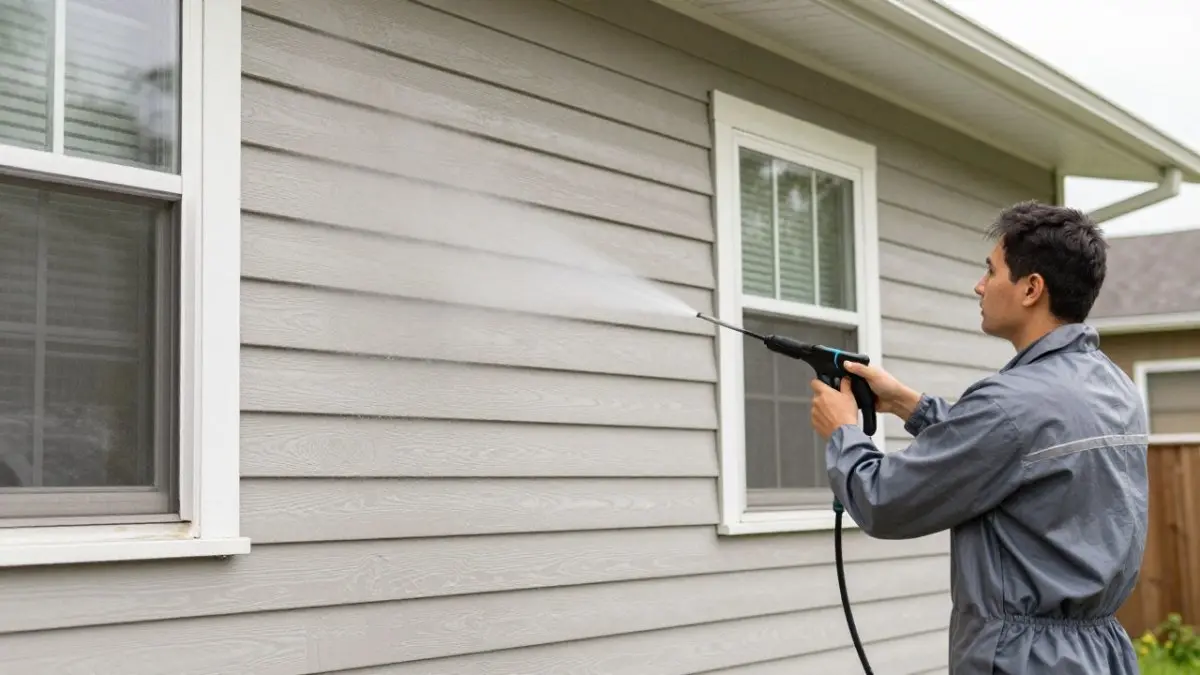
A common mistake is pointing a pressure washer at vinyl siding to save time. The water gets behind the panels, and a few weeks later you are looking at soft spots or mildew growing where you cannot reach it. If you want to handle siding yourself, follow a proven method for cleaning siding without damage rather than guessing at nozzle settings.
Soft Washing Chemicals: What Goes on Your Home and Yard
Soft washing chemicals are the part homeowners ask about most, usually because of pets, landscaping, and runoff. Soft washing generally relies on a diluted cleaning solution to kill mold, mildew, and algae, with the dilution and dwell time matched to the surface.
Protecting the yard during any exterior wash generally involves wetting down plants, moving outdoor furniture, and keeping pets and children off treated surfaces until they dry.
Runoff is the part most DIY guides skip. Rinse water carries whatever you put on the surface, and in Los Angeles most residential storm drains lead to the ocean or to local waterways without treatment. Containing runoff is an important consideration during any exterior wash. The EPA guidance on managing wash water runoff explains why this matters and what containment looks like in practice.
Chemical selection also depends on the surface. Chemical selection also depends on the surface, since some materials need a gentler cleaner than others. If you want plant-safe methods and DIY recipes, our guide to eco friendly exterior home cleaning covers the options in detail.
Can You Soft Wash With a Pressure Washer?
Yes, you can soft wash with a pressure washer, but only if you change the setup. Use a low-pressure nozzle or a soft wash tip, dial the pressure down, and apply the cleaning solution with a downstream injector so it mixes into the water stream. The machine becomes a delivery tool, not a blaster.
A standard high-pressure tip is not suited to delicate surfaces, so the pressure level matters more than the label on the job.
Pressure Washing vs Soft Washing for Home Exteriors Cost and Value
Pricing for either method depends on square footage, surface condition, height, and how much organic growth has to be treated, so quotes are based on each job rather than a flat rate. That said, the factors that move a Los Angeles quote are predictable, and knowing them lets you compare bids apples to apples. Our average cost of house pressure washing guide gives you real pricing benchmarks to compare each method.
The biggest driver is treatable area, not house size. A single-story stucco home with 1,500 square feet of exterior wall and a concrete driveway is a very different job from a two-story home with the same footprint, because height adds ladder work, fall protection, and time. Roof pitch matters too: a walkable low-slope tile roof is faster and safer to soft wash than a steep shingle roof, and that shows up in the price.
Soil level is the second driver. A north-facing wall under coastal marine layer that has gone green with algae takes more chemical, more dwell time, and sometimes a second application, while a sun-baked south wall may only need a maintenance rinse. Wildfire ash is its own category: after a regional fire, exterior surfaces hold fine alkaline ash that needs gentle lifting rather than blasting, and that changes both method and labor.
Access is the third. Gates, locked side yards, pool cages, and dense landscaping all slow a crew down. A property where the technician can park a trailer and reach every wall with a hose is cheaper per square foot than one where every section requires dragging equipment through a narrow side yard.
Value matters more than the sticker price. A cheap high-pressure wash on a delicate surface can cost far more in repairs than a proper soft wash would have. Conversely, soft washing a concrete driveway is a waste of chemistry when a surface cleaner would do the job faster. The right method is the one that cleans effectively without creating a repair bill. For current pricing or a quote, contact Carters Precision Pressure Washing directly.
Choosing the Right Clean for Your Los Angeles Property
Los Angeles homes deal with a specific mix of conditions: long dry stretches, marine layer moisture near the coast, and sun that bakes organic growth onto roofs and north-facing walls. That combination makes soft washing the default for roofs, stucco, and siding here, while pressure washing handles driveways, walkways, and patios.
Stucco is everywhere in this city, and it is one of the surfaces most easily ruined by a careless high-pressure pass. If your home has it, read our guide on how to safely clean stucco siding before you touch a wand. For a professional assessment of which method your property needs, our team can walk the exterior and tell you surface by surface.
Call Carters Precision Pressure Washing for a Free Estimate
If you are still weighing pressure washing vs soft washing for home exteriors, the fastest way to settle it is an on-site look. We specialize in soft washing for roofs and houses and pressure washing for driveways, patios, and other hard surfaces, and we match the method to the material rather than applying one approach to everything. Our team serves residential and commercial properties across Los Angeles and is ready to restore your curb appeal. Get a free pressure washing estimate online and we will follow up with a clear recommendation.
Your exterior takes a beating from sun, marine moisture, and urban grime, and the wrong cleaning method can do more harm than the dirt. Carters Precision Pressure Washing brings soft washing for roofs and siding together with pressure washing for concrete and pavers, so every surface gets the treatment it can handle. Call for a free estimate and let us put the right method to work on your property.
Frequently Asked Questions
Should you pressure wash or soft wash a house?
Most house exteriors should be soft washed. Siding, stucco, painted trim, and roofing materials can be damaged by high pressure, which forces water behind panels and strips paint. Soft washing uses low pressure and a cleaning solution to kill mold, mildew, and algae at the root. Pressure washing is better reserved for hard, durable surfaces like concrete driveways, sidewalks, and patios where force lifts embedded dirt without harming the material.
Is soft washing safer for vinyl siding than pressure washing?
Yes. Vinyl siding is one of the surfaces most vulnerable to pressure washing damage. High PSI can crack panels, force water behind the siding, and strip the finish. Soft washing cleans vinyl siding at low pressure with a detergent mix that breaks down organic growth, so the siding comes clean without the risk of water intrusion or panel damage.
Can you soft wash with a pressure washer?
You can, with the right setup. A pressure washer with a low-pressure nozzle or a downstream injector can apply soft washing chemicals at reduced PSI. The key is keeping pressure low enough to avoid surface damage and letting the solution dwell long enough to work. Many professionals use a dedicated soft wash system for better control over pressure and chemical mix.
Do soft washing chemicals harm plants or pets?
Soft washing chemicals, typically sodium hypochlorite mixed with water and a surfactant, can harm plants if applied directly or left on foliage. Ask your provider how they protect your yard and pets before work begins.