

Table of Contents
- Prepare Your Property and Assess the Cleaning Challenge
- Exterior House Cleaning Safety Tips You Need to Follow
- Select the Right Cleaning Solution for Your Surface
- Best Pressure Washer Settings for House Siding
- Clean Specific Exterior Surfaces Step by Step
- Remove Algae from Wood Decks Without Damage
- Rinse, Dry, and Maintain Your Clean Exterior
- Frequently Asked Questions
Last Updated: October 1, 2026
Prepare Your Property and Assess the Cleaning Challenge
Before you start to clean exterior house surfaces, take time to prepare. A few minutes of planning prevents damage and keeps you safe.
Clear the area first. Move outdoor furniture, grills, planters, and decorations away from the surfaces you’ll clean. Close windows and doors. Cover air conditioning units and outdoor electrical outlets with plastic sheeting. Check for delicate plants near the work zone.
Next, identify your exterior surface materials. Different surfaces need different approaches. Vinyl siding, brick, stucco, wood, concrete, and stone each respond differently to pressure and cleaning solutions. Touch the surface. Look closely at any existing damage. Cracks, peeling paint, and loose mortar need gentler treatment.
Clear the area and protect plants and fixtures
Move everything that could get wet or damaged:
- Outdoor furniture and cushions
- Planters and hanging baskets
- Garden decorations and ornaments
- Grills and outdoor appliances
- Door mats and rugs
Protect what stays behind:
- Cover electrical outlets and boxes with plastic
- Close all windows and doors
- Shield air conditioning units
- Cover delicate flowering plants with tarps
Identify your exterior surface materials
Each material has different cleaning needs. Knowing what you have prevents costly mistakes.
Vinyl siding handles moderate pressure well. Brick and stone are durable but need care around mortar joints. Stucco is softer and cracks easily under high pressure. Wood absorbs water and can rot if not dried properly. Concrete and asphalt tolerate high pressure but may stain.
Run your hand across the surface. Look for soft spots, cracks, or loose areas. These spots need lower pressure or hand scrubbing instead.
Exterior House Cleaning Safety Tips You Need to Follow
Safety comes first when cleaning exterior house surfaces. Pressure washers are powerful tools. Mistakes cause injuries and property damage.
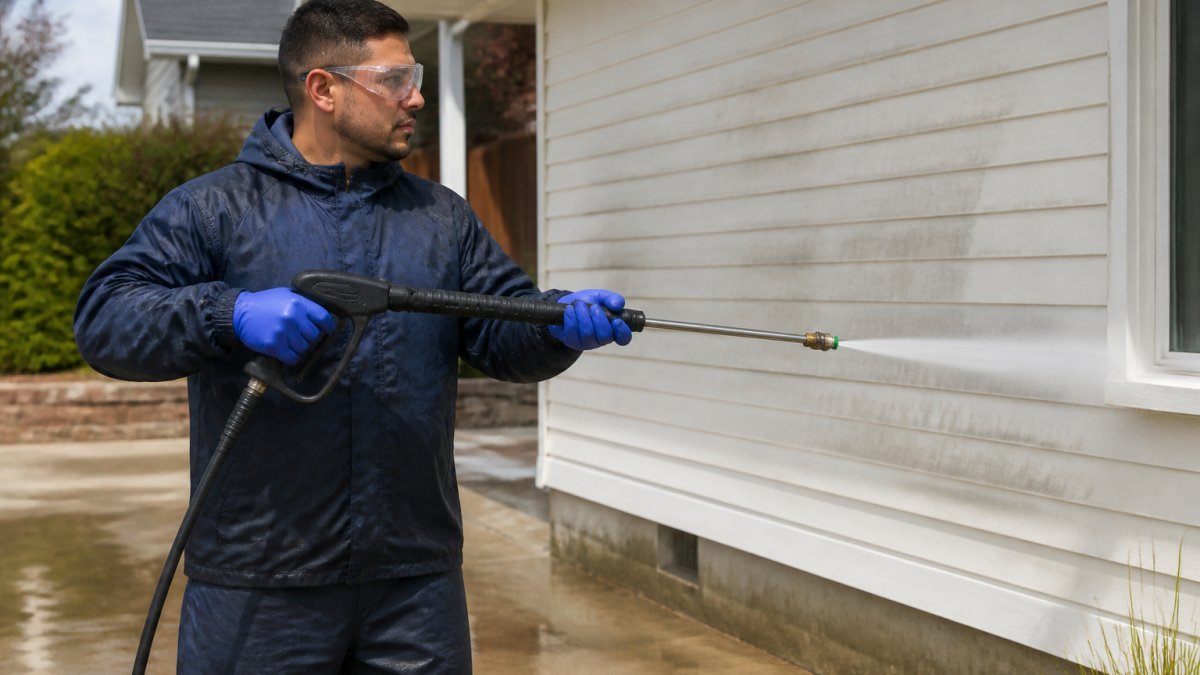
Wear proper protective gear every single time. Safety goggles protect your eyes from flying debris and spray. Heavy-duty gloves keep your hands dry and protected. Closed-toe shoes with good grip prevent slips. Long pants and long sleeves protect your skin.
Check weather conditions before you start. Don’t wash in rain or strong wind. Wind blows spray in unpredictable directions. Rain makes surfaces slippery and dilutes your cleaning solution. Avoid hot, sunny days if possible, detergent dries too fast and leaves streaks.
Look for electrical hazards. Keep the pressure washer away from power lines, electrical meters, and outdoor outlets. Never spray directly at electrical equipment. Water conducts electricity. If you’re unsure about electrical safety, call a professional.
Wear proper protective gear
Safety gear protects you from injury:
- Safety goggles or face shield (required)
- Heavy-duty work gloves
- Long-sleeved shirt or jacket
- Long pants
- Closed-toe shoes with slip-resistant soles
- Hearing protection if using a gas-powered washer
Check weather conditions and electrical hazards
Best conditions for cleaning:
- Dry, calm weather
- Mild temperatures
- Overcast skies (prevents quick drying and streaks)
- No rain in the forecast for 24 hours after
Electrical safety checklist:
- Keep washer at least 10 feet from power lines
- Never spray toward electrical panels or meters
- Avoid outdoor outlets and light fixtures
- Check for overhead wires before starting
Select the Right Cleaning Solution for Your Surface
The right cleaning solution makes a huge difference. It removes dirt, mold, and mildew without damaging the surface underneath.
Most cleaning jobs need a detergent designed for pressure washers. These are gentler than household cleaners. They break down grime and let water do the work.
For environmental protection, biodegradable detergents are the smart choice.
Biodegradable detergents for environmental protection
Biodegradable options clean effectively and protect your yard. These detergents break down naturally in soil and water. They won’t kill grass, flowers, or beneficial insects.
Vinegar solutions for mold and mildew removal
Vinegar is a natural alternative for mold spores and mildew growth. Mix one part white vinegar with three parts water in a spray bottle. This works best for light to moderate mold.
Best Pressure Washer Settings for House Siding
Pressure washer settings matter enormously. Too much pressure damages siding. Too little doesn’t clean effectively.
Using high pressure on delicate surfaces strips paint, cracks stucco, and splinters wood. Start with low pressure and increase only if needed. Test on an inconspicuous area first.
Low-pressure technique for delicate materials
Vinyl siding, painted surfaces, and wood need gentle treatment. Use a 25-degree or 40-degree nozzle. Keep the nozzle at least 12 inches from the surface. Move in smooth, overlapping strokes from top to bottom.
High-pressure washing for concrete and stone
Concrete driveways and stone patios can handle higher pressure. Use a 15-degree nozzle at 2,500-3,000 PSI. Keep the nozzle moving to avoid etching the surface.
Clean Specific Exterior Surfaces Step by Step
Different surfaces need different approaches. Here’s how to clean exterior house surfaces properly for each material type.
Cleaning exterior walls and siding
Start at the top and work downward. Gravity helps water and detergent flow down naturally. This prevents clean areas from getting dirty again.
For vinyl siding:
- Use 25-40 degree nozzle
- Keep 12+ inches away from surface
- Move in smooth horizontal strokes
- Avoid spraying directly at seams
For brick or stone:
- Use 40-degree nozzle
- Keep 18+ inches away
- Move slowly to prevent water penetration
- Avoid high pressure on mortar joints
For painted surfaces:
- Use lowest pressure that works
- Test on hidden area first
- Avoid spray patterns that concentrate pressure
Cleaning windows and glass surfaces
Windows require special care. High pressure breaks glass. Detergent leaves streaks if not rinsed thoroughly.
For window seals and frames:
- Use a brush, not pressure
- Remove dirt from corners and crevices
- Rinse gently to avoid water intrusion
- Dry immediately to prevent water spots
Cleaning decks and patios
Decks and patios are high-traffic areas that collect dirt, leaves, and debris. Clear loose debris first with a broom. Then apply a deck cleaner or mild detergent.
For wood decks:
- Use lowest effective pressure
- Scrub in direction of wood grain
- Avoid pressure over 1,500 PSI
- Let dry 48 hours before sealing
For concrete or stone patios:
- Higher pressure works well
- Scrub for stubborn stains
- Rinse completely to remove all detergent
- Check for slippery algae growth
Remove Algae from Wood Decks Without Damage
Wood decks are prone to algae, mold spores, and mildew growth. These thrive in shaded, damp areas. Algae makes decks slippery and damages the wood over time.
Identify algae, mold spores, and mildew growth
Green or black slime on wood = algae. It grows quickly and makes surfaces dangerous.
Apply soft-bristled scrubbing before pressure washing
Scrubbing loosens algae without damaging wood fibers. Use a stiff-bristled deck brush or soft-bristled scrub brush. Work in the direction of the wood grain.
Algae returns quickly to damp, shaded decks. Improve airflow by trimming nearby trees and shrubs. This prevents future growth and extends the life of your deck.
Rinse, Dry, and Maintain Your Clean Exterior
Rinsing properly prevents damage and ensures a clean finish. Use the top-down method to prevent recontamination.
Top-down rinsing technique to prevent damage
Begin at the roof or top of walls. Work your way down systematically. This prevents dirty runoff from soiling clean areas.
For vertical surfaces:
- Start at top and work down
- Use overlapping horizontal strokes
- Keep 12-18 inches from surface
- Maintain consistent pressure
For horizontal surfaces:
- Rinse from high point to low point
- Allow water to drain naturally
- Avoid pooling water
- Check for complete detergent removal
Post-cleaning maintenance schedule
Maintenance extends the life of your clean exterior. A simple schedule keeps your property looking great.
For decks and patios:
- Sweep weekly
- Deep clean 1-2 times per year
- Reseal wood decks every 2-3 years
- Check for new algae growth monthly
Frequently Asked Questions
What is the best solution for cleaning exterior house surfaces?
The best solution depends on your surface material and the type of buildup. For most exterior surfaces, a biodegradable detergent mixed with water works well for general grime and dirt. For mold and mildew, a vinegar solution or specialized mildew remover is more effective. Always test any cleaning solution on an inconspicuous area first to ensure it won’t damage your siding, paint, or other finishes. Avoid harsh chemicals that can harm plants and create harmful runoff.
Can you use a pressure washer on all exterior house surfaces?
No. Pressure washers work well on concrete, stone, and hardy surfaces like vinyl siding, but can damage wood decks, stucco, and older painted surfaces. For delicate materials, use low-pressure settings (below 1500 PSI) or opt for soft-bristled scrub brushes instead. Always start with the lowest pressure setting and increase gradually while testing on a small area. Material-specific chemical compatibility matters, what’s safe for concrete may strip paint from wood or damage delicate finishes.
How do you remove algae from wood decks safely?
Start by clearing debris and identifying the extent of algae growth and mold spores. Apply a soft-bristled brush with a vinegar solution or biodegradable deck cleaner, scrubbing in the direction of the wood grain. Rinse thoroughly with low-pressure water from a garden hose or pressure washer set to 1000-1200 PSI. Avoid high-pressure washing on wood, which can splinter and damage the surface. After rinsing, allow the deck to dry completely before applying any sealant.
What safety gear is required for exterior house cleaning?
Wear safety goggles to protect your eyes from spray and debris, heavy-duty gloves to shield your hands from chemicals and pressure, and long pants and closed-toe shoes to protect your legs and feet. Consider a respirator or face mask if using chemical detergents, especially when working in enclosed spaces or with mold spores. Wear a long-sleeved shirt for additional protection. Never operate a pressure washer alone, and always inform someone of your location in case of emergency.