
Quick Summary
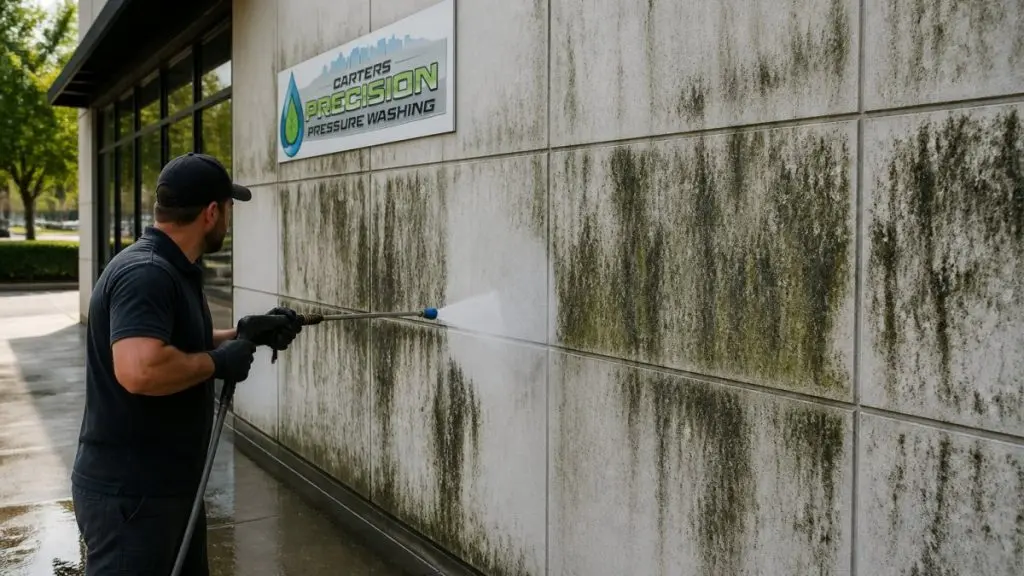
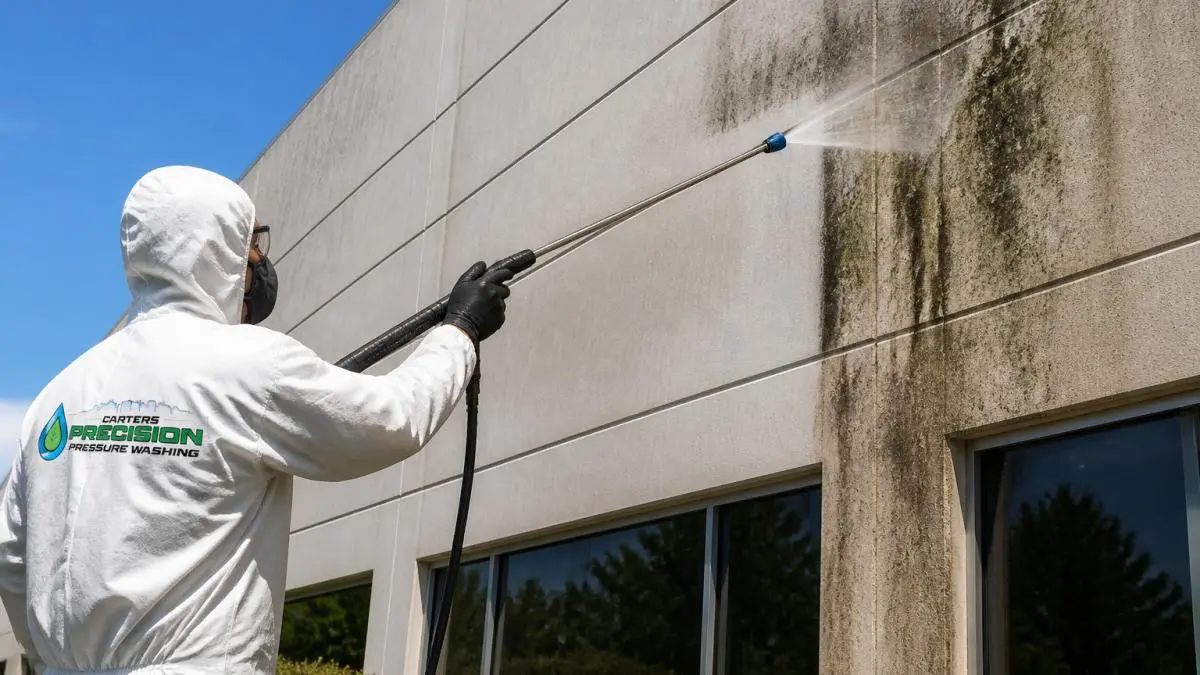
Organic stains on commercial building exteriors are removed by wetting the wall, applying a cleaner with a low-pressure soft wash system from the bottom up, letting it dwell for 10 to 15 minutes, then scrubbing heavy growth and rinsing from top to bottom. Mold and mildew respond to this sequence, while lichen is harder and may need repeat treatment. Wearing protective gear and covering plants is essential before starting.
- Wet the wall with plain water before applying any cleaner.
- Let the solution dwell for 10 to 15 minutes without letting it dry.
- Rinse from top to bottom so clean water never runs over dirty surfaces.
- Lichen grips the surface tightly and is harder to remove than algae.
- Trim plants to stay at least 12 inches from the building.
Table of Contents
- Identifying the Types of Organic Stains on Commercial Exteriors
- Safety Precautions Before You Start
- Equipment and Cleaning Products You Will Need
- Step-by-Step: Mold and Mildew Removal from Exterior Walls
- Commercial Soft Washing Versus High-Pressure Cleaning
- Removing Algae from Commercial Siding Without Damage
- Keeping Organic Growth from Returning to Your Building
- Booking a Professional Exterior Cleaning for Your Property
- Frequently Asked Questions
Identifying the Types of Organic Stains on Commercial Exteriors
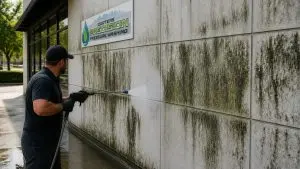
Organic stains are the dark streaks, green films, and fuzzy patches that show up on commercial buildings over time. Knowing which stain you are dealing with can help identify an appropriate cleaning approach.
Common types of organic growth include mold, mildew, algae, and lichen.
Mold and Mildew: Where They Grow and Why
Mold and mildew thrive in damp, shaded areas that rarely dry out. On commercial buildings, you will usually find them:
- Along the bottom of exterior walls near soil and sprinklers
- Under eaves and overhangs where moisture collects
- On north-facing walls that get little direct sun
- Around downspouts and gutter outlets
Mildew looks flat and powdery, often gray or white. Mold tends to look fuzzy or slimy and can appear black, brown, or green.
Algae, Lichen, and Plant Growth
Algae form green, black, or blue-gray streaks on siding, stucco, and concrete. They feed on moisture and show up most on surfaces that stay wet after rain or irrigation.
Lichen is a different organism. It looks like flat, crusty patches in gray, yellow, or orange. It grips the surface tightly, so it is harder to remove than algae.
Plant growth, such as moss or small weeds, may appear in wall cracks.
Safety Precautions Before You Start
- Wear chemical-resistant gloves, eye protection, and waterproof boots
- Use a respirator if the cleaning solution is strong or sprayed in a fine mist
- Block off the work area with cones and signs, especially near walkways and entrances
- Cover plants, vehicles, windows, and light fixtures with plastic sheeting
- Keep children and pets away from the area during and after cleaning
Watch out:
Check the solution label for dwell time and rinse requirements. Follow the safety data sheet the manufacturer provides. The Occupational Safety and Health Administration offers guidance on chemical handling and fall protection for workers who clean at height, including OSHA guidance on workplace chemical safety and hazard communication.
Equipment and Cleaning Products You Will Need
- Low-pressure soft wash system with a pump and tank
- Pressure washer for hard surfaces like concrete, rated for light use
- Extension wands and a fan tip for controlled spraying
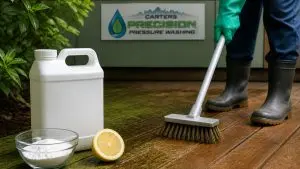
- Stiff nylon brush for scrubbing stubborn spots
- Garden hose and nozzle for rinsing
- Ladder or lift for higher walls
- Buckets, measuring cups, and a pH test strip
Step-by-Step: Mold and Mildew Removal from Exterior Walls
- Wet the area first. Rinse the wall with plain water so the cleaner does not soak in too deep.
- Protect plants and surfaces. Cover nearby landscaping and wet it down to dilute any runoff.
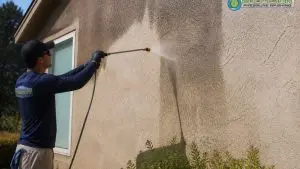
- Apply the solution. Use the low-pressure soft wash system and coat the wall from the bottom up.
- Let it dwell. Allow the solution to sit for 10 to 15 minutes. Do not let it dry on the surface.
- Scrub heavy growth. Use the nylon brush on thick patches, especially in grout lines and corners.
- Rinse from top to bottom. Work downward so clean water never runs over dirty surfaces.
- Check for missed spots. Repeat on stubborn areas, but avoid over-treating older paint or stucco.
The core cleaning sequence is easier to scan at a glance:
| Step | What to do | Time or frequency |
|---|---|---|
| Wet the area first | Rinse the wall with plain water | Before applying cleaner |
| Protect plants and surfaces | Cover landscaping and wet it down | Before applying cleaner |
| Apply the solution | Coat the wall from the bottom up | Low-pressure soft wash system |
| Let it dwell | Allow solution to sit without drying | 10 to 15 minutes |
| Scrub heavy growth | Brush grout lines and corners | As needed on thick patches |
| Rinse from top to bottom | Work downward so clean water never runs over dirt | Continuous |
| Check for missed spots | Repeat on stubborn areas | Avoid over-treating older paint or stucco |
Commercial Soft Washing Versus High-Pressure Cleaning
For most commercial buildings, the best approach combines both. Soft wash the walls and roof, then pressure wash the hard surfaces at ground level. Ask any contractor you hire which method they plan to use on each surface, and why. Our safe cleaning guide for commercial building exteriors covers which method suits each surface type.
Removing Algae from Commercial Siding Without Damage
If the algae has been there for years, you may need two treatments a few days apart. The second pass usually removes the remaining staining.
Keeping Organic Growth from Returning to Your Building
- Trim plants and shrubs so they stay at least 12 inches from the building
- Repair gutters and downspouts so water drains away from walls
- Fix irrigation heads that spray directly onto siding
- Improve airflow in shaded areas with small adjustments to landscaping
- Schedule a soft wash every 6 to 12 months, depending on local conditions
Booking a Professional Exterior Cleaning for Your Property
Carters Precision Pressure Washing provides professional soft washing and pressure washing for commercial properties in Los Angeles. book a professional commercial building washing to get a clear plan for your property.
Pricing for your building depends on its size, surfaces, and access, so request a quote for an accurate figure. Our residential pressure washing price guide explains how costs are typically structured by surface type and square footage.
Last Updated: October 27, 2026
Frequently Asked Questions
How do you remove mold and mildew from a commercial building exterior?
Start by protecting plants, windows, and electrical fixtures with plastic sheeting. Apply a diluted, EPA-registered biocide or cleaning solution with a low-pressure applicator, let it dwell for the time listed on the label, then rinse from the bottom of the wall upward. Mold on exterior walls is usually surface growth, so gentle application followed by thorough rinsing removes it without stripping paint or damaging the substrate. Work in sections so the solution does not dry on the surface before rinsing.
What is the safest way to clean algae off commercial siding?
The safest approach uses low pressure and a soft wash solution designed for organic growth. Algae penetrates porous siding and stucco, so high-pressure water can etch the surface or force water behind panels. Apply the solution from the lower edge up, allow adequate dwell time, and rinse gently. Test a small, inconspicuous area first to confirm the solution does not discolor the finish before treating the full building.
Should you use soft washing or pressure washing on a commercial building?
Soft washing is generally the better choice for commercial siding, stucco, painted surfaces, and roofs because it relies on chemistry and low pressure rather than force. Pressure washing works well on concrete sidewalks, parking structures, and other hard surfaces that can handle high pressure. Many commercial properties need both, so a qualified contractor will match the method to each surface type.
How do you keep algae and mildew from returning on building exteriors?
Reduce moisture and shade where growth starts. Trim vegetation so it does not touch walls, direct downspouts away from the building, and fix drainage problems that keep surfaces wet. Schedule periodic soft washing, typically once or twice a year depending on exposure, and consider applying a protective coating after cleaning. Regular maintenance is far less costly than repeated emergency removal.