
Quick Summary
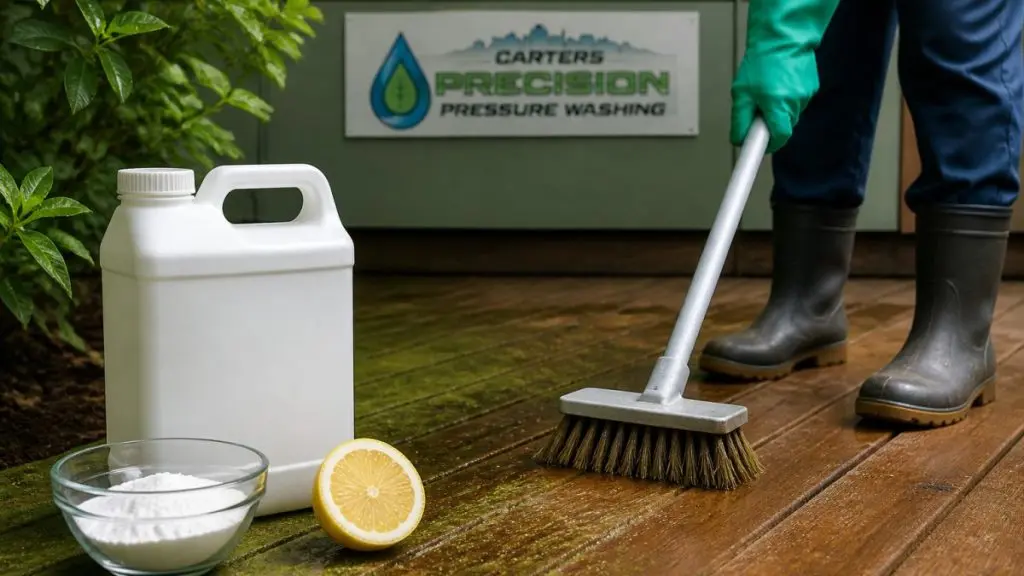
The best eco-friendly deck cleaner for algae is usually an oxygen bleach product, typically sodium percarbonate-based, which lifts algae without harsh fumes and is less corrosive than chlorine bleach. Vinegar-based cleaners suit light growth, while plant-based surfactants work best around pets and gardens. Always dilute to the label and rinse thoroughly.
- Oxygen bleach cleaners release oxygen to break down algae cells and are less corrosive than chlorine bleach.
- Vinegar-based cleaners are low cost and work on light algae but are weaker on heavy growth.
- Plant-based surfactants are gentler on plants but can foam and need thorough rinsing.
- Do not rely on a “natural” label alone; read the full ingredient list and safety data sheet.
- Clean deck twice a year, in spring and fall, and trim branches to increase sun exposure.
Table of Contents
Why Algae Grows on Wood Decks in Los Angeles
Algae is one of the most common problems on exterior wood, and Los Angeles gives it plenty of help. Mild, damp mornings, shaded decks under trees, and slow-drying boards create the conditions green and black growth needs.
Algae feeds on moisture and organic debris trapped in wood grain, so the surface stays slippery long after the sun comes out. Pollen, leaves, and pet waste add nutrients. Choosing a deck cleaner that is safe for your family and landscaping starts with understanding this cycle.
What Makes a Deck Cleaner Eco-Friendly
An eco-friendly deck cleaner is a product that removes algae with low-toxicity ingredients, minimal fragrance, and biodegradable formulas. Most labels that use this language rely on oxygen-based or plant-derived actives rather than chlorine or strong acids. For a broader view, see this eco-friendly exterior home cleaning guide.
When comparing products, look for these markers:
- Ingredient list with recognizable, non-hazardous components
- Clear dilution and rinse instructions
- Biodegradability claims supported by the manufacturer
- Warnings that are mild rather than “danger” or “poison” labels
Watch out: “natural” on a label does not guarantee low toxicity. Read the full ingredient list and safety data sheet before using a product near plants or pets.
Comparing Eco-Friendly Deck Cleaners for Algae
Several categories of cleaners fit the eco-friendly description. Each works differently, and each has trade-offs in cost, odor, and effectiveness on heavy growth.
| Cleaner Type | Main Strength | Main Drawback | Typical Use |
|---|---|---|---|
| Oxygen bleach | Lifts algae without harsh fumes | Needs dwell time | Routine and moderate growth |
| Vinegar-based | Low odor, easy to find | Weaker on heavy growth | Light maintenance |
| Plant-based surfactant | Gentle on plants | Can foam and needs thorough rinsing | Homes with pets and gardens |
Pricing depends on brand, container size, and concentration, so check current retail listings before buying.
Oxygen Bleach Cleaners
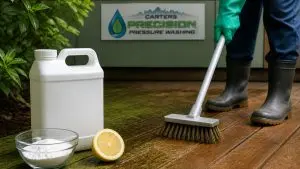
Oxygen bleach products, usually sodium percarbonate-based, release oxygen when mixed with water and break down algae cells. They are among the most common eco-friendly options for wood decks because they are less corrosive than chlorine bleach. Mix to the label, apply evenly, let the solution sit for the recommended time, then scrub and rinse. Follow this full step-by-step deep clean for wood decks to avoid damaging the boards. Other providers offer similar formulas, so compare concentrations and reviews.
Pros:
- Effective on moderate algae
- Lower fume and corrosion risk than chlorine products
- Widely available
Cons:
- Requires careful dilution
- May need a second application on heavy growth
Vinegar-Based Cleaners
Vinegar is cheap, familiar, and low in odor once it dries. Full-strength white vinegar can help with light algae, though it is weaker than oxygen-based products on established growth and may leave a faint smell. Dilute it, test on a hidden board, and rinse well so the wood does not stay acidic.
Pros:
- Low cost and easy to source
- Minimal residue when rinsed
Cons:
- Less effective on heavy staining
- Strong smell during application
Non-Toxic Deck Cleaner Options for Homes With Pets and Plants
Households with dogs, children, or sensitive garden beds need cleaners with the lowest exposure risk. Start with products labeled biodegradable and low-hazard, then check the safety data sheet for skin, eye, and ingestion guidance. Pre-wet nearby plants with clean water, and cover edible crops during application. Keep pets off the deck until the surface is fully rinsed and dry.
Non-toxic does not mean risk-free. Read this guide to whether pressure washing and cleaners harm garden plants before you start. Always store concentrates out of reach and follow the label’s protective equipment advice (Prevention).
How to Remove Algae From Wood Deck Boards Step by Step
- Sweep the deck and remove leaves, pollen, and debris. Time: 10 minutes.
- Wet the boards with a garden hose so the cleaner spreads evenly. Time: 5 minutes.
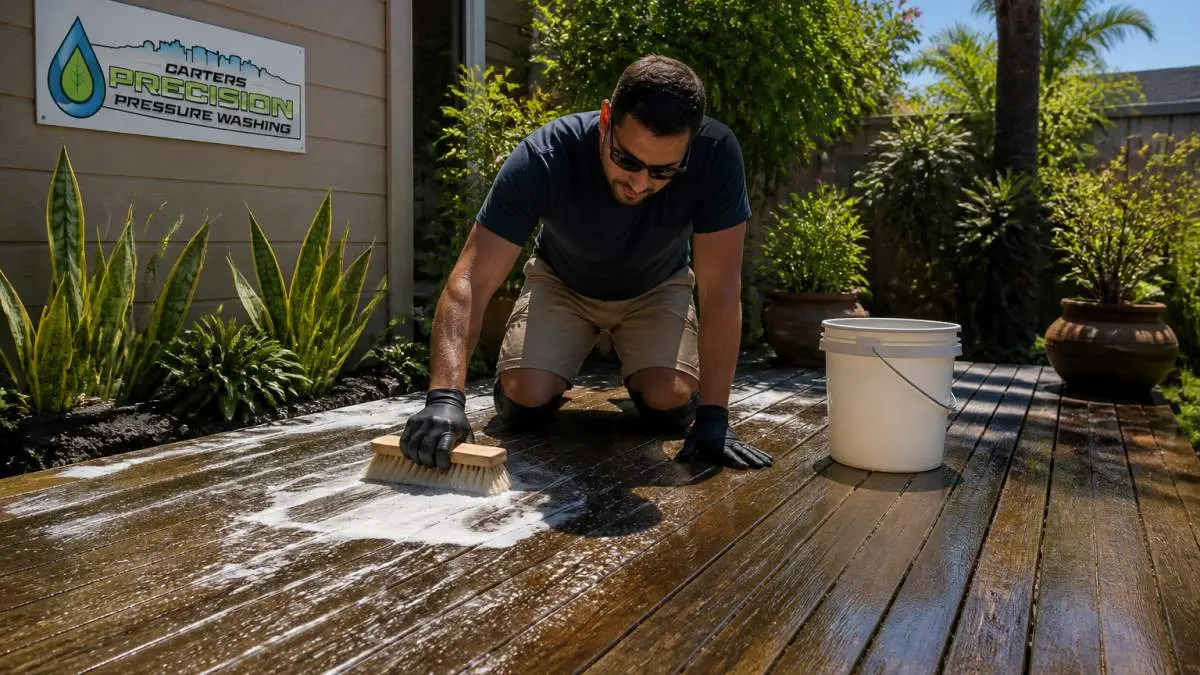
- Apply the diluted cleaner with a soft-bristle brush or pump sprayer, working from the bottom of the stairs upward. Time: 15 minutes.
- Let the solution dwell for the time listed on the label, usually 10 to 15 minutes. Do not let it dry on the wood.
- Scrub gently along the grain. Time: 15 minutes.
- Rinse thoroughly with clean water until no foam remains. Time: 10 minutes.
- Allow the deck to dry completely before walking on it.
Expected result: boards look clean and feel less slippery underfoot once dry.
Clean Algae Off Deck Without Pressure Washer Using Hand Methods
A pressure washer is not required. Follow this hand-cleaning method for deck stairs if algae makes the steps slippery. A stiff-to-soft deck brush, a bucket, and a garden hose handle most light to moderate algae. Use gentle, controlled strokes, because aggressive scrubbing raises the wood grain and invites faster regrowth. Work in small sections so the cleaner does not dry before you rinse.
A common mistake is skipping the rinse. Leftover cleaner residue attracts dirt and can speed up the next bloom.
Preventing Algae on Wood Deck Surfaces Long Term
Prevention matters more than cleaning. Trim overhanging branches to increase sun exposure, clear debris weekly, and improve airflow under the deck where possible. Re-cleaning twice a year, typically in spring and fall, keeps growth from taking hold. Once the wood is clean and dry, a protective treatment or sealing service can slow future buildup. Learn about professional paver sealing in Los Angeles for protective treatment options.
Booking a Professional Deck Cleaning in Los Angeles
Call for a Free Estimate today.
Frequently Asked Questions
What is the best eco-friendly cleaner for algae on a wood deck?
Look for products labeled for wood decks and follow the dilution instructions on the label. Test any cleaner on a small hidden area first to check for discoloration. Check the manufacturer’s website for current prices.
Are oxygen bleach deck cleaners safer for plants than chlorine bleach?
Yes, oxygen bleach is generally considered safer for plants than chlorine bleach because it does not release chlorine gas and breaks down into oxygen and water. Chlorine bleach can damage nearby shrubs and lawn edges and can harm wood fibers over time. Even with milder products, pre-wetting plants, rinsing them after cleaning, and avoiding runoff into garden beds are good practices. Always read the label for plant-safety guidance.
Can vinegar remove algae from a wood deck?
White vinegar can help loosen light algae growth on a wood deck, but it is typically weaker than dedicated oxygen bleach cleaners for heavier staining. It works best on early-stage growth and needs scrubbing with a soft brush. Rinse thoroughly afterward and let the wood dry completely. Vinegar can be acidic, so avoid soaking the wood and test it on an inconspicuous spot before cleaning the whole deck.
How can I keep algae from growing back on my deck?
Contact Carters Precision Pressure Washing for a free estimate.