

Quick Summary
Preventing algae on shaded wood decks means cutting off its three needs: moisture, shade, and organic debris. Sweep off leaves and dirt often, trim plants that block airflow, and clean lightly once or twice a year, using a deck-safe cleaner and low pressure.
- Algae needs moisture, shade, and organic material to grow on decks.
- Sweep off leaves and debris regularly, especially during wet months.
- Clean most shaded decks lightly once or twice a year.
- Use cleaners labeled safe for wood, avoiding bleach-heavy mixtures.
- Use a wide fan tip and low pressure to avoid splintering boards.
Table of Contents
- Why Algae Takes Hold on Shaded Wood Decks
- How to Clean a Wood Deck Without Damaging It
- Choosing the Best Cleaner for Algae on Wood Decks
- How Often to Clean a Wood Deck in Shade
- Pressure Washing a Wood Deck Safely
- Preventing Algae Regrowth Between Cleanings
- Booking Your Next Deck Cleaning in Los Angeles
- Frequently Asked Questions
Why Algae Takes Hold on Shaded Wood Decks
Last Updated: November 1, 2026
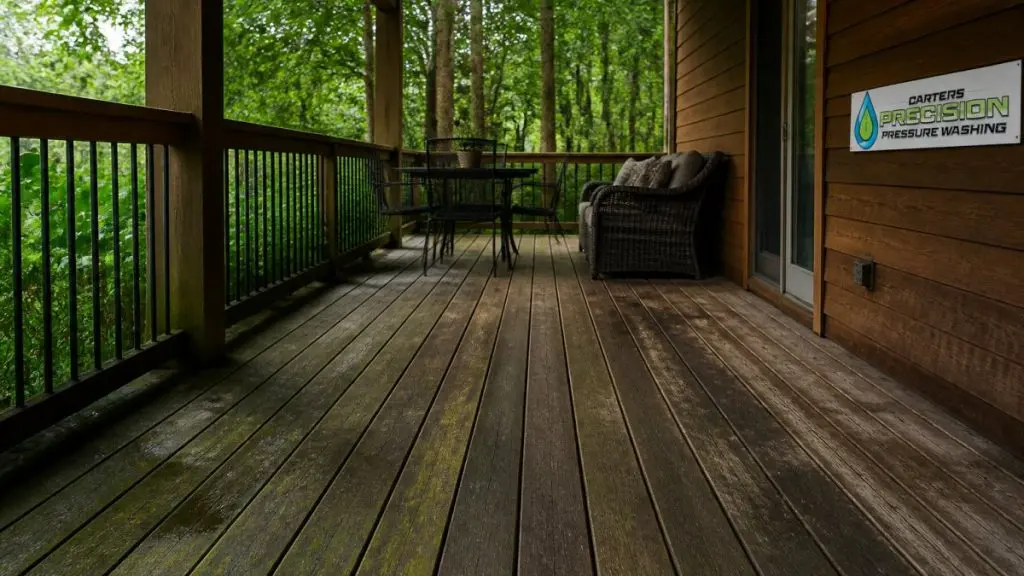
Shaded wood decks are one of the most common places algae shows up in Los Angeles. The good news is that most of the cause is simple to understand, and so is the fix. A deck that stays damp and dark is an open invitation for green, slick growth.
Algae needs three things to grow: moisture, shade, and organic material. Wood provides a surface that holds water, and shade keeps that water from evaporating. Leaves, pollen, and dust give algae something to feed on.
- Moisture that lingers: Water sits in the grain and between boards long after rain stops.
- Little sunlight: Shade blocks the sun that would otherwise dry the surface.
- Organic debris: Leaves and dirt collect in gaps and corners.
Think of a deck under a large oak or next to a fence as a small greenhouse. The surface stays wet, and the wood rarely dries out.
How to Clean a Wood Deck Without Damaging It
Cleaning a wood deck is about removing growth without harming the wood. Start by sweeping off loose leaves and debris, then wet the deck with a garden hose. Apply a deck-safe cleaner, let it sit for a few minutes, and scrub gently with a soft-bristle brush. Rinse thoroughly from the top down.
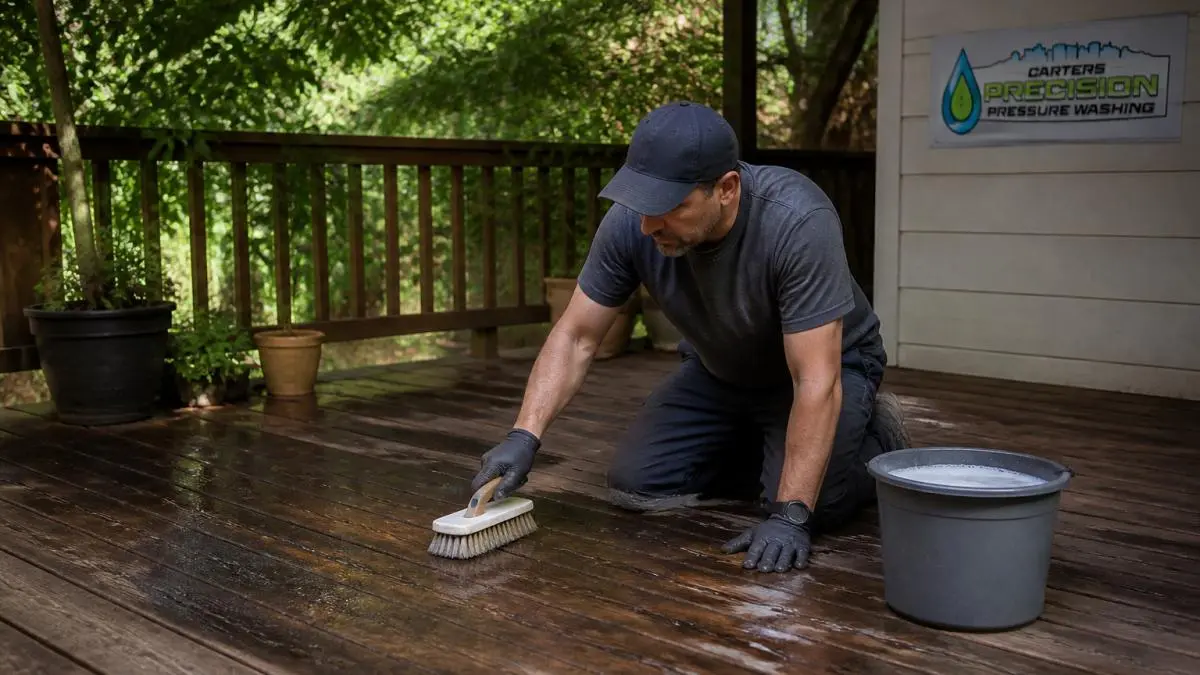
Soft, controlled methods work better on softer wood. For the complete method, see this step-by-step guide to deep cleaning wood decks without damage.
- Sweep and remove debris first
- Pre-wet the surface before applying cleaner
- Scrub along the grain, not across it
- Rinse fully so no residue dries on the boards
Watch out: Using bleach-heavy mixtures on wood can dull the finish and weaken fibers. Stick with cleaners made for wood decks.
Choosing the Best Cleaner for Algae on Wood Decks
The right cleaner depends on how heavy the growth is and how sensitive your landscaping is. Look for products labeled safe for wood and for surrounding plants. Oxygen-based cleaners are a common choice because they lift algae without the harsh fumes of strong chlorine products. For guidance on picking a gentle, eco-friendly deck cleaner for algae, this article walks through what to look for.
Read labels carefully before you buy. Some cleaners require dilution, and others need a longer dwell time. Testing a small hidden area first is a smart habit.
How Often to Clean a Wood Deck in Shade
Most shaded decks need attention more often than sunny ones. Many homeowners find that a light cleaning once or twice a year keeps algae under control, while heavily shaded decks may need quarterly checks during damp seasons.
Look for early signs like a slippery feel, green tint, or dark spots in the grain. Catching growth early means a simpler cleaning and less risk to the wood. If you are already dealing with slick patches, learn how to remove slippery algae from deck stairs.
Here is a quick reference for how often shaded decks typically need attention.
| Deck condition | Suggested cleaning frequency | Note |
|---|---|---|
| Most shaded decks | Light cleaning once or twice a year | Keeps algae under control |
| Heavily shaded decks | Quarterly checks during damp seasons | Watch for early signs |
| Early growth signs | Clean as soon as seen | Simpler cleaning, less wood risk |
Pressure Washing a Wood Deck Safely
Pressure washing can be effective on wood decks when it is done with care. Use a wide fan tip, keep the nozzle moving, and hold it at a distance that does not gouge the surface. Lower pressure is almost always the better choice on older or softer boards. If you are worried about nearby greenery, read this guide on whether pressure washing harms garden plants.
Keep the spray angled with the grain. Avoid aiming directly at joints or gaps where water can force its way in. Work in sections so the deck does not dry unevenly.
Watch out: Excessive pressure can splinter boards and create fuzzy grain that holds dirt faster. If you see the wood fibers lifting, reduce the pressure right away.
Preventing Algae Regrowth Between Cleanings
Prevention matters most on shaded decks. Sweep off leaves and debris regularly, and avoid letting planters or dirt sit on the boards. Improve airflow where you can by trimming nearby branches or shrubs that block breezes.
Applying a quality sealant or stain designed for outdoor wood can also slow moisture absorption. Choose a product rated for shade and check the manufacturer’s directions for reapplication timing.
- Clear debris weekly during wet months
- Trim overhanging plants to let air move
- Reseal or restain according to the product’s schedule
Booking Your Next Deck Cleaning in Los Angeles
If your shaded deck has more growth than you can safely tackle yourself, professional help can save time and protect the wood.
Call Carters Precision Pressure Washing for a free estimate to get started.
Frequently Asked Questions
Why does algae grow on shaded wood decks?
Shade keeps wood boards damp for longer after rain, fog, or morning dew, because sunlight is not drying the surface. Algae and mildew spores settle on the grain and feed on the moisture and organic debris trapped in it. In Los Angeles, marine layer fog can keep under-tree and under-eave decks wet for hours each morning. Clearing leaves and debris and improving airflow under the deck reduces the moisture algae needs to establish.
How often should you clean a shaded wood deck?
Most shaded wood decks benefit from a gentle cleaning once or twice a year, and sometimes more often if they sit under heavy trees or near a fence line. Look for green or dark patches, slickness underfoot, or a musty smell as signals that it is overdue. Scheduling cleanings in early spring and early fall keeps growth from getting established before the wettest and most humid seasons.
Can pressure washing damage a wood deck?
Yes. High pressure can gouge soft wood, raise the grain, and strip protective stain. Use a low-pressure setting, keep the nozzle moving, and hold the tip at a safe distance from the boards. A soft-wash method with a diluted cleaner and low-pressure rinse is usually the safer choice for aging or softer decking. If you are unsure, have a professional assess the boards first.
When should you call a professional to clean a wood deck?
Call a professional when algae is thick across large areas, when boards feel soft or spongy, or when you are unsure how much pressure the wood can handle. Contact Carters Precision Pressure Washing for a free estimate. Pricing depends on deck size, condition, and access, so request a quote for current rates.