
Last Updated: October 31, 2026
Quick Summary
Green and black streaks on your siding are the most obvious sign your home needs pressure washing, since they are living algae, mold, and mildew rather than dirt. Other signs include chalky white residue on brick or stucco, dull gray driveways, slippery walkways, and rust-colored stains near downspouts.
- Siding and stucco should be cleaned annually to remove algae before it damages paint.
- Soft washing is the safer method for siding, roofs, and stucco, while pressure washing suits concrete, patios, and brick.
- Absorb fresh oil stains with kitty litter or sawdust before applying a degreaser.
- Schedule the wash before the photographer arrives when listing your home.
- Consumer pressure washers deliver inconsistent pressure and often lack surface cleaners and soft wash systems.
Table of Contents
- Green and Black Streaks: The Most Obvious Sign Your Home Needs Pressure Washing
- How Often to Pressure Wash a House in Los Angeles
- Soft Washing vs. Pressure Washing for Homes: Which Does Your Siding Need?
- Pressure Washing Driveway Stains: Oil, Rust, and Tire Marks
- Dull Curb Appeal Before a Sale: When Clean Siding Sells a House
- DIY vs. Professional Pressure Washing: What You Risk by Going It Alone
- Schedule a Free Estimate with Carters Precision Pressure Washing
- Frequently Asked Questions
Green and Black Streaks: The Most Obvious Sign Your Home Needs Pressure Washing
Those green and black streaks running down your siding are not dirt. They are living organisms, and they can damage your exterior over time. This guide covers the warning signs that tell Los Angeles homeowners it is time to call in professionals for pressure washing.
The green film is algae. The black streaks are mold and mildew, and they thrive in the marine layer that settles over Los Angeles in the morning hours. Both feed on organic material in paint and stucco, and both can hold moisture against your siding. Left alone, growth like this can contribute to surface wear over time.
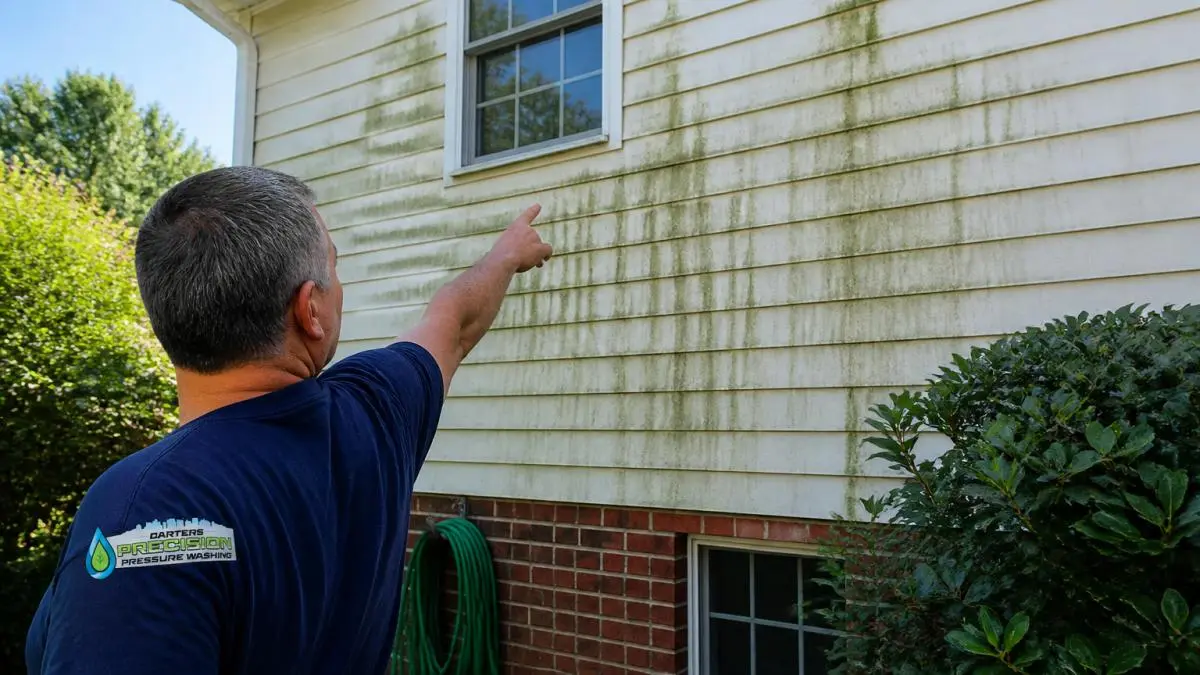
Look closely at north-facing walls and shaded areas. That is where these streaks appear first.
Other signs worth checking:
- Chalky white residue on brick or stucco, which signals efflorescence and trapped moisture
- Dull, gray driveways that used to be bright concrete
- Slippery walkways, a genuine safety hazard
- Rust-colored stains near downspouts and irrigation lines
The U.S. Environmental Protection Agency’s guidance on mold and moisture is clear that mold growth indoors and out points to excess moisture that needs addressing. On exterior surfaces, regular cleaning removes both the growth and the food source it lives on.
How Often to Pressure Wash a House in Los Angeles
Many Los Angeles homes benefit from periodic exterior cleaning, and the local climate can influence how often that is needed. Dry summers, marine layer moisture, and dust from nearby hills can all encourage organic growth.
A typical cleaning schedule by surface can look like this:
| Surface | Frequency | Why It Matters |
|---|---|---|
| Siding and stucco | Annually | Removes algae before it damages paint |
| Roof | Annually | Prevents moss and granule loss |
| Driveway and walkways | Every 12-18 months | Clears oil, tire marks, and grime |
| Patios and pool decks | Annually | Prevents slippery buildup |
| Commercial storefronts | Quarterly | Keeps entryways presentable |
Homes in Los Angeles neighborhoods with dense tree canopy can collect sap, pollen, and bird droppings more quickly than open lots, and coastal properties can also contend with salt spray.
Soft Washing vs. Pressure Washing for Homes: Which Does Your Siding Need?
Soft washing is a low-pressure cleaning method that relies on specialized cleaning solutions to kill organic growth, while pressure washing uses high-pressure water to blast away dirt and stains from hard surfaces. The right choice depends entirely on what you are cleaning.
For siding, roofs, and stucco, soft washing is the safer method. High pressure on stucco can force water behind the exterior finish and may contribute to cracks and moisture damage. Read this guide to safe pressure washing for stucco homes for proper PSI settings and soft washing methods. Older wood siding can be vulnerable to damage under high pressure.
For concrete driveways, patios, and brick, pressure washing is the correct tool. These surfaces can handle the force, and the pressure is what lifts embedded dirt and stains.
The short version: if it is a hard, unpainted surface, pressure washing works. If it is painted, textured, or part of the building envelope, soft washing is the answer.
Pressure Washing Driveway Stains: Oil, Rust, and Tire Marks
Concrete stains do not all respond to the same treatment. Oil needs a degreaser and time to lift. Rust needs a dedicated acid-based remover. Tire marks need heat and pressure together. Treating them all with the same pass of a wand usually just spreads the problem.
Rust stains are the toughest of the three. Learn how to remove rust stains from a concrete driveway step by step. They often come from irrigation water high in iron, or from metal furniture left sitting on the concrete. A standard wash will not touch them.
Watch out: scrubbing a fresh oil stain with water before absorbing it pushes the oil deeper into the concrete pores, and it becomes far harder to remove.
A proper sequence looks like this:
- Absorb fresh oil with kitty litter or sawdust, then sweep it up
- Apply a degreaser and let it dwell
- Use a surface cleaner for even pressure across the slab
- Treat rust separately with a dedicated remover
- Rinse and repeat on stubborn areas
Dull Curb Appeal Before a Sale: When Clean Siding Sells a House
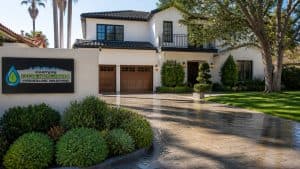
A clean exterior can make a strong first impression, and it shows in the first photos buyers see online. Benefits of Pressure Washing Before Selling Your Home explains how cleaning boosts curb appeal and value. Streaked siding, stained driveways, and grimy walkways can read as neglect to many buyers.
If you are listing in the next few months, timing matters. Schedule the wash before the photographer arrives, not after.
The work that moves the needle most:
- The driveway and front walkway, since they frame the entry
- The siding facing the street
- The roof, where black streaks are visible from the curb
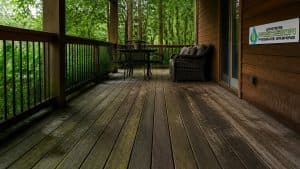
- Patios and pool decks, which buyers inspect closely
DIY vs. Professional Pressure Washing: What You Risk by Going It Alone
Renting a pressure washer for a weekend looks cheap until something goes wrong. The risks are real: etched concrete from holding the wand too close, water forced behind siding, stripped paint, cracked stucco, and damaged window seals. See the common mistakes to avoid when pressure washing before you start.
The equipment gap matters too. Consumer units deliver inconsistent pressure, and most lack the surface cleaners and soft wash systems that make a professional job even and safe.
Where professional service earns its keep:
- Surface matching. The right pressure and method for stucco, wood, brick, and concrete.
- Chemical control. Cleaning solutions applied so they kill growth without harming landscaping or pets.
- Time. A full exterior that takes a homeowner a weekend takes a crew a few hours.
- Results that last. Proper soft washing kills the organisms at the root, so the green does not return in two weeks.
If you are weighing the DIY route, be honest about the surfaces you are working with. Stucco and older wood siding are not forgiving.
Schedule a Free Estimate with Carters Precision Pressure Washing
The signs are usually obvious once you know what to look for: green streaks, dull concrete, slippery walkways, and stains that will not budge. Catching them early protects your siding and saves you from bigger repairs down the line.
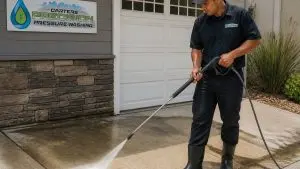
Carters Precision Pressure Washing provides soft washing for roofs and houses and pressure washing for driveways, patios, and other hard surfaces in Los Angeles. To learn more and request a quote, contact Carters Precision Pressure Washing for a free estimate.
Get started with Carters Precision Pressure Washing and restore your property’s curb appeal with a clean that lasts.
Frequently Asked Questions
What are the signs that a house needs pressure washing?
The clearest signs are green or black streaks on siding, a chalky white film on stucco, dark patches on the roof, and stained or slippery driveways. You may also notice dirt collecting on north-facing walls that stay shaded, grime on patio furniture, or a general dullness that washing won’t fix with a garden hose. If you can see visible buildup on more than one surface, it’s time to book professional pressure washing.
How often should you pressure wash a house in Los Angeles?
Many Los Angeles homes benefit from periodic exterior cleaning, and the right schedule depends on the property and its conditions. Driveways and patios may need attention more often, especially in high-traffic households or where sprinklers hit the concrete daily.
Is soft washing safer than pressure washing for house siding?
Yes, for most siding materials. Soft washing uses low pressure and a cleaning solution, and is commonly used on delicate surfaces such as stucco, wood, and painted siding. Higher-pressure washing is typically used on concrete, brick, and pavers.
Should I pressure wash my house myself or hire a professional?
Renting a machine and buying detergent often costs close to a professional service, and the risks are higher: cracked stucco, water forced behind siding, damaged plants, and uneven results that show up within weeks. Professional companies typically bring their own equipment and cleaning solutions. Improper DIY pressure washing can damage some surfaces, especially roofs and painted siding.