
Table of Contents
- Start With a Clear Scope of Work
- Soft Washing vs Pressure Washing: Match the Method to Your Surface
- Verify Licensing, Insurance, and Worker’s Compensation
- Questions to Ask Pressure Washing Contractors Before You Sign
- Using a Pressure Washing Cost Estimator and Understanding Pricing Structures
- Red Flags in Contracts and Eco-Friendly Cleaning Solutions
- Post-Service Inspection Checklist for Your Pressure Washing Company
- Conclusion
- Frequently Asked Questions
Last Updated: October 4, 2026
Start With a Clear Scope of Work
Hiring a residential pressure washing company starts with one step most homeowners skip: writing down exactly what needs cleaning. A clear scope protects your wallet and your siding.
A written scope of work lists every surface you want cleaned, the method for each, and the expected result. Without it, you are comparing quotes for different jobs.
Identify Your Surfaces and Their Needs
Walk your property, list every surface, and note what each needs:
- Vinyl or wood siding: grime, mildew, and pollen buildup
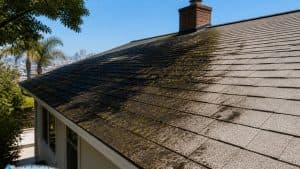
- Roof shingles: black streaks from algae, not dirt
- Concrete driveway: oil stains, rust, tire marks
- Deck or patio: graying wood, slippery algae film
- Gutters: leaf debris and exterior staining
Each surface needs a different approach. A driveway can take high pressure. A roof cannot.
Soft Washing vs Pressure Washing: Match the Method to Your Surface
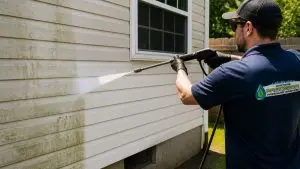
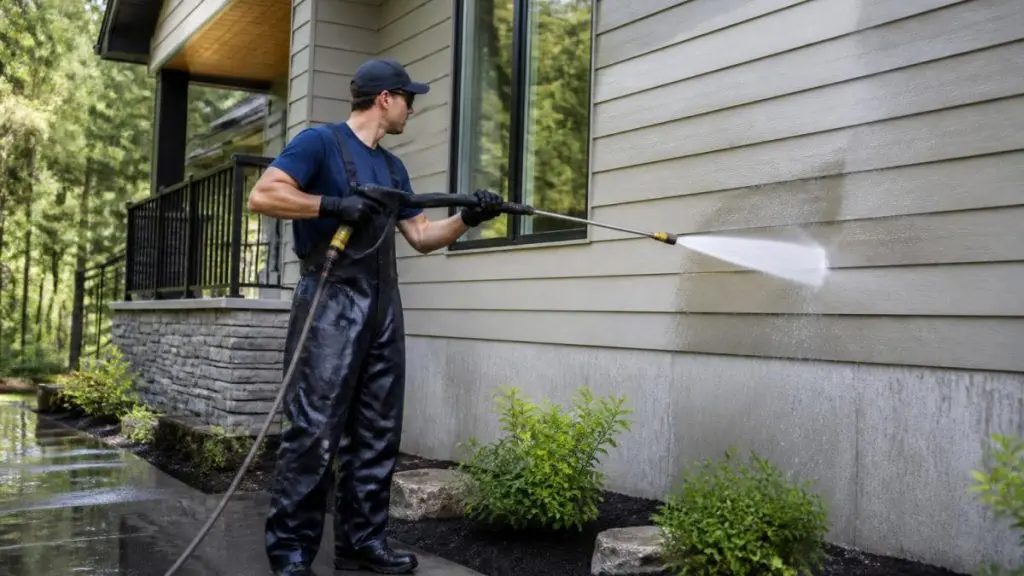
Soft washing and pressure washing are not the same service, and mixing them up is how siding gets ruined. Soft washing uses low pressure, usually under 500 PSI, plus cleaning solutions that kill mold, mildew, and algae at the root. Pressure washing uses high pressure, often 2,000 to 4,000 PSI, to blast dirt and stains off hard surfaces.
| Surface | Recommended Method | Typical PSI Range | Why |
|---|---|---|---|
| Roof shingles | Soft washing | Under 500 | High pressure strips granules |
| Vinyl siding | Soft washing | Under 500 | Pressure forces water behind panels |
| Stucco | Soft washing | Under 500 | Cracks and pits easily |
| Concrete driveway | Pressure washing | 2,500-4,000 | Needs force for oil and stains |
| Brick and stone | Pressure washing | 1,500-2,500 | Durable but mortar can erode |
| Wood deck | Low pressure wash | 500-1,200 | High pressure gouges soft grain |
Ask every contractor which method they plan for each surface. If the answer is “pressure washing” for your roof, walk away.
Verify Licensing, Insurance, and Worker’s Compensation
A legitimate pressure washing company carries general liability insurance and worker’s compensation coverage. Ask for proof before work begins. If a worker falls off a ladder on your property and the company has no coverage, the claim can land on your homeowner’s policy.
What to Look For in a Certificate of Insurance
Request a certificate of insurance (COI) and check:
- General liability: covers damage to your property, such as a cracked window or stripped paint
- Worker’s compensation: covers injuries to workers on your property
- Policy dates: confirm coverage is active for your service date
- Business name: must match the company quoting you, not a subcontractor
Call the insurer listed on the certificate to confirm it is real. This takes five minutes and has saved homeowners from real trouble.
Also check your state’s licensing board or consumer protection office. Requirements vary by state, and some areas require a home improvement contractor license for exterior work. The Federal Trade Commission’s consumer guidance on hiring contractors outlines your rights when hiring home services.
Never hire a company that asks for full payment upfront in cash. A common scam is collecting a deposit and never returning. Reputable companies take a deposit and bill the balance after you inspect the work.
Questions to Ask Pressure Washing Contractors Before You Sign
The right questions separate professionals from fly-by-night operators, but only if you know what a good answer sounds like.
1. How many years have you been in business, and can I see your portfolio?
A pro gives a specific number and before-and-after photos of jobs like yours.
**2.
**3.
4. Do you use cleaning solutions safe for plants and pets?
Expect specifics: biodegradable detergents, pre-wetting plants before application, and rinsing after.
**5.
**6.
7. How do you protect my landscaping, outlets, and light fixtures?
Expect a real answer: covering outlets, taping fixtures, pre-wetting and covering plants, and directing runoff away from garden beds.
8. What happens if something gets damaged?
The answer should reference their general liability policy and a written damage-repair process. Red flag: “that never happens” or refusing to put the process in writing.
9. Who will actually be on my property, your employees or subcontractors?
Worker’s compensation coverage follows the employer.
10. What is your cancellation and weather policy?
Expect a clear rain-rescheduling window and a written cancellation term. Red flag: no policy, or an undisclosed cancellation fee.
A pro answers these without hesitation and puts the important ones in writing. Vague answers, pushback, or pressure to sign on the spot mean keep looking.
Print this list and write the contractor’s answers next to each question during the call. Comparing written answers across three companies exposes inconsistencies that a phone conversation alone will hide.
Using a Pressure Washing Cost Estimator and Understanding Pricing Structures
A pressure washing cost estimator gives you a ballpark before you call anyone. Most ask for your property size, surfaces, and location. Treat the number as a sanity check on the bids you collect, not a final quote or a negotiation target.
What Actually Drives the Price
Five variables move the price most:
- Square footage of each surface. A 1,200-square-foot driveway is not priced like a 400-square-foot walkway.
- Surface type. Concrete is fast. Wood decks and stucco take longer because they need lower pressure and more careful technique.
- Level of soiling. Light pollen rinse-off versus years of black algae streaks and oil stains are different jobs. Heavy mildew on a north-facing wall can add significant time.
- Accessibility. A steep roof, a fenced backyard with a narrow gate, or a second-story section over landscaping slows the crew and raises the price.
- Height and stories. A two-story home takes longer than a single-story ranch of the same footprint because of setup, ladder work, and reach.
Flat Rate vs. Cost Per Square Foot
Most companies price one of two ways. Flat rate pricing is one set price for the whole job. Cost per square foot charges by the size of each surface. Flat rate is easier to budget; per-square-foot pricing is more transparent for large properties and shows what each surface costs.
Ask which method the company uses and why, then ask the follow-up most homeowners miss: what is the minimum charge? Many companies have a minimum job price, so a small walkway quote may cost more per square foot than a full driveway.
Add-Ons and What Is Usually Not Included
House washing quotes frequently exclude:
- Gutter exterior cleaning and downspout flushing
- Driveway and sidewalk cleaning
- Deck or fence cleaning and brightening
- Roof soft washing
- Rust, oil, or tannin stain removal (these often need specialty treatments)
- Post-treatment for algae regrowth
Ask for each add-on priced separately so you can compare bids apples to apples. A low base price with expensive add-ons is not the same as a higher base price that includes them.
How to Compare Three Written Estimates
Get at least three written estimates and compare scope, not just the bottom line. Line up these items:
| Item to compare | Why it matters |
|---|---|
| Surfaces listed | A quote that skips the fence is not cheaper, it is a different job |
| Method and PSI per surface | Confirms the contractor will not pressure-wash your roof |
| Cleaning solutions | Plant-safe and algae-killing are not the same as plain water |
| Add-on pricing | Exposes low base prices padded with extras |
| Insurance and licensing | A missing certificate is a risk you carry |
| Payment schedule | Deposit size and when the balance is due |
| Damage and cancellation terms | Tells you who pays if something goes wrong |
The cheapest quote often cuts corners on surface protection and cleaning solutions, and the most expensive is not automatically best, compare what each company actually promises.
Be cautious of a quote that is dramatically lower than the others. It usually means the contractor plans to use high pressure on every surface, skip plant protection, or use no cleaning solution at all. Those shortcuts are how siding gets stripped and wood gets gouged.
Federal Trade Commission’s consumer guidance on hiring contractors
Red Flags in Contracts and Eco-Friendly Cleaning Solutions
Read every contract line by line before signing. Watch for:
- No written estimate, only a verbal price
- A demand for full payment upfront
- No mention of insurance or licensing
- Blank spaces you are asked to sign
- No cancellation or damage policy
- Pressure washing listed for roofs or delicate siding
Ask what cleaning solutions the company uses. Many homeowners worry about plants, pets, and runoff; biodegradable detergents and plant-safe rinsing are common in professional work. Ask the contractor to pre-wet plants and rinse them after.
For runoff rules, check with your local water authority. Some areas restrict what can flow into storm drains. The Environmental Protection Agency’s guidance on stormwater runoff explains why this matters for exterior cleaning.
Post-Service Inspection Checklist for Your Pressure Washing Company
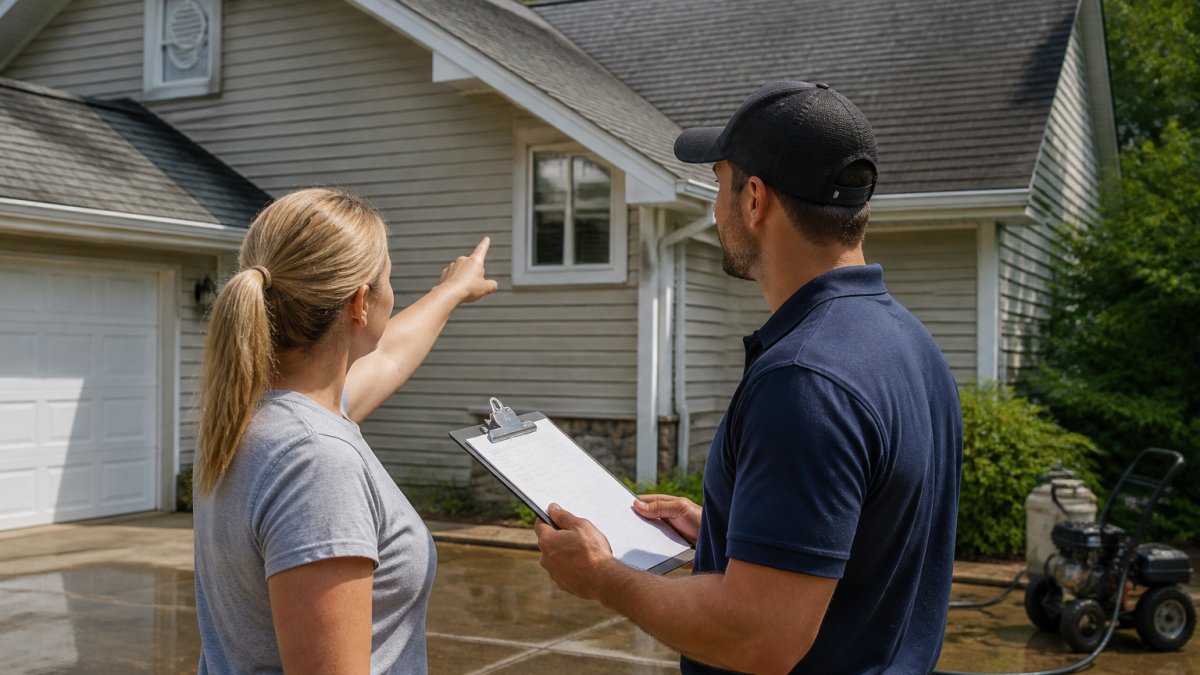
Inspect the work before paying the final balance. Walk the property with the crew lead and use this checklist:
- Siding is evenly clean with no missed patches or streaks
- No stripped paint, cracked stucco, or gouged wood
- Windows, doors, and outlets are dry with no water intrusion
- Plants and landscaping look undamaged
- Driveway and patio stains are gone or clearly reduced
- Gutters and downspouts are clear
- No standing water or runoff pooling near the foundation
- Before-and-after photos match what you see
Snap your own photos during the walkthrough. If something is wrong, note it in writing before you pay. A good company fixes issues without a fight.
Schedule your cleaning on a dry, mild day. Cleaning solutions work better when surfaces are not baking in direct sun, and results last longer when rain is not in the forecast for 24 hours.
Conclusion
Hiring the right residential pressure washing company comes down to homework: a clear scope, the right method per surface, verified insurance, and a written contract you understand. Skip those steps and you risk damage that costs more than the cleaning.
At Carters Precision Pressure Washing, we handle roofs, houses, driveways, and commercial exteriors with the right method for every surface. We back our work with a written estimate and a free on-site assessment. Call for a free estimate and see the difference precision makes.
Frequently Asked Questions
How much should I pay someone to power wash my house?
Pricing depends on your home’s size, the surfaces being cleaned, and the level of grime. Most residential pressure washing companies use a pressure washing cost estimator based on square footage or a flat rate for the whole job. A 2,000 sq ft house with siding and a driveway will cost more than a single-story home with just a patio. Always get a written estimate that breaks down each surface so you can compare quotes fairly. Request a free estimate from Carters Precision Pressure Washing for your specific property.
What questions should I ask a pressure washing contractor before hiring?
Ask about licensing, liability insurance, and worker’s compensation coverage. Request their PSI settings and nozzle tips for each surface to confirm they won’t damage your siding or roof. Ask whether they use soft washing or pressure washing for your specific materials. Request references and before-and-after photos from similar jobs. Confirm whether they use biodegradable detergents safe for plants and pets. Finally, ask for a written service agreement that details the scope, schedule, and property protection measures.
How do I know if a pressure washing company is insured?
Ask for a certificate of insurance and call the insurer directly to verify the policy is active. You want to see general liability insurance and worker’s compensation coverage. General liability protects your property if they damage siding or a window. Worker’s compensation protects you from liability if a crew member gets injured on your property. A legitimate residential pressure washing company will provide these documents without hesitation. If they can’t produce a certificate, walk away.
How long does it take to pressure wash a 2,000 sq ft house?
Most professional crews finish a 2,000 sq ft house in two to four hours, depending on the surfaces, level of buildup, and whether soft washing is required. Roof cleaning may add time because it uses lower pressure and specialized cleaning solutions. Driveways and patios typically add one to two hours. Scheduling and turnaround time also depend on weather and crew availability. Ask your contractor for a time estimate when you request your written estimate.